Philippe Claudel’s first film gives Kristin Scott Thomas, in French, a woman out of prison after fifteen years and not yet out of anything else. She is remarkable. The film around her is decent and careful, and it explains too much at the end.
Philippe Claudel is a novelist, and this is his first film as director, which you could guess from the dialogue and would never guess from the lead. Juliette (Kristin Scott Thomas) comes out of prison after fifteen years and goes to live with her sister Léa (Elsa Zylberstein) in Nancy, in a house with a husband who does not trust her, two small girls and a great many books. What she did comes out early, in a job interview, and it is bad enough that Léa’s husband Luc (Serge Hazanavicius) has his reasons. Why she did it is held back until the end. It is a good film, worth your evening, and it is carried by one performance.
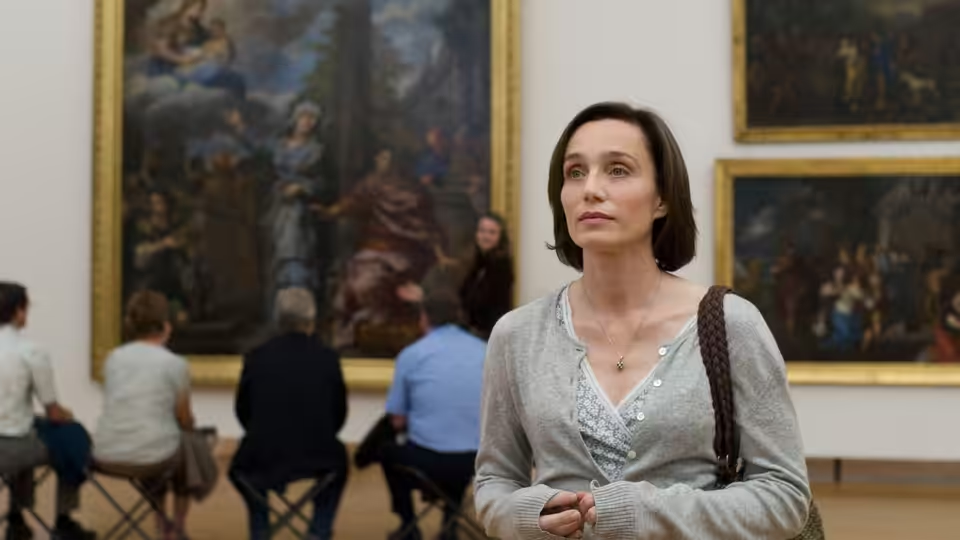
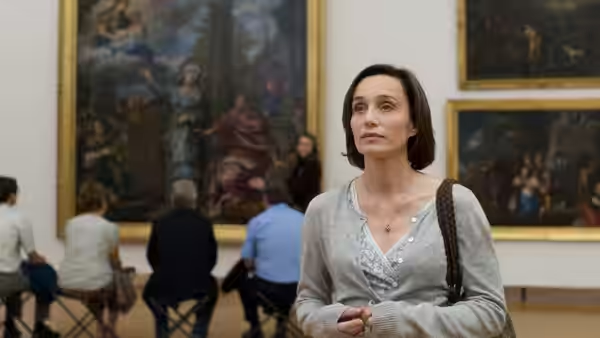
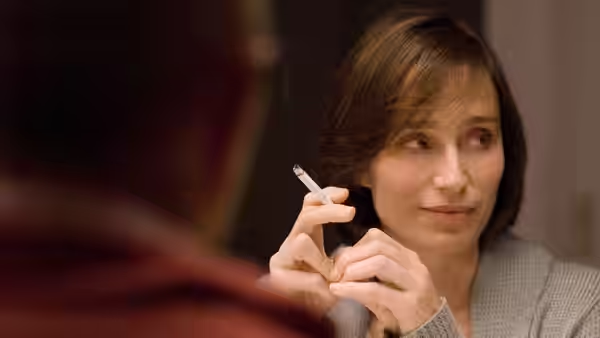
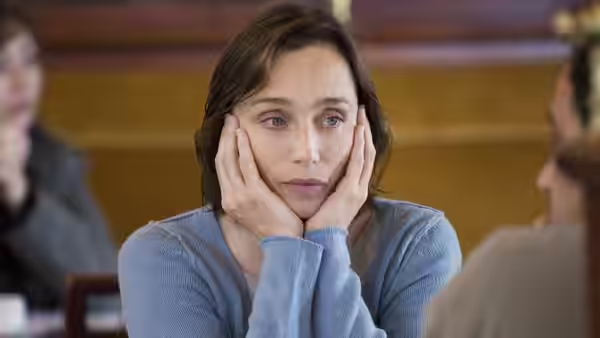
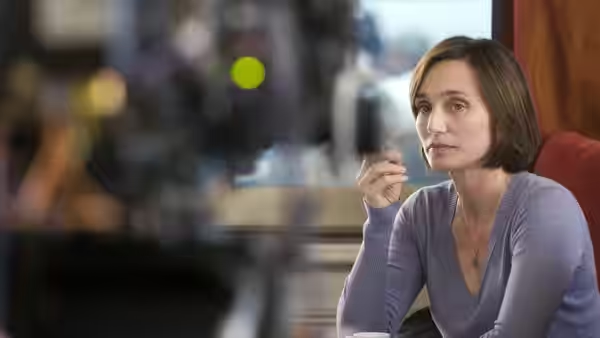
Scott Thomas has spent much of her English-language career being cool in good coats. Here she is in a borrowed anorak with no make-up, speaking French, and doing almost nothing. Juliette smokes, sits, and answers questions with the fewest words that will end the conversation. Watch her in the interview with a man who wants to know what she went down for. She tells him, flat, and the air goes out of the office. We flinched, and so did he, and the film had us from there. What is striking is how much Scott Thomas lets through later: a dry remark at a dinner party that the guests take for a joke, a half-smile when P’tit Lys (Lise Ségur) asks where she has been and she says, far away.
Jérôme Alméras shoots Nancy in winter grey and the sisters’ house in low lamplight that makes the books look warmer than the people. Samuel Deshors’s production design puts shelves in every room and sits Papy Paul (Jean-Claude Arnaud), mute since a stroke, in a corner with a novel. Laurence Esnault and Jacqueline Bouchard dress Juliette in the same two or three dark things for most of the film; when Léa takes her shopping and she comes out in colour, it counts. Virginie Bruant cuts slowly and lets scenes end on a face rather than a line. The music, by Jean-Louis Aubert and Edouard Dubois, is sparse and mostly guitar, and stays out of the way.
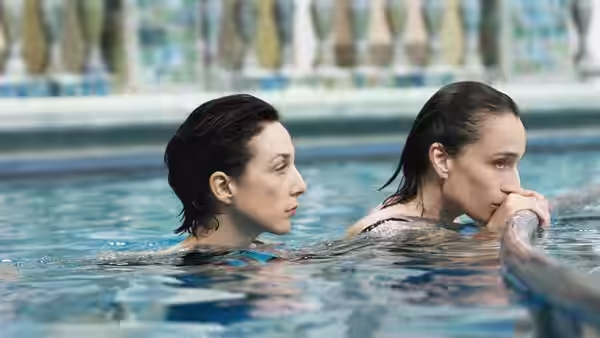
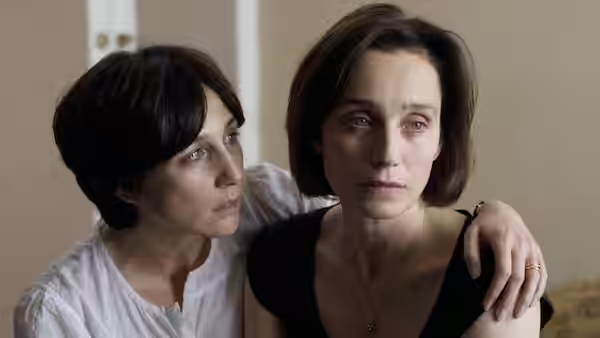
Zylberstein has the harder part, because Léa talks. She wants back a sister she lost when she was too young to be told anything. The scene most people will remember is the one at the swimming pool, where the two women float side by side and Juliette finally says something about the inside of a cell. We were more moved by the earlier one in which Léa, in front of her students, stops being able to teach. Frédéric Pierrot’s Captain Fauré, to whom Juliette must report, is a lonely man who talks about rivers he has never seen. Claire Johnston has one scene as the sisters’ mother, in a care home, and it got to us more than we were ready for: she does not know Léa, and then for a moment she takes Juliette for the girl she was.
The trouble is the writing, and it is a novelist’s trouble. Claudel gives nearly everyone a speech that says what the scene is about. Fauré explains loneliness. A dinner guest explains what people assume about women like Juliette. Then the ending. The film has kept one thing back for a hundred minutes and in the last fifteen it tells us, in a scene between the sisters that goes on past the point where it has worked. We will not say what the reason is. We will say that it is a reason, that it is built to let the audience off, and that the film was braver when it refused to.
Most critics liked it less than we did, and the ones who liked it least were cross about that last scene. We would still send you. It is 115 minutes, and for a hundred of them a woman sits in a kitchen and lets a family find out, slowly, that she is still a person. Scott Thomas does that with a cigarette and a look, and it is enough.