Robert J. Flaherty’s bayou drama is worth seeing for Richard Leacock’s photography and Virgil Thomson’s music. The slender story holds our attention, but its cheerful view of oil drilling leaves too much unquestioned.
Robert J. Flaherty’s Louisiana Story is worth seeing for its photography and music, though its kindly treatment of oil drilling takes some swallowing. The small adventure puts a boy among waterways and working adults, with little dialogue to explain their lives. That leaves the photography, editing and music with much of the work, and they reward the attention they ask for. The trouble comes when the film expects the same warm response to everything it shows.
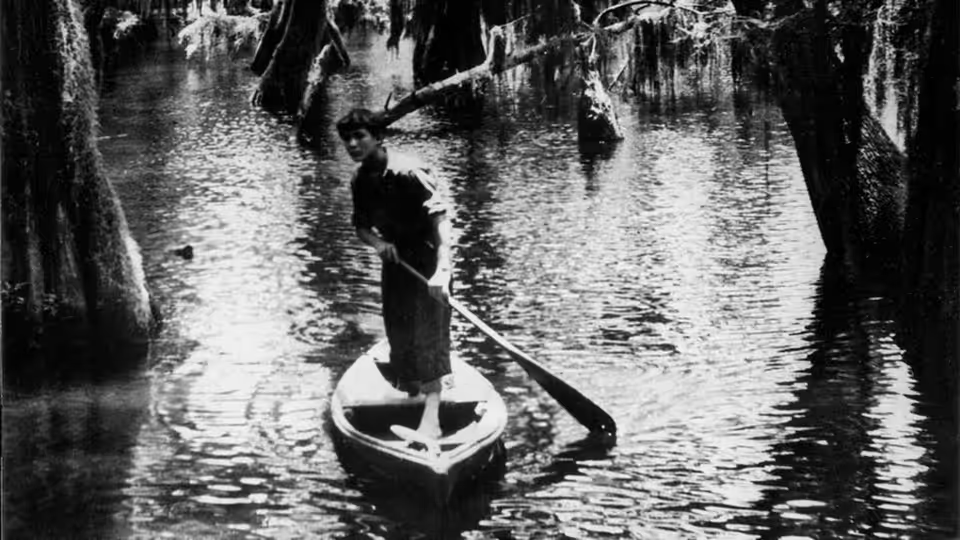
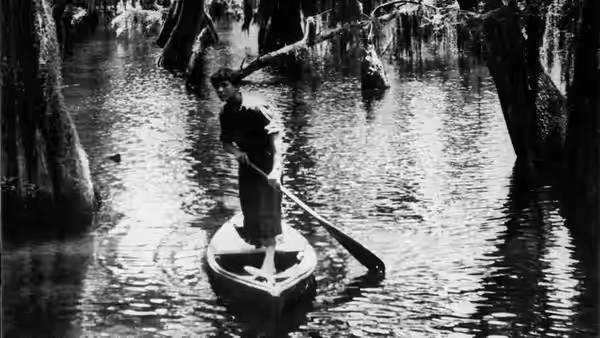
Richard Leacock’s photography makes the opening canoe journey a reason to stay with the film, even before the slender story has much to offer. We felt ourselves relax as the boy travelled through the bayou, carried along by Virgil Thomson’s music and the pleasure of being allowed to look. The images give the waterway an interest that does not depend on an incident waiting around the next bend. There is confidence in spending so much of an adventure simply attending to its surroundings.
Virgil Thomson’s score is especially valuable in a film with so little speech, giving the canoe journey movement without making it feel hurried. It encourages curiosity about the bayou and affection for the boy, and the pictures are strong enough to deserve both. We are less persuaded when that same affectionate mood extends to the oil workers. The music’s charm helps the favourable portrait go down easily, which is precisely why it needs listening to with a little suspicion.
Helen van Dongen’s editing keeps the limited action from feeling merely strung out, although there are stretches where the slightness of the story becomes difficult to ignore. The film can generate suspense, and its quietness makes those changes of pace effective. The story credited to Frances H. Flaherty and Robert J. Flaherty gives the people too little substance, however, especially beside the attention paid to their surroundings. At 78 minutes, the film is short enough to sustain its leisurely approach. We still wanted more reason to care about the family beyond their place in these images.
Joseph Boudreaux plays The Boy, and having a child at the centre gives the film a convincing reason to look at familiar surroundings with curiosity. Lionel Le Blanc and E. Bienvenu play His Father and His Mother, but the sparse dialogue gives their relationships little room to develop. Frank Hardy’s The Driller and C.P. Guedry’s His Boilerman receive a generosity that becomes hard to accept without question. The problem is the suggestion that friendly workers leave nothing else worth asking about their industry.
An adventure this quiet needs no apology for keeping its action scarce, and the unforced stretches are often the most absorbing. Its interest in an actual landscape does, however, invite questions about what industrial work means for the people living there. The film need not supply a lecture, but its confidence in the drillers ought to rest on more than their agreeable presence. Come prepared for a quiet evening, and keep a little of that goodwill in reserve.