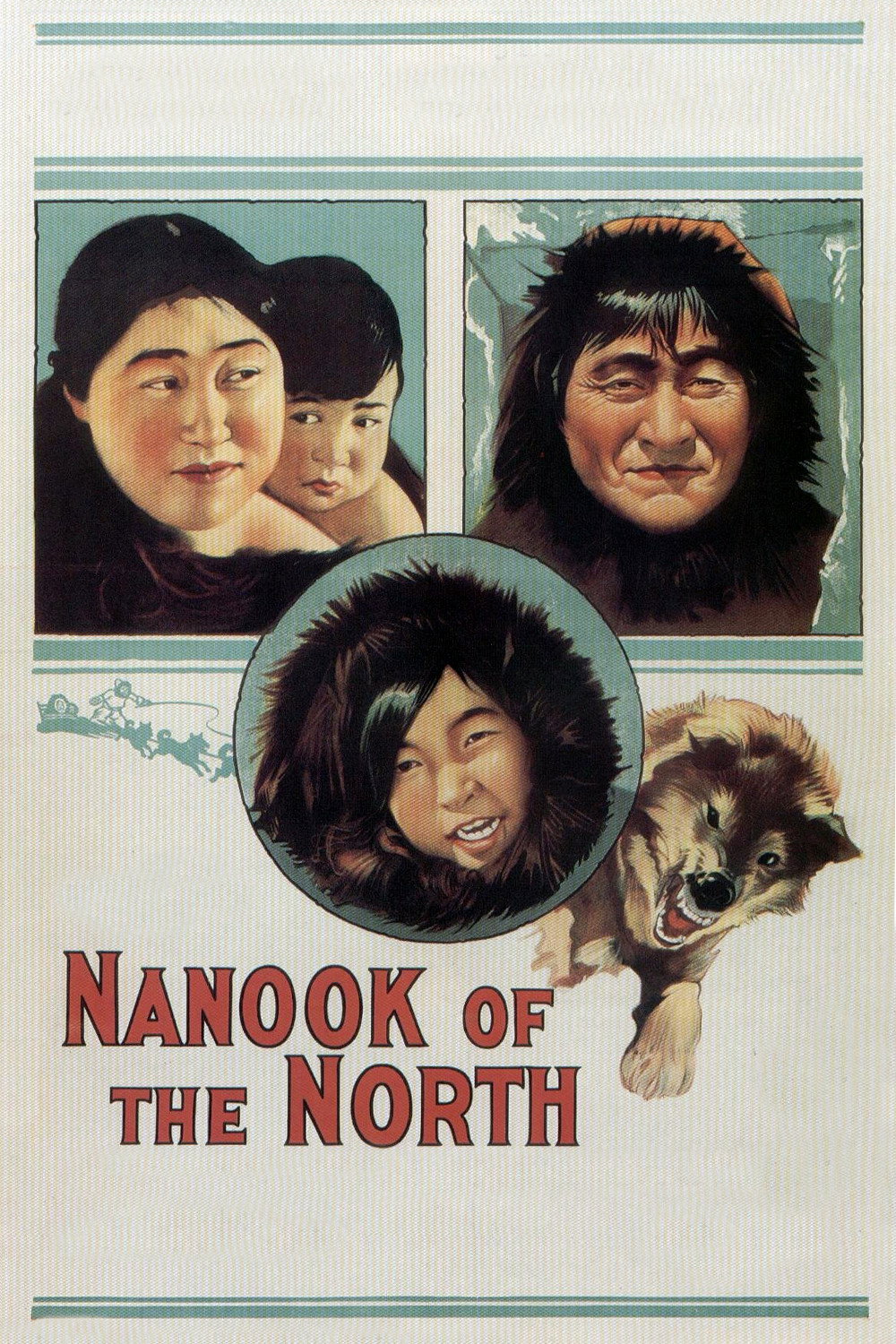
Flaherty made the documentary a story with a hero in it, and he staged as much as he found. The method looks indefensible on paper; in Nanook of the North it works. Whether it kept working for the next thirty years is another matter.
Fi1m perspective
Partway through Nanook of the North (1922) a man builds an igloo, cutting each block from the snow with a long knife, and then fits a slab of clear ice into the wall for a window and sets a wedge of snow outside it to bounce the light in. Elsewhere Flaherty had an igloo built with one side missing so the camera could watch the family go to bed. Those two facts are his cinema. He would wait as long as a thing took, and he would rearrange the thing so it could be filmed at all. The walrus hunt is a line of men on a rope being dragged towards the surf by a beast we barely see, with no cut to let us off, and we held our breath through it and then felt slightly uneasy at how neatly we had been handled.
He came to film sideways. He had been a prospector in the Canadian north for years, took a three-week cinematography course in Rochester, New York, and shot a great deal on his expeditions that nobody saw, because the negative caught fire. When he went back it was with a story: one hunter, one family, one year. After Nanook came Moana (1926), a film of Polynesian life to which John Grierson first attached the word documentary; Tabu (1931), a South Seas story made with F.W. Murnau; Man of Aran (1934); The Land (1942); and Louisiana Story (1948). His wife Frances was his creative partner, editor and producer, and Helen Van Dongen cut the later films.
The method never changed. He lived among his subjects for long stretches, learned what they did, then arranged it into what he called natural drama, with re-enactments where the present would not oblige. "Sometimes you have to lie," he said. "One often has to distort a thing to catch its true spirit." In Nanook the lie is out in the open and the film survives it: the harpoons are out of date, the wife is not the hunter's wife, and none of it matters much while Allakariallak is grinning at a gramophone. By Man of Aran the complaint had hardened. Critics said he had shown the islanders fighting the sea with a romance that did not match how they lived, and that he had no interest in the present of anywhere he pointed a camera. We have not reviewed it and will not judge it here, but the charge fits what we can see in Nanook, where the trading post gets a scene and the rifles get none.
Louisiana Story watches oil drilling arrive in a bayou community and is usually taken as the fullest statement of what he did: long takes, close attention to light and texture, a rhythm found in the cutting rather than the plot. He saw better than almost anyone who came after him, and he did not want to see everything. Start with Nanook, where the seeing is at its purest and the arranging is easiest to spot, and decide for yourself how much a documentary is allowed to invent.
Biography
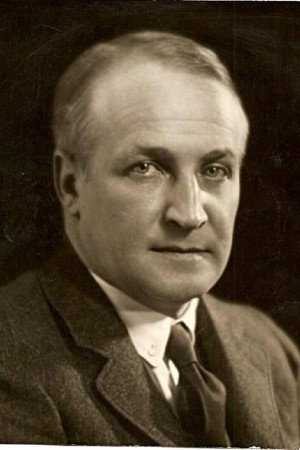
Robert J. Flaherty was an American filmmaker who directed, produced, wrote, edited and photographed Nanook of the North (1922).
Born on 16 February 1884 in Iron Mountain, Michigan, he worked as a prospector and explorer in northern Canada before turning to film. He died on 23 July 1951 in Dummerston, Vermont.
His later films include Moana (1926), Man of Aran (1934) and Louisiana Story (1948). He collaborated with his wife Frances Hubbard Flaherty on several projects.