Gaspar Noé’s Love is a disappointing romance with moments of real tenderness. Its explicit sex scenes earn their place, but thin characters and laboured conversations make 134 minutes feel like a considerable commitment.
Gaspar Noé wants to give a couple’s sexual life the sustained attention that screen romances usually grant their conversations. That is a worthwhile ambition, and Love has enough tenderness to justify the attempt. It is also a disappointing film, because the lovers become less interesting the longer they talk, and 134 minutes allows them plenty of opportunity. The difficulty is sustaining concern for people whose unhappiness soon becomes predictable.
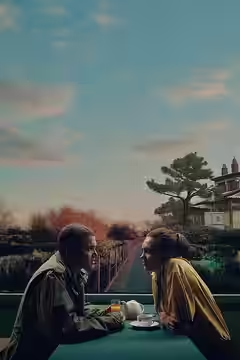
Murphy, played by Karl Glusman, is an aspiring filmmaker looking back on a relationship from an unhappy present. The fragmented recollections make sense as the habits of someone who keeps returning to what he has lost, hoping repetition will somehow help. His self-absorption need not be a problem; unhappy, selfish people can be absorbing company. Here, however, the screenplay gives his longing so little variety that we begin waiting for another thought to occur to him.
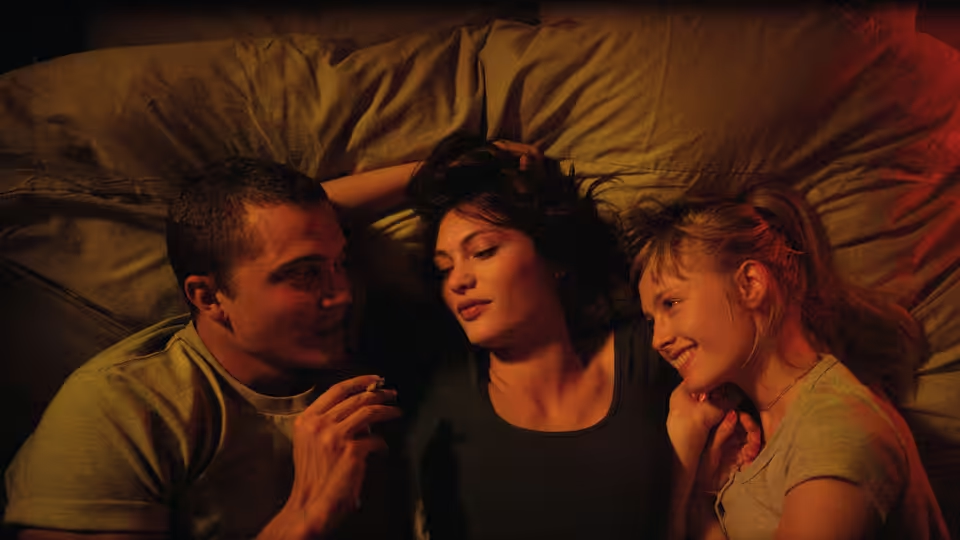
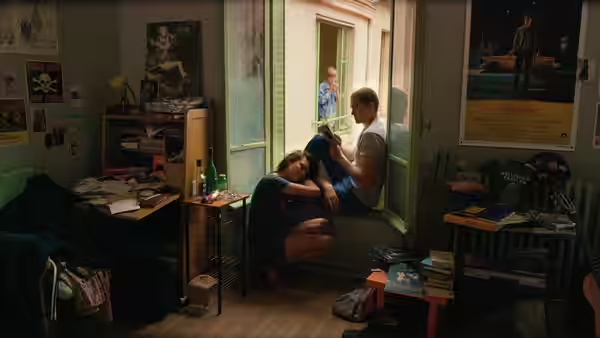
Benoît Debie lights the lovers so that their physical closeness can seem tender even when the images are explicit. The sex is allowed to look pleasurable, which makes its place among these unhappy recollections more affecting. We were unexpectedly saddened by the remembered intimacy between Murphy and Electra, because the film keeps setting it against his dissatisfaction in the present. For a while, it makes the pain of remembering physical happiness recognisable, without requiring us to admire the man doing the remembering.
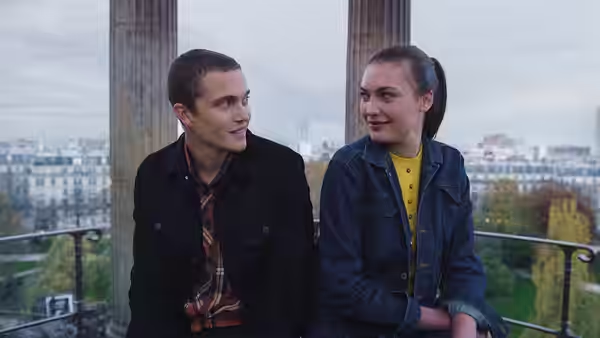
Aomi Muyock gives Electra a vulnerability that occasionally interrupts Murphy’s account of himself. There are glimpses of a woman with feelings that cannot be reduced to his regret, and they make us wish the film would spend longer with her. Klara Kristin, as Omi, has less room to become someone we can consider separately from the central man’s predicament. Gaspar Noé’s screenplay keeps bringing the conversations back to sex and unhappiness, with too little curiosity about how these people might behave when neither is being discussed.
Gaspar Noé and Denis Bedlow give the memories a drifting rhythm in the editing, so the relationship can be recalled in fragments rather than explained in sequence. The approach works while each return changes our sense of the couple, then becomes wearing as the same feelings recur. Samantha Benne’s production design contributes to the enclosed feeling, but the surroundings offer little relief from Murphy’s preoccupations. As the encounters accumulate, the lack of much life beyond the relationship becomes harder to ignore.
The explicit sex is not the obstacle to emotional involvement, and removing it would leave the film poorer. A romance can be graphic, awkward and deeply affecting without making its lovers pleasant people. What is missing here is enough difference between one argument and the next, or enough discovery within them, to justify staying so close for so long. The scenes continue after their emotional point is clear, and the dialogue too often states what the bodies have already made apparent. For an evening in with someone we like, we would choose lovers with more to say to each other.