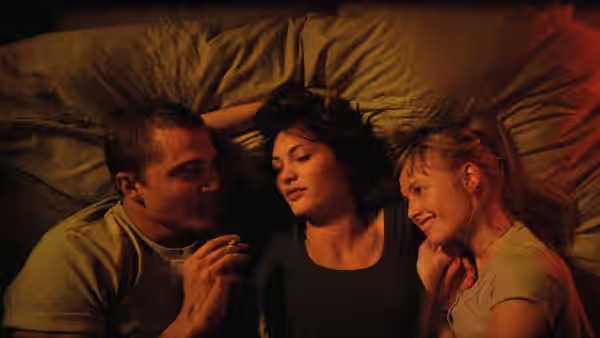
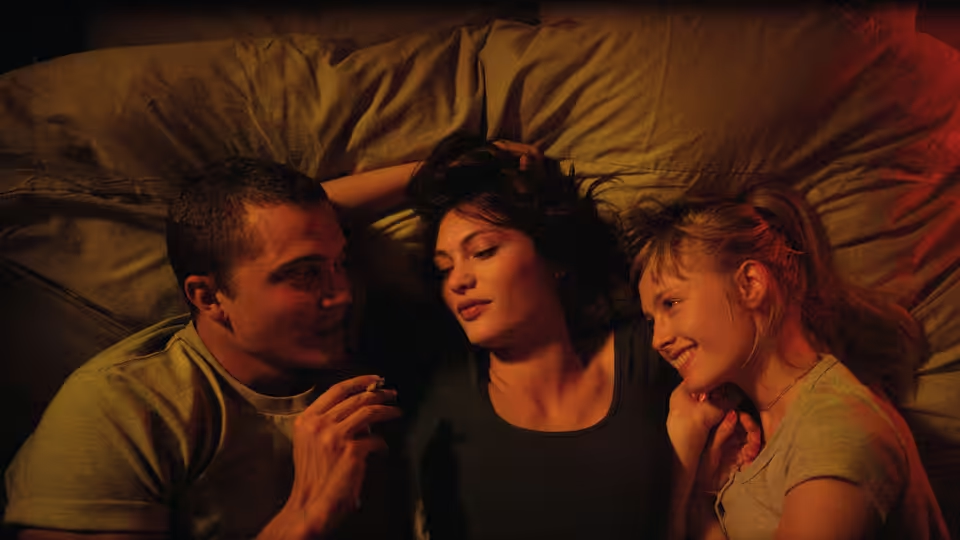
Murphy (Karl Glusman) lying in bed between Electra (Aomi Muyock) and Omi (Klara Kristin)
Film review

Love

2015 · Directed by Gaspar Noé · 2h 14m

In a sentenceThe sex is tender; the conversations make a persuasive case for going home alone

Murphy (Karl Glusman) is an aspiring filmmaker preoccupied with memories of his former relationship with Electra (Aomi Muyock), an aspiring artist. Omi (Klara Kristin) is the other woman in his life, but he keeps looking back from an unhappy present. He wants to make a film that brings sexual intimacy and emotion together. His own recollections move between sex, arguments and moments of closeness, arriving in fragments rather than chronological order. The people around him have to compete with his attachment to the relationship he remembers and his dissatisfaction with the life he now has.

Plays from YouTube when you press play; nothing loads from them until then.

Fi1m review

Gaspar Noé’s Love is a disappointing romance with moments of real tenderness. Its explicit sex scenes earn their place, but thin characters and laboured conversations make 134 minutes feel like a considerable commitment.

Gaspar Noé wants to give a couple’s sexual life the sustained attention that screen romances usually grant their conversations. That is a worthwhile ambition, and Love has enough tenderness to justify the attempt. It is also a disappointing film, because the lovers become less interesting the longer they talk, and 134 minutes allows them plenty of opportunity. The difficulty is sustaining concern for people whose unhappiness soon becomes predictable.

Murphy, played by Karl Glusman, is an aspiring filmmaker looking back on a relationship from an unhappy present. The fragmented recollections make sense as the habits of someone who keeps returning to what he has lost, hoping repetition will somehow help. His self-absorption need not be a problem; unhappy, selfish people can be absorbing company. Here, however, the screenplay gives his longing so little variety that we begin waiting for another thought to occur to him.

Benoît Debie lights the lovers so that their physical closeness can seem tender even when the images are explicit. The sex is allowed to look pleasurable, which makes its place among these unhappy recollections more affecting. We were unexpectedly saddened by the remembered intimacy between Murphy and Electra, because the film keeps setting it against his dissatisfaction in the present. For a while, it makes the pain of remembering physical happiness recognisable, without requiring us to admire the man doing the remembering.

Aomi Muyock gives Electra a vulnerability that occasionally interrupts Murphy’s account of himself. There are glimpses of a woman with feelings that cannot be reduced to his regret, and they make us wish the film would spend longer with her. Klara Kristin, as Omi, has less room to become someone we can consider separately from the central man’s predicament. Gaspar Noé’s screenplay keeps bringing the conversations back to sex and unhappiness, with too little curiosity about how these people might behave when neither is being discussed.

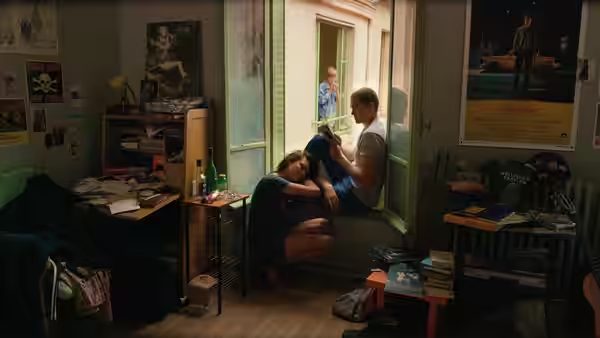
Gaspar Noé and Denis Bedlow give the memories a drifting rhythm in the editing, so the relationship can be recalled in fragments rather than explained in sequence. The approach works while each return changes our sense of the couple, then becomes wearing as the same feelings recur. Samantha Benne’s production design contributes to the enclosed feeling, but the surroundings offer little relief from Murphy’s preoccupations. As the encounters accumulate, the lack of much life beyond the relationship becomes harder to ignore.

The explicit sex is not the obstacle to emotional involvement, and removing it would leave the film poorer. A romance can be graphic, awkward and deeply affecting without making its lovers pleasant people. What is missing here is enough difference between one argument and the next, or enough discovery within them, to justify staying so close for so long. The scenes continue after their emotional point is clear, and the dialogue too often states what the bodies have already made apparent. For an evening in with someone we like, we would choose lovers with more to say to each other.

Critical consensus AI synthesised

58
Positive
8
Mixed
8
Negative
6

The consensus on Love is mixed, though praise repeatedly centres on the filming of its explicit sex scenes. The reviews find tenderness, melancholy and careful lighting and choreography in material that might otherwise seem merely provocative; several see Noé’s treatment of sexual intimacy as unusually frank about how relationships work. Even some sceptical critics admire the dreamy imagery and 3D effects, while supporters find the recollection of a lost relationship poignant rather than simply self-absorbed.

Reservations cluster around thin characters, awkward dialogue, uneven performances and a length that tests even sympathetic reviewers. The spread is wide: critics disagree over whether the film gives its sexual encounters enough emotional weight, and whether its fragmented storytelling deepens the sense of memory or makes the drama harder to follow. RogerEbert.com finds a mournful exploration of sensuality in the flashbacks, whereas Total Film considers the fractured chronology confused and the performances hollow.

Variety
21 May 2015 · festival review · Peter Debruge
80*

Noé delivers a courageously personal, semi-autobiographical account of an aspiring filmmaker torn between two women that explores the emotional foundation of sex more honestly than most films. The explicit 3-D result proves surprisingly tame and soft-core for the director, fulfilling the lead character’s ambition of depicting sentimental sexuality.

Read the full review →
Vulture
31 October 2015
80*

Praises how the film makes sex look awesome and sad in all the right ways, calling the entrapment vivid and poignant despite its solipsistic world.

Read the full review →
RogerEbert.com
30 October 2015 · Simon Abrams
75*

The film unsentimentally depicts a past sexual relationship through fragmented flashbacks from the perspective of an unlikeable protagonist trapped in an unsatisfying present. It succeeds as a mannered, mournful exploration of sensuality and memory when viewed as an over-determined work about characters seeking escape in the past.

Read the full review →
Financial Times
19 November 2015 · Danny Leigh
74*

The critic describes the film as sad and smudgy, praising Noé’s conjuring of drug-induced memories of a former relationship through its explicit scenes and visual style. He notes the potent 3D effects amid the story of a ruinous relationship.

Read the full review →
Evening Standard
20 November 2015 · Charlotte O'Sullivan
70*

After a slow start, Noé’s self-referential soap proves more-ish. It highlights Electra as a convincingly vulnerable aspiring artist and lover-of-threesomes, and praises the novelty of allowing a heroine to have rotten-looking teeth.

Read the full review →
The AV Club
22 May 2015 · C+ · Ignatiy Vishnevetsky
63

It's woodenly earnest with on-the-nose dialogue and amateur actors, but fitfully compelling as an exercise in limited style and psychological interiority.

Read the full review →

Straight answers AI written, from our review

Is Love worth watching?
Love offers moments of tenderness, but we find it a disappointing romance and score it 54 out of 100. Its explicit intimacy may interest viewers drawn to frank relationship dramas, but thin characters, repetitive arguments and laboured conversations make its 134 minutes difficult to recommend.
How long is Love, and what is it rated?
Love runs 2h 14m. It is a drama and romance film.
Where can I watch Love in Greece?
Love is not on any streaming or rental service in Greece at the moment. It is available in 8 other countries; change your country at the top of the page to see where. Availability is checked daily.
How violent or frightening is Love, and is it suitable for children?
Love has a UK 18 certificate and contains explicit sex, making it unsuitable for children and younger teenagers. The sexual content is the main concern highlighted in our review, rather than violence or fear; we find tenderness in those scenes, but they suit adults comfortable with graphic sexual imagery.
How does Love compare to Weekend?
Love is the less persuasive romance beside Weekend, which we recommend for giving physical intimacy a fuller emotional context through two men talking and listening. Both find room for tenderness, but Love repeats its lovers’ unhappiness until it becomes wearing, while Weekend makes conversation revealing, despite occasional dialogue that sounds too written.
What should I watch after Love?
After Love, try Weekend (2011, Fi1m 86): Two men talking and listening give physical intimacy a persuasive emotional context. Then Happy Together (1997, Fi1m 86): Repeated separations and reconciliations reveal the exhausting pull of an unhappy relationship.

Cast

If you liked this, try…

  1. Weekend (2011, Fi1m 86)Two men talking and listening give physical intimacy a persuasive emotional context.

  2. The Piano Teacher (2001) · not on Fi1m yetA more disturbing study of desire, with sharply drawn lives beyond sex.

  3. Happy Together (1997, Fi1m 86)Repeated separations and reconciliations reveal the exhausting pull of an unhappy relationship.

  4. Scenes from a Marriage (1973) · not on Fi1m yetFor arguments that keep revealing something new about the people having them.

  5. Hiroshima mon amour (1959) · not on Fi1m yetPhysical closeness and troubled memory meet in a richer account of longing.