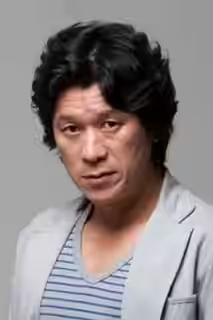
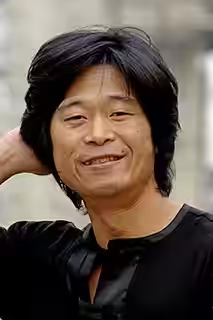
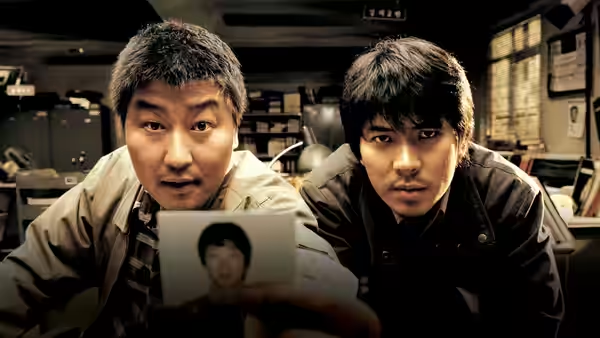
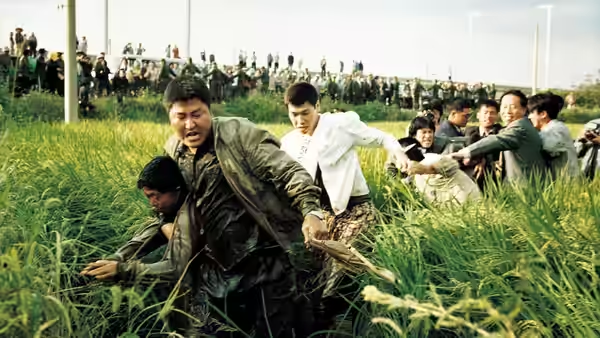
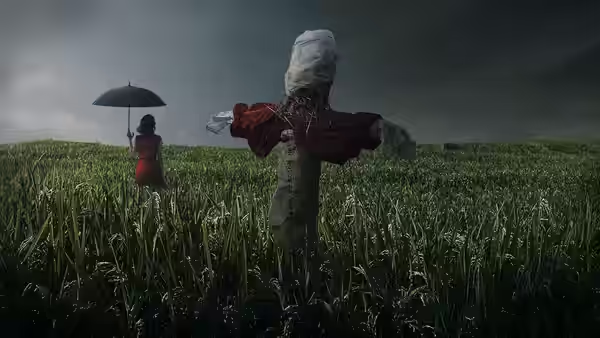
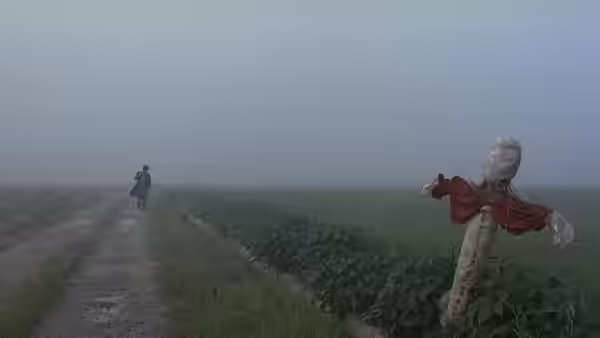
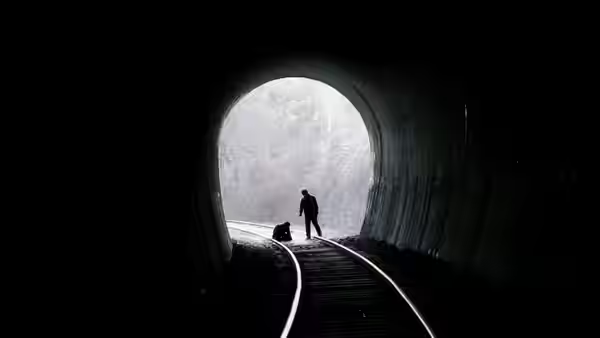
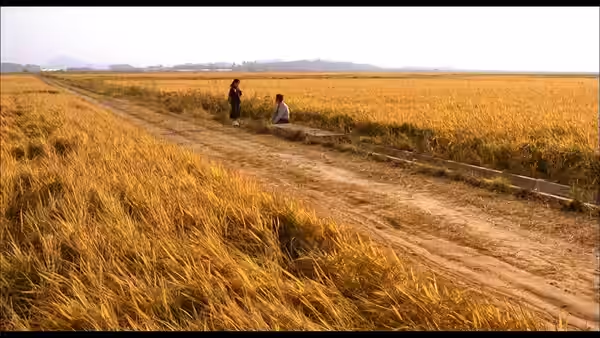
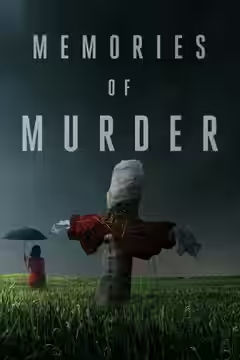
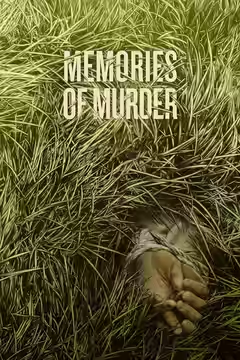
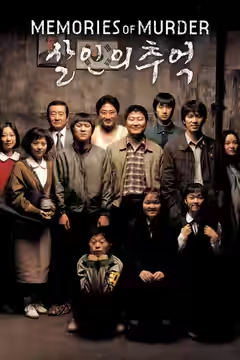
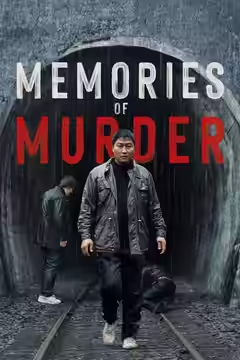
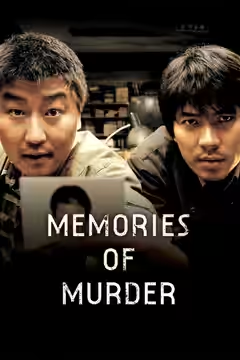
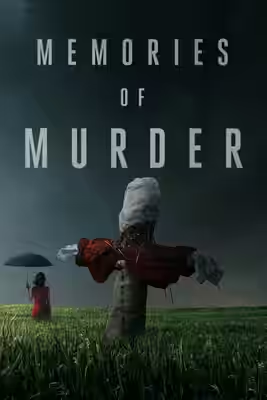
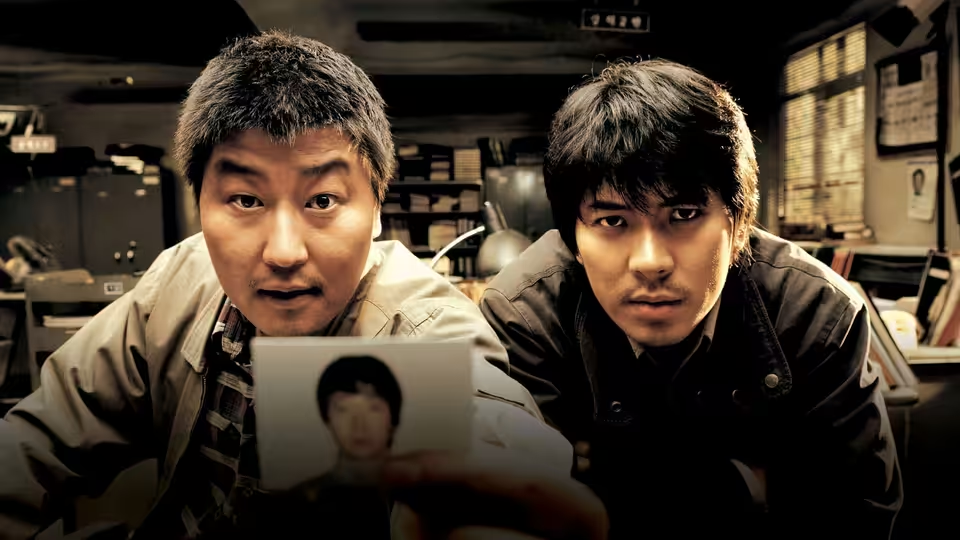
A scene from Memories of Murder
Film review

Memories of Murder

2003 · Directed by Bong Joon Ho · 2h 11m

In a sentenceThe evidence is under a tractor, the suspect is whoever looked at them funny, and it is raining again

A farming town in Gyeonggi Province, South Korea, autumn 1986. A woman’s body is found in a concrete drainage ditch beside a rice field, and the local police have never dealt with anything like it. Detective Park Doo-man (Song Kang-ho) believes he can tell a guilty man by looking him in the eye; Detective Cho Yong-koo (Kim Roe-ha) prefers a flying kick to a question. Detective Seo Tae-yoon (Kim Sang-kyung) arrives from Seoul with a notebook and a belief in paperwork, and is mistaken for a suspect within minutes. Children, a tractor and reporters trample the crime scene before anyone ropes it off. The first man dragged in is Baek Kwang-ho (Park No-sik), a slow local boy Park has a feeling about. Then a second body is found.

Plays from YouTube when you press play; nothing loads from them until then.

Fi1m review

Bong Joon Ho’s second feature is a police procedural about police who cannot do the procedure, and it is one of the best films of its kind we know. Funny, then not funny, then something else; the long middle stretch is the only place it drags.

Bong Joon Ho made this in 2003, before Parasite made him famous in Britain, and it is built on a real case, a run of murders south of Seoul in the late 1980s, unsolved when the film was written. Bong and his co-writer Shim Sung-bo do not solve it either. They spend 131 minutes with the men who tried, and the result is a police film in which almost nothing the police do is any use. We would tell a stranger to see it, and we do not say that often.

The joke, and it is a joke for about forty minutes, is that these detectives are terrible at their job. Song Kang-ho’s Park Doo-man is a country policeman who thinks he has a gift: he stares at a suspect and knows. Kim Sang-kyung’s Seo Tae-yoon comes from Seoul in a long coat and wants documents, timings, a map. Kim Yu-seon puts Park in a leather jacket that has seen rain and Seo in one that has not yet. Song plays Park with a slow, satisfied face, a man who is nearly always wrong and nearly never doubtful, and it is a great comic performance right up to the point where it stops being one.

Kim Hyung-koo shoots the countryside in flat grey daylight, wide, with fields to the horizon and a body somewhere in them. At night it rains, and the only light is torches and a squad car, so the woods become small bright circles with black between them. Ryu Seong-hie’s police station has an interrogation room in the basement with a boiler, a pipe and a bulb, and it looks like a place where nobody would hear you. Taro Iwashiro’s score is a single mournful string theme used sparingly; it appears, does its work, and leaves.

Here is what got at us. Kim Roe-ha’s Cho, the partner, greets suspects with a running drop-kick, and the first time he does it we laughed, because Bong stages it like slapstick. The man he is kicking is Baek Kwang-ho, whom Park No-sik plays as a frightened child in a grown body, and by the second kick we felt sick, and a little ashamed of the first laugh. The brutality is funny because it is stupid, and then it is not funny because it is happening to someone.

Bong keeps widening the frame. This is South Korea under a military government, and the film notices it in passing: the town goes dark for civil-defence drills, riot police are unavailable because they have been sent to beat up students, and a forensic sample has to go abroad because nobody at home can read it. Kim Seon-min’s editing lets these details sit inside ordinary scenes rather than flagging them. Byun Hee-bong and Song Jae-ho, as the sergeants running the station, are exactly the kind of tired men who let this happen.

It is not flawless. The middle hour brings in one suspect after another, and the shape repeats: a lead, an interrogation, a collapse, more rain. Go Seo-hee’s Officer Kwon Kwi-ok is the only person in the building who does real detective work, and the script gives her a fraction of the time it gives the men who do not. Park Hae-il, as a factory worker who comes into view late in the first half, is good in a part we cannot say much about.

Most critics admire it, and one dissenting review calls it too obedient to the serial-killer thriller. We think that misses the point. Bong uses the conventions, the montage of clues, the suspect in the chair, so that we can watch each one fail. Song Kang-ho’s staring method is what the genre has always told us works, and here it does not. The second half goes somewhere we will not describe, except to say that the real case was resolved years after the film was made, and that this changes nothing about how it plays.

The 15 certificate is fair: the violence is mostly to suspects, not victims, and that is deliberate. Watch it with someone who will laugh at the drop-kick, and then watch them stop.

Critical consensus AI synthesised

79
Positive
14
Mixed
0
Negative
1
Los Angeles Times
30 October 2019 · Justin Chang
90*

The critic calls the film a brilliant investigative procedural and one of Bong’s finest, still regarded as a masterpiece comparable to Zodiac for its handling of a grim true-crime saga. It highlights Bong’s singular command of tension, technique, and gallows humor, recommending it for a retrospective screening.

Read the full review →
RogerEbert.com
14 December 2012 · Seongyong Cho
90*

The critic praises Bong Joon-ho’s film as a superb country thriller that uses its serial-killer investigation to expose the injustices and brutality of 1980s South Korean society under military dictatorship. It singles out the vivid recreation of the era, the dynamic performances (especially Song Kang-ho), and the mix of black humor, tension, and social critique.

Read the full review →
Screen Daily
6 August 2003
90*

The critic describes the film as one of the most complete and compelling to emerge from South Korea in recent years, a detective thriller that is mysterious, dramatic, creepy and corroding with a chilling twist. It praises the even-handed direction, character development, assemblage of clues and atmosphere while noting its strong domestic box office.

Read the full review →
Time Out
21 March 2012 · TR
90*

The review calls the film a huge critical and commercial success that fictionalises the hunt for Korea's first recorded serial killer. It singles out the plentiful gallows humour from clashes between local and urban detectives, Bong's brilliant multi-perspective direction, and tremendous performances amid the repressive 1980s context.

Read the full review →
Empire
11 September 2020 · John Nugent
85*

The critic views the re-release as a chance to appreciate the film's remarkable measure and control as an early sign of Bong's mastery, with compelling thrills, visual prowess and dark comedy. It singles out the gravity given to each murder scene amid the farcical police ineptitude.

Read the full review →
IndieWire
20 April 2021 · David Ehrlich
85*

The piece argues that the real-world resolution of the case makes the film even more haunting and effective. It singles out the ending and the film’s blend of dark comedy with philosophical ambiguity about justice.

Read the full review →

Straight answers AI written, from our review

Is Memories of Murder worth watching?
Memories of Murder is worth watching for anyone who can take a crime film in which the police fail at almost everything, and we scored it 91, which means we would tell a stranger to see it. It starts as comedy about incompetent detectives and turns into something much bleaker. The middle hour repeats itself, but that is the only place it drags.
How long is Memories of Murder, and what is it rated?
Memories of Murder runs 2h 11m. It is a crime and drama film.
Where can I watch Memories of Murder in Chile?
Memories of Murder is not on any streaming or rental service in Chile at the moment. It is available in 8 other countries; change your country at the top of the page to see where. Availability is checked daily.
How violent or frightening is Memories of Murder, and is it suitable for children?
Memories of Murder carries a UK 15 certificate, and we think that is fair: it is about a series of murders, but the violence on screen is mostly the police beating suspects, including a frightened, slow local boy, and it is meant to make you uncomfortable. It is not for children. Teenagers who can handle a grim, adult crime drama with brutality and dread will be fine.
How does Memories of Murder compare to Zodiac?
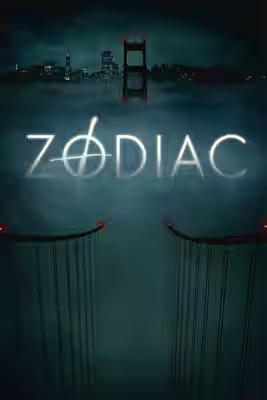
Memories of Murder and Zodiac are both about real unsolved cases and both watch investigators drown in leads that go nowhere, but Bong's film is funnier, angrier and shorter, and its violence comes from the police rather than the killer. Fincher's is colder and more patient, built on paperwork and repetition. We rate Bong's the higher of the two; Zodiac suits those who want the slow procedural itself.
What should I watch after Memories of Murder?
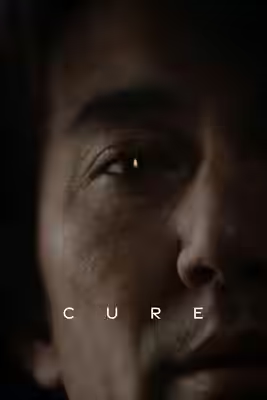
After Memories of Murder, try Zodiac (2007, Fi1m 91): Fincher’s account of another unsolved case, colder, longer and just as haunted by paperwork. Then Cure (1997, Fi1m 85): Kiyoshi Kurosawa’s detective story in which the investigation infects the investigator.

Cast

If you liked this, try…

  1. Zodiac (2007, Fi1m 91)Fincher’s account of another unsolved case, colder, longer and just as haunted by paperwork.

  2. Cure (1997, Fi1m 85)Kiyoshi Kurosawa’s detective story in which the investigation infects the investigator.

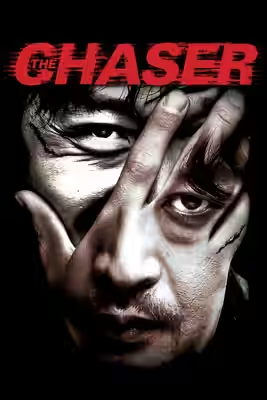
  3. The Chaser (2008) · not reviewed yetSeoul at night, a former policeman, and an institution that will not listen to him.

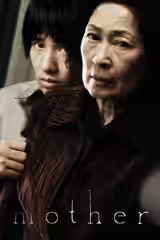
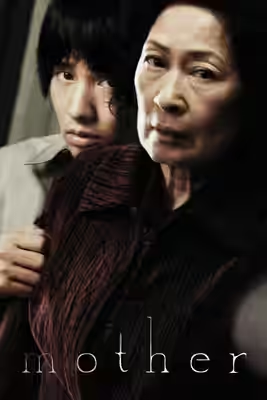
  4. Mother (2009) · not reviewed yetBong again, with a small-town killing and a woman who refuses the official answer.

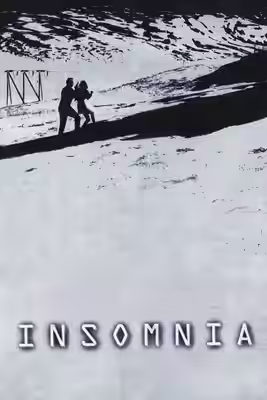
  5. Insomnia (1997) · not reviewed yetThe Norwegian original: a detective who cannot sleep and begins to make things worse.

Free account

Know what to watch tonight

Two lists that know where things are streaming, collections you can share, your own score beside ours, and Discover that remembers what you have seen.

  • Want to see, sorted by what is streaming now
  • Seen, with your score out of ten
  • No adverts, ever