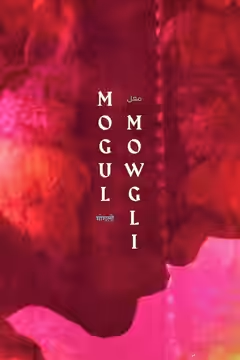
Riz Ahmed gives this feverish drama about a rapper and serious illness its force. The family scenes are warmer and sharper than some of the cultural symbolism, which occasionally explains what his performance has already made clear.
Mogul Mowgli is a good, sometimes overburdened drama about a rapper whose illness makes it impossible to keep his troubles at a comfortable distance. Bassam Tariq and Riz Ahmed, who wrote it together, let performance, family comedy and disturbing visions interrupt one another. The interruptions suit Zed, a man having difficulty with both his body and his sense of belonging. We recommend it for the acting and the uneasy closeness of the family scenes, with some patience required when the film starts explaining itself.
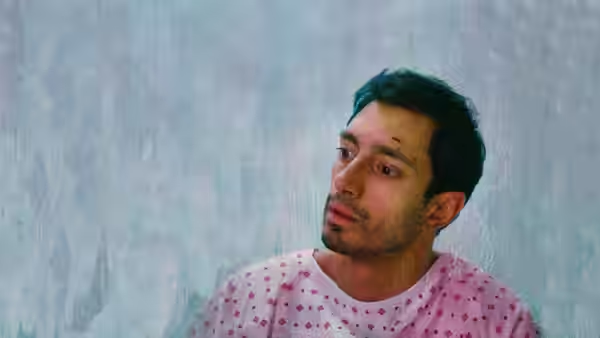
Riz Ahmed gives Zed enough confidence on stage to make his vulnerability elsewhere hurt. The concert scenes establish what he can do with language, and the rapping feels necessary to the character rather than included to certify his talent. We found the hospital scenes unexpectedly upsetting: the same performer who commands attention has become painfully exposed to it. His performance allows embarrassment and humour into the illness, which keeps Zed from becoming merely a brave man suffering for our benefit.
Bashir, played by Alyy Khan, gives the family material equal weight. The banter has the awkward warmth of people who know each other well enough to cause damage without much preparation, and both actors let affection survive the friction. This is where the film’s concern with inheritance becomes easiest to understand, in a father and son who cannot simply put their differences aside. We wanted more time with them, because their exchanges are more absorbing than some of the explanations attached to Zed’s troubles.
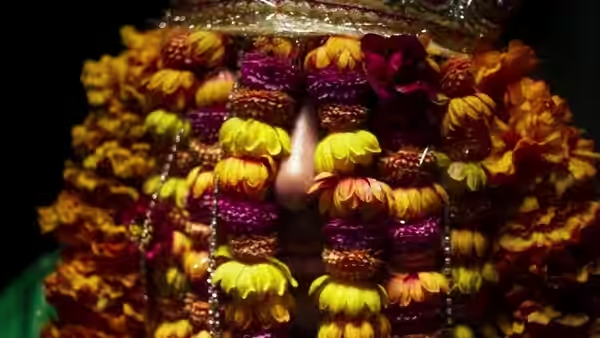
Annika Summerson’s cinematography makes the visions feel intrusive, with images that isolate Zed even as the film fills with family history. Francesca Massariol’s production design works most clearly in the hospital scenes, giving his distress an ordinary setting that stops the strangeness from becoming decorative. Editors Adam Biskupski and Hazel Baillie keep shifting between comedy, illness and nightmare, usually before we have settled into any one of them. The occasional jolt feels clumsy, but the restlessness suits a character who cannot get comfortable.
Paul Corley’s music contributes to the unease, though the rap is what we remember. With Zed performing, the film can bring family estrangement and questions of identity into the same stretch of sound without stopping for an explanation. That gives the musical passages a purpose beyond relief from the hospital. The score has a less distinctive job, and does not always seem necessary beside such an expressive lead performance.
The writing is less sure when it moves away from that performance. The relationship with Bina, played by Aiysha Hart, needs more attention if it is to carry the weight the film places on it, while some of the cultural symbolism makes an already clear point twice. The stretches concerned with recovery can also drift, despite a running time of 89 minutes. These are meaningful limitations in a film that asks us to follow several kinds of distress at once, although they never make Zed himself uninteresting.
Within the illness drama, the family humour is a welcome way of resisting solemnity. It leaves room for irritation and embarrassment, feelings that a more reassuring film might tidy away. We would have preferred fewer explanations and more room for those exchanges. Watch it for the rap and the difficult affection between father and son; allow for a script that sometimes presses harder than it needs to.