Satyajit Ray makes an aristocrat’s decline moving without excusing his pride. Chhabi Biswas and the musical performances earn our patience, though the drama between them sometimes feels too firmly fixed in place.
The Music Room is a patient, affecting film about a man whose love of music gives us a reason to care about his decline. Satyajit Ray takes aristocratic pride seriously without asking us to wish inherited privilege back into good health. We recommend it warmly, provided there is room in the evening for sustained listening. The dramatic pace can feel stiff, but the musical performances give that slowness a purpose beyond the solemn examination of a difficult man.
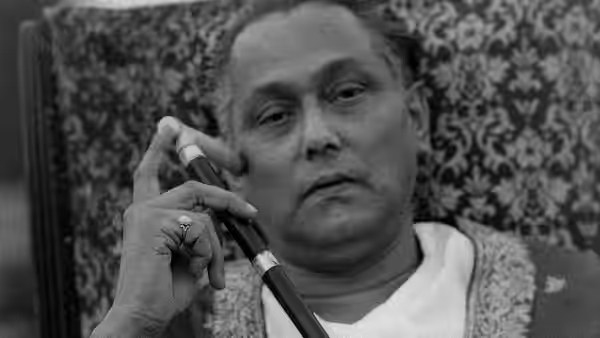
Chhabi Biswas makes Biswambhar Roy’s pride bearable to watch because his attachment to music feels so deep. There is selfishness in that attachment, and the performance allows us to recognise it without reducing him to a cautionary example. We were moved by his absorption in the musical performances; for those stretches, we could understand why he would resist anything that threatened them. That feeling gives his decline a sadness that a simple portrait of aristocratic foolishness would struggle to achieve.
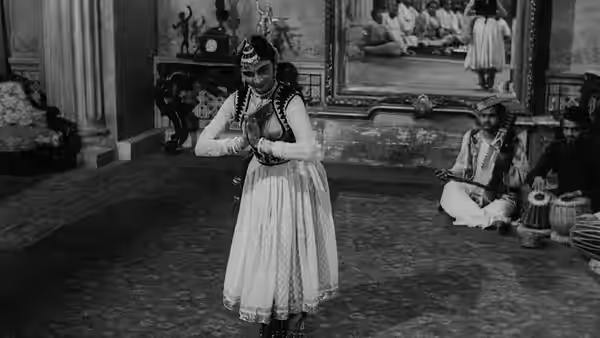
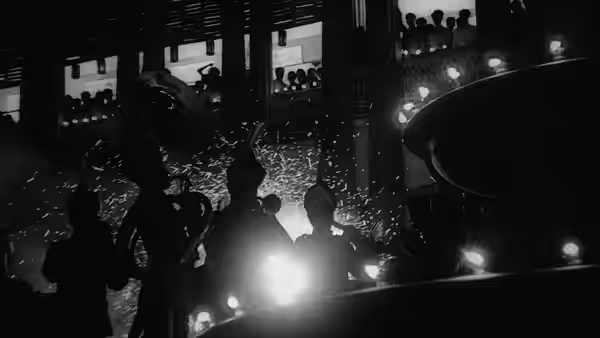
Subrata Mitra’s cinematography is especially persuasive in the musical passages, where watching the performers becomes a pleasure in itself. Their concentration matters, as does the sense of people doing demanding work before us. The care given to their presence makes Roy’s enthusiasm comprehensible, including to those who do not share his tastes. These passages also provide a welcome opportunity to look beyond the central character, whose troubles can otherwise make the film feel rather airless.
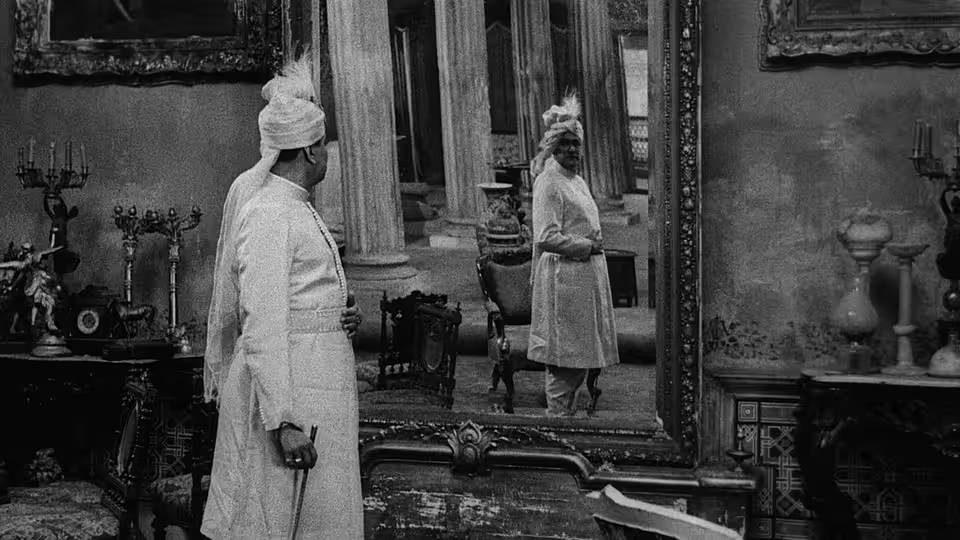
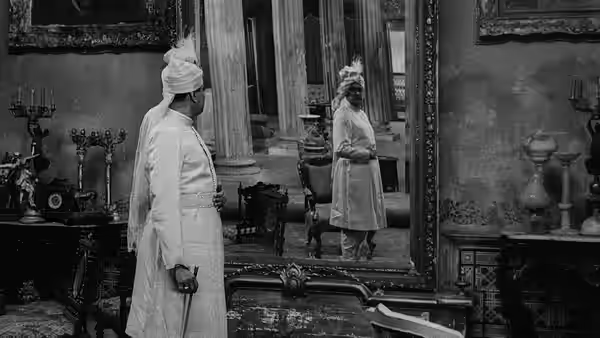
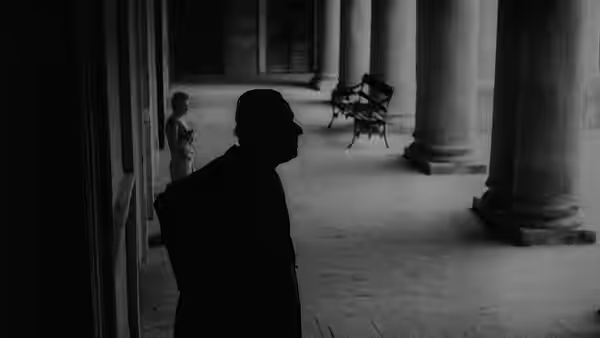
Bansi Chandragupta’s production design makes the music room convincing as a place someone might build a life around. Its formality suits Roy, and it also makes his attachment feel restrictive; we can admire the setting and still want some air. That is useful work in a film whose central character regards cultural refinement as a reason to hold his ground. The space helps us understand why leaving an established way of life behind might be difficult, even when staying seems foolish.
The music, credited to Robin Majumdar and Ustad Vilayat Khan, has to do more here than announce sadness or supply atmosphere. The sustained performances require attention, and they repay it by making Roy’s devotion something we can share for a while. We do not need to know the musical tradition to recognise concentration, skill or the pleasure of listening. Familiarity with Indian classical music will add to the experience, but treating it as an entrance requirement would shut out people the film can reach perfectly well.
Dulal Dutta’s editing is most convincing when it gives the music time without making us impatient for the story to resume. Between performances, the drama can feel over-insistent about Roy’s decline, and his pride is established more quickly than it is complicated. There are stretches when we understand his resistance and find ourselves waiting to learn something else about him. This is a limitation, though making everything move faster would risk losing the patience that serves the music so well.
Stories about fading aristocrats can make decay seem so tasteful that we forget what their subjects are defending. This one keeps Roy’s selfishness in view while allowing his love of art to be credible. We would have welcomed a little more dramatic movement, but we would not shorten the musical passages to get it. Choose it for an evening when a singer or dancer can have your full attention.