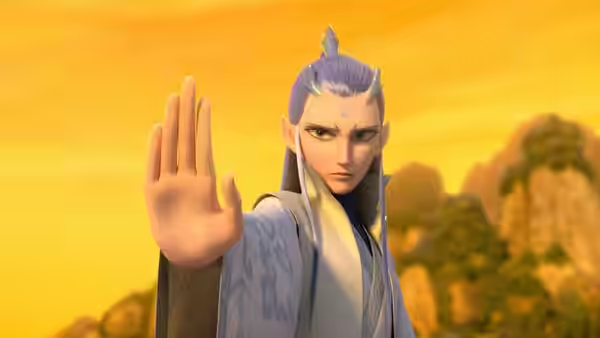
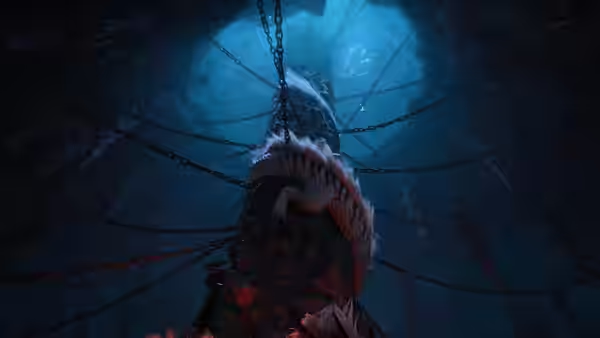
Jiaozi’s Ne Zha is worth the effort for its mischievous hero and the parents trying to protect him. Lively animation keeps it moving, even when the mythology grows muddled and the action becomes exhausting.
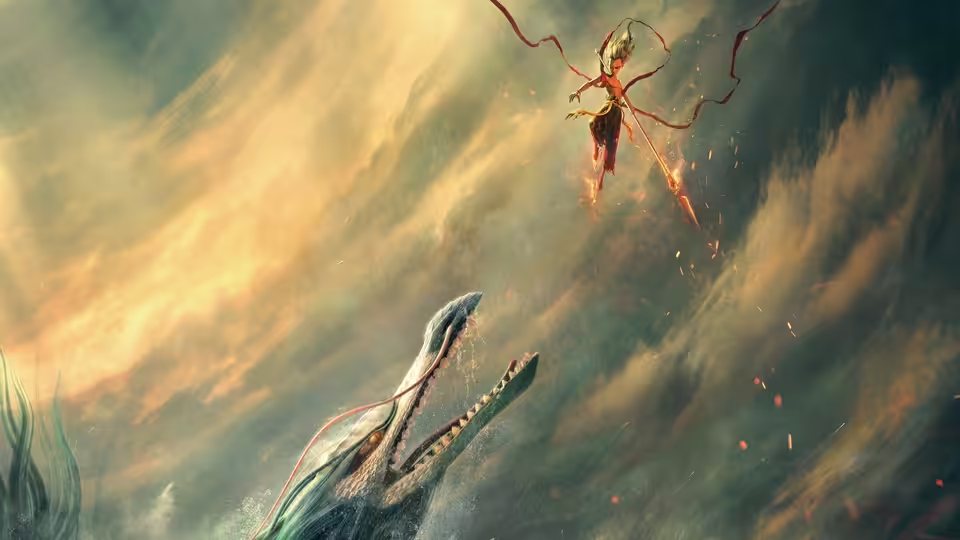
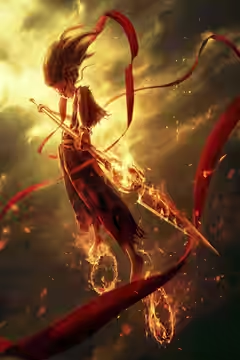
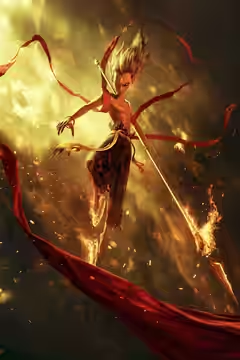
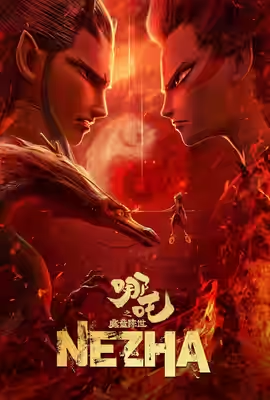
Ne Zha is a good animated adventure with an impatient streak that occasionally makes it hard work. Jiaozi directs a fantasy built around a child who refuses to let an unfair fate decide what sort of person he can be. We need to care about that child before the mythology can mean much, and the film gets this right. Its hero is difficult enough to be interesting, and the affection for him survives a considerable amount of supernatural complication.
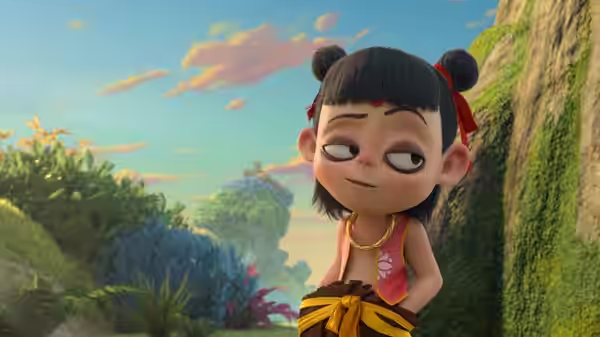
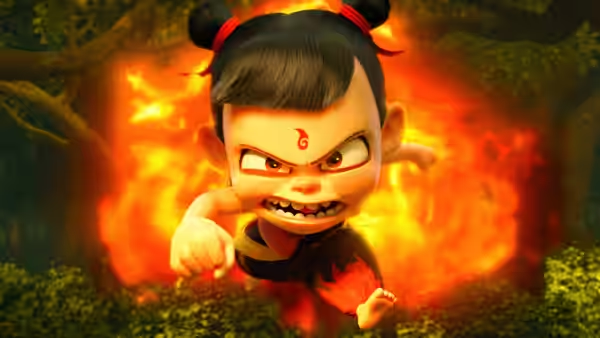
Young Nezha, voiced by Yanting Lü, is allowed to be troublesome rather than merely misunderstood in an appealing way. The mischief matters: it gives us someone to watch while the film explains the forces surrounding him, and prevents the message about self-determination from becoming a lesson in good behaviour. We do not have to approve of everything he does to want him treated fairly. Jiaozi’s screenplay is at its strongest when it lets that awkwardness remain.
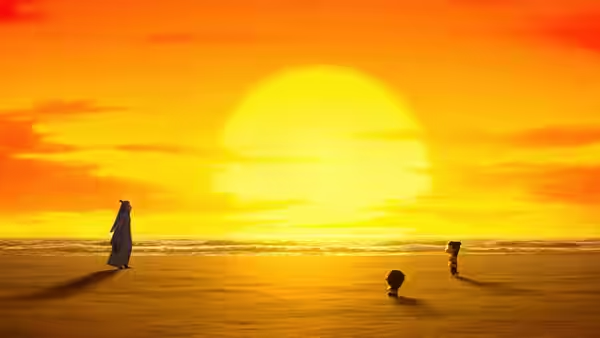
Li Jing and Lady Yin, voiced by Chen Hao and Lu Qi, give the rebellion a reason to matter beyond the boy’s own pride. We were moved by their attempts to protect him from other people’s prejudice. They have a child to care for, and the film allows that ordinary parental concern to remain important amid its fantasy business. The affection does not make Nezha easier to manage; his parents still have to deal with his behaviour.
The animation suits a hero who cannot be relied upon to behave. Its restless movement and willingness to push the action keep the adventure buoyant, and there is pleasure in watching a film indulge its own unruliness so freely. The problem is that it becomes reluctant to stop, even when there is already plenty to look at. By the climax, the activity is exhausting, and some of the earlier pleasure in following the action has gone.
Jiaozi is less assured when explaining the mythology. Too many rules require attention, and their shifting terms make it harder to judge what a danger means or what a character can do about it. A fantasy can ask us to accept improbable things, but we still need to understand the immediate problem. Here, the effort of keeping up too often intrudes on the simpler question of what will happen to the child.
Wan Pin-Chu’s score helps to sustain the momentum, though momentum is seldom what the film lacks. We wanted more space around the emotions, particularly when the parents’ concern had already given us a reason to care. The same reservation applies to the cutting: movement takes precedence over allowing a moment to settle. At 110 minutes, the film would benefit from less explanation and a few longer pauses.
The familiar animated-adventure promise that a misfit can choose a different future works here because the misfit has a personality worth spending time with. That remains a sound reason to see Ne Zha, despite the overcrowding and the rules that take too much explaining. Choose it for the troublesome boy and his parents, and be prepared for rather more explanation than they need.