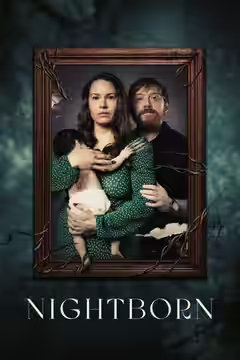
Hanna Bergholm’s second horror film has a furious performance from Seidi Haarla at its centre and one good, mean joke about never being believed. Around them the folk-horror machinery turns much as you would expect, and the comedy lands about half the time.
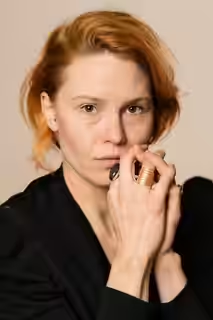
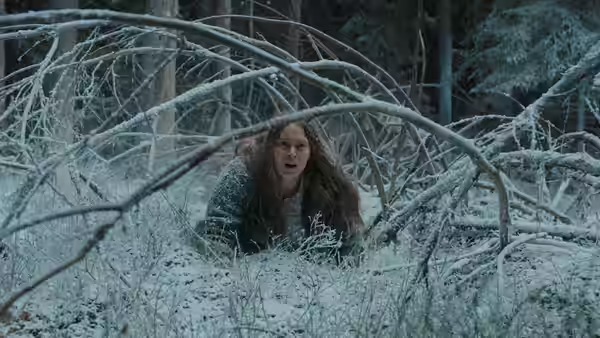
Hanna Bergholm’s first film, Hatching (2022), gave a girl an egg and let it grow into something she had to hide from her mother. Nightborn turns the arrangement round. This time the mother is the one who sees the monster, and the trouble is that nobody else will. Saga (Seidi Haarla) has a new baby, a partner called Jon (Rupert Grint) and a flat full of people telling her she is tired. She is tired. She is also right, and the film’s best idea is how long it makes her wait for anyone to say so.
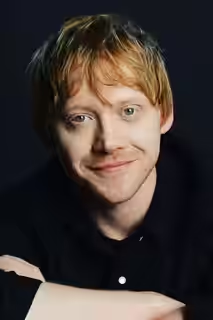
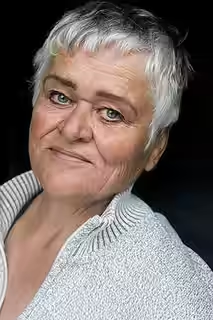
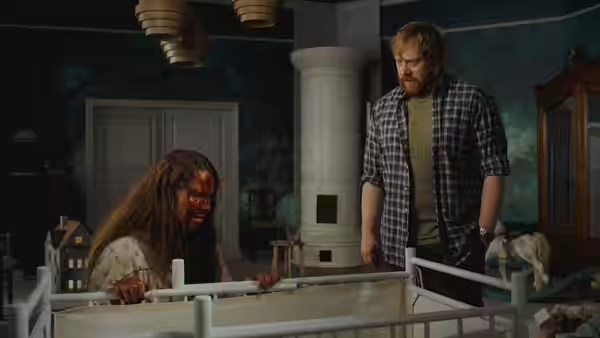
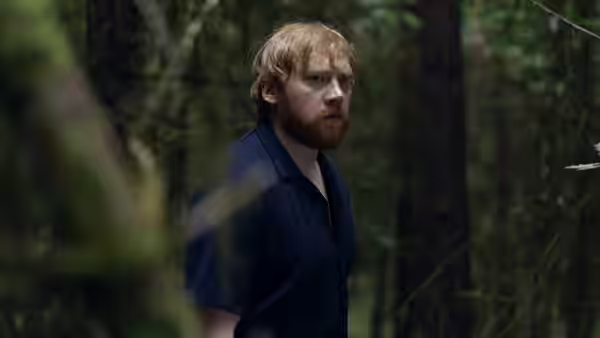
Haarla plays her from the gut. The voice drops, the shoulders go, and when she finally shouts it comes out closer to a growl than a line; she has no interest in being liked and the film is better for it. Grint is quietly infuriating as Jon, a man who agrees with everything Saga says in the tone you would use on a child and then does the opposite. We wanted to hit him by the twenty-minute mark, which means the performance is doing its job. Pirkko Saisio, as Saga’s mother, is the only person on screen who seems to have met a baby before, and she gets more out of a look than most of the cast get from a page.
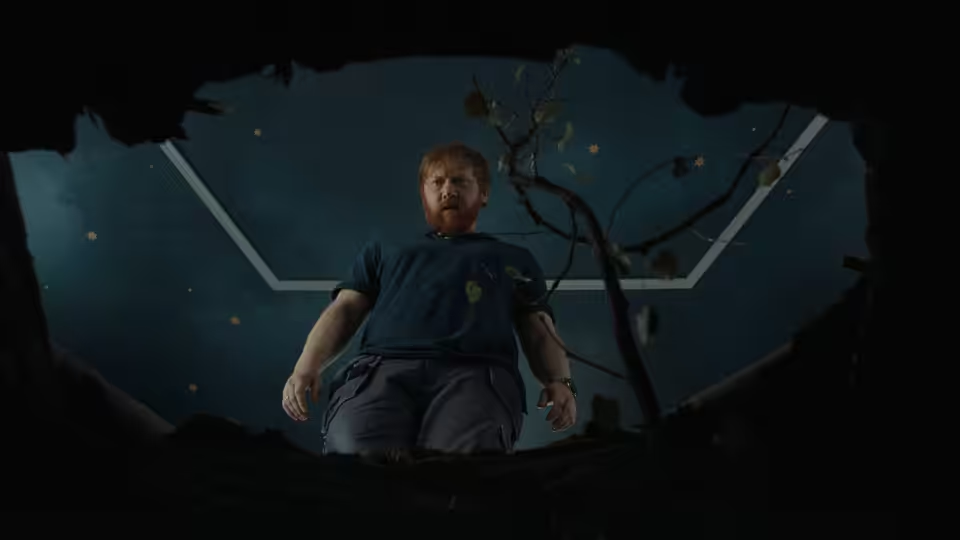
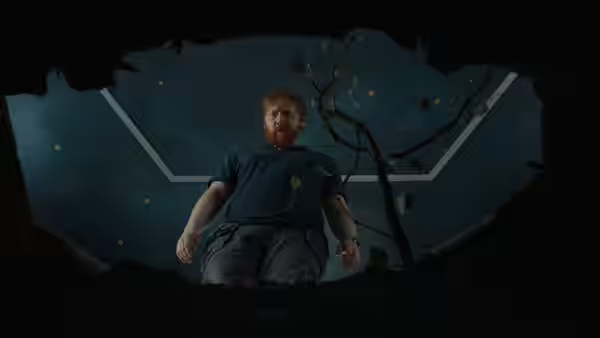
Pietari Peltola shoots the flat close and shallow, Haarla’s face sharp and the rooms behind her soft, so that whatever is at the edge of the frame is never quite in focus and we are never quite sure it was there. Kari Kankaanpää’s production design keeps the place ordinary: nappies, half-drunk mugs, a cot slightly too large for the corner it has been pushed into. The sound is the real weapon. Eicca Toppinen’s score mostly stays out of the way and lets the crying, the fridge hum and the night noises do the work, and the few times the music does rise it is low and grinding and well judged.
The film is also, in stretches, a comedy, and the gore is the funny part. Bergholm and co-writer Ilja Rautsi time the nastiest moments like punchlines, with a cut from Jussi Rautaniemi arriving a beat earlier than you expect, and we laughed out loud twice and felt slightly grubby about it both times. The social comedy is weaker. Jon’s parents (Rebecca Lacey and John Thomson) turn up to be awful about everything, and the jokes they are given are the jokes any film would give them. Saga’s colleagues get one scene each to misunderstand her and then vanish.
The larger problem is that the horror plot is the one you would guess from the title. Something old, something to do with the night, something the older generation half remembers and will not name: the folk-horror cupboard is opened and the usual things come out of it. The second half takes a turn we will not describe, and when it came we had been waiting for it for twenty minutes. The film also says its one thing, that a mother who reports something wrong will be told to get more sleep, and then says it again, and again, until the point has become a lecture. At 92 minutes it is not long, and it still finds time to repeat itself.
Here is what we felt. There is a scene, early, in which Saga tries to describe what she has seen and Jon puts a hand on her arm and lowers his voice, and we were angrier than the film probably intended, on her behalf and on behalf of every woman who has sat through that gesture. That anger carried us a long way. It did not carry us all the way, because somewhere in the middle we realised we knew the shape of what was coming and the film had no second idea to replace the first.
Hatching was stranger and smaller and kept its secret longer. Nightborn is more confident, better acted and more conventional, and we would take the first film’s oddness over this one’s polish. Most critics have landed roughly where we have: a strong centre, a familiar outside.
See it for Haarla, who deserves a better monster, and for Saisio, who deserves a film of her own. Go with someone who will argue with you afterwards about whether Jon was the villain from the start; the film has decided the answer is obvious, and decided it early.