Ira Sachs’s love triangle is short, sharp and superbly acted, with Franz Rogowski as a director who treats other people’s lives as rehearsals. It keeps its distance from everyone, including us, and gives Agathe less than it gives the men.
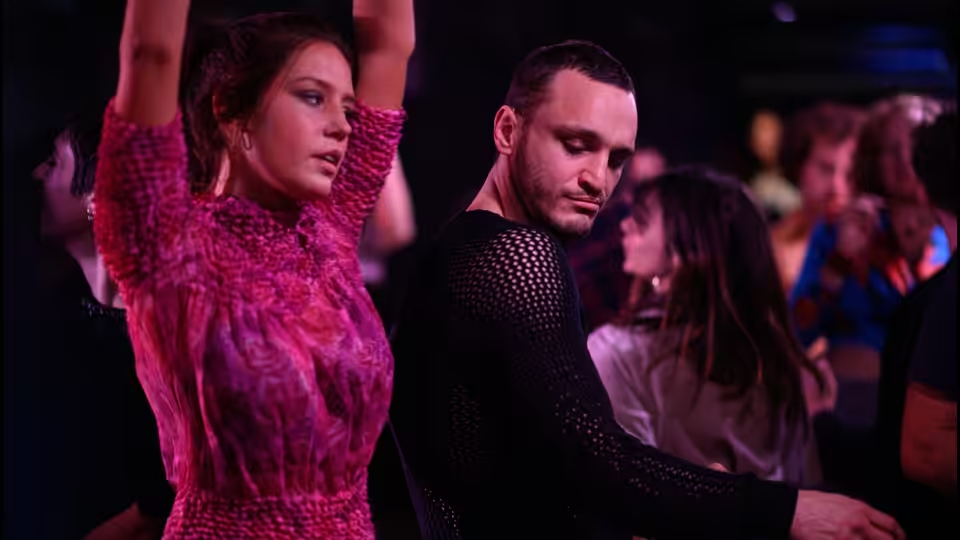
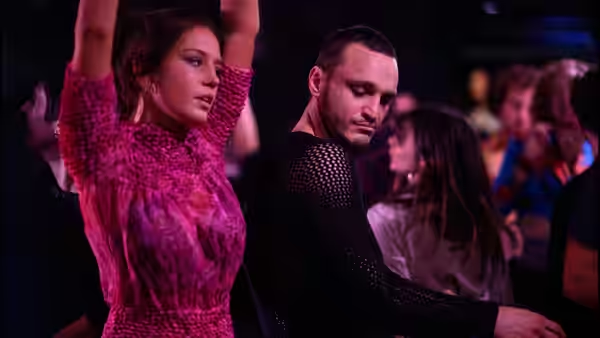
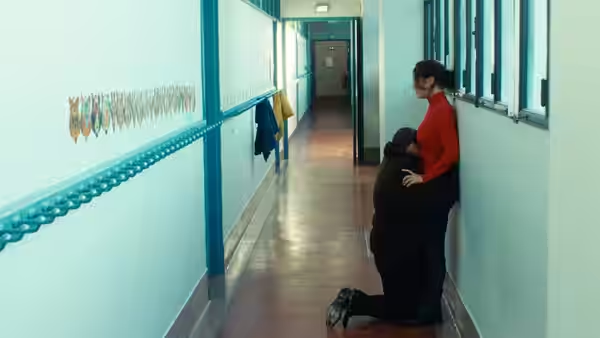
Tomas (Franz Rogowski) is a film director, and the first thing we see him do is tell a young actor, take after take, how to walk down a flight of stairs. He is not pleasant about it. That night, at the wrap party, his husband Martin (Ben Whishaw) goes home early and Tomas stays to dance with Agathe (Adèle Exarchopoulos), and then to go home with her. Ira Sachs’s Passages, written with Mauricio Zacharias, follows the next few months in the lives of these three people in Paris, and does it in 92 minutes without a wasted scene. It is a good film, sharp and well acted, and its one real flaw is that it finds the man doing the damage more interesting than the two people absorbing it.
Rogowski is the reason to see it. He plays Tomas as a man who never stands still: he cycles through the city standing on the pedals, walks into other people’s rooms as if he had paid for them, and wants whatever is not currently in his hands. Khadija Zeggaï dresses him in cropped jumpers and a mesh top that would look absurd on almost anyone else, and on him they read as a dare. He is charming for exactly as long as it takes to get what he came for, and Rogowski lets us see the switch flip every time. It is a horrible performance in the best sense, and we could not look away from it.
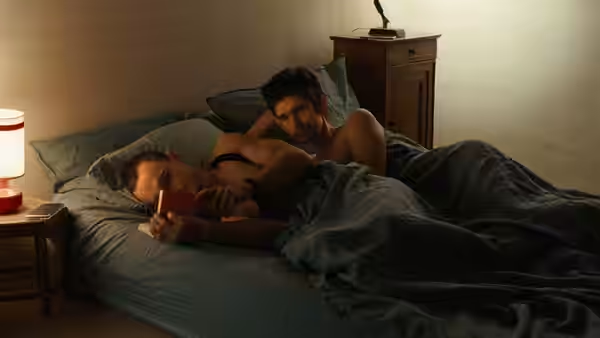
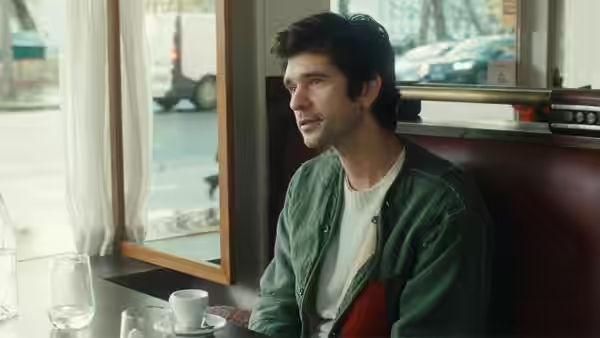
Here is the moment that got us. Tomas comes home the morning after the party, climbs into bed with Martin and announces that he has had sex with a woman, and that it was exciting, in the tone of a man reporting a good lunch. We laughed out loud at the nerve of it. Then Sachs held on Whishaw, who says almost nothing, and the laugh went sour in about four seconds, because Whishaw’s face told us this was not the first morning like this and would not be the last.
Whishaw does a great deal with little to say. Martin is tired in a way that has taken years, and Whishaw plays the tiredness first, so that when the anger does come it lands. Exarchopoulos makes Agathe warm, direct and clear-eyed, easily the most likeable person on screen, and the film gives her less than either man: we know what Tomas wants and what Martin has stopped wanting, and we are left to guess at her. Erwan Kepoa Falé, as Amad, a man who comes into Martin’s life, is drily grown-up and a relief whenever he appears.
Josée Deshaies shoots the flats and streets in plain daylight, keeps the camera at arm’s length and lets scenes run without cutting into faces. The sex scenes, which are long and explicit and there are several, are done the same way, in unbroken takes with the camera kept well back, so we watch two bodies negotiate rather than two faces perform. Sophie Reine cuts scenes off a beat before they resolve, which is right for a film about a man who leaves rooms, and occasionally frustrating for us. Pascale Consigny gives Martin a home full of things that took time to gather and Agathe a small, tidy place that Tomas immediately fills. There is almost no music, and the film does not need any.
The distance is also the trouble. Sachs watches these three the way Tomas watches his actors, with interest and without much mercy, and by the last half hour we wanted the film to sit with Martin or Agathe for a scene that was not about Tomas. It rarely does. A dinner with Agathe’s parents goes the way you fear, and is funny, and tells us nothing we did not already know. Against Keep the Lights On (2012), Sachs’s earlier film about a man who cannot be trusted with the person who loves him, this is cooler and cleaner and less bruising.
It carries an 18, and it earns the certificate in three or four scenes, none of them gratuitous; the sex is where these people tell the truth, since they will not do it anywhere else. See it, ideally with someone you are not in the middle of leaving.