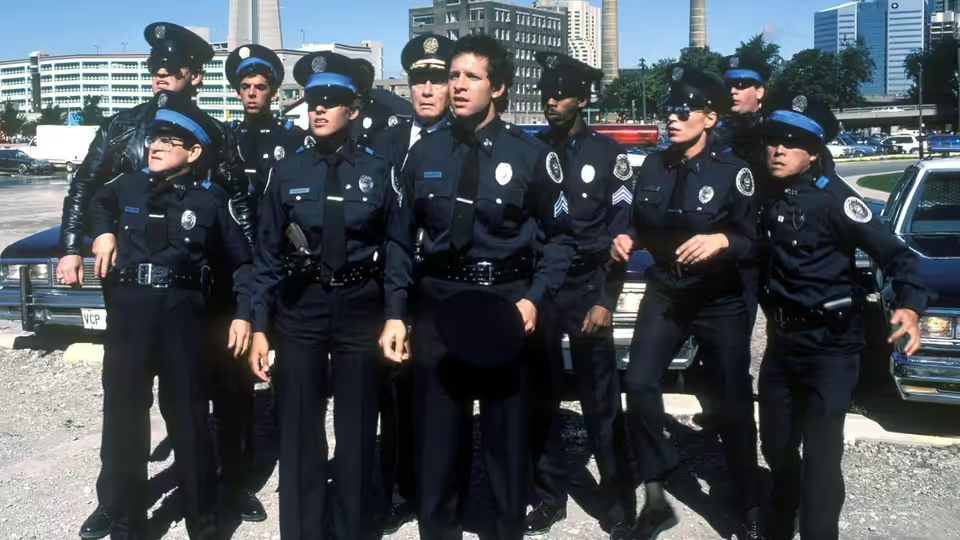
Jerry Paris gets some good-natured comedy from Steve Guttenberg and Bobcat Goldthwait, but too many jokes arrive already exhausted. Even at 84 minutes, this return to the academy offers too little to recommend.
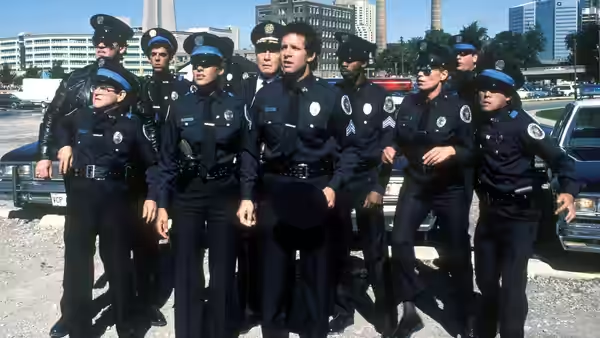
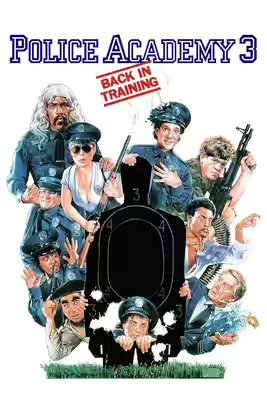
Police Academy 3: Back in Training is a poor comedy with some likeable people in it. Jerry Paris directs a return to the academy, where the threat of closure gives its collection of misfits a reason to pull together. That is a workable premise: their failings ought to complicate a job that requires them to prove their usefulness. Gene Quintano’s script gets disappointingly little from it, trusting familiar personalities and stale jokes to carry most of the load.
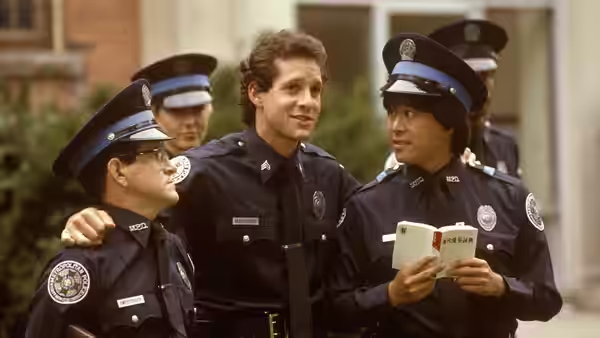
Steve Guttenberg gives Carey Mahoney enough ease and warmth to suggest the sort of film this could have been. His straight-man part is frustratingly slight, leaving too little time for the other personalities to become funny in relation to him. A comedy like this needs someone who can receive a joke as well as deliver one. We wanted more of that relaxed presence, particularly when the script was treating another familiar character trait as sufficient reason to laugh.
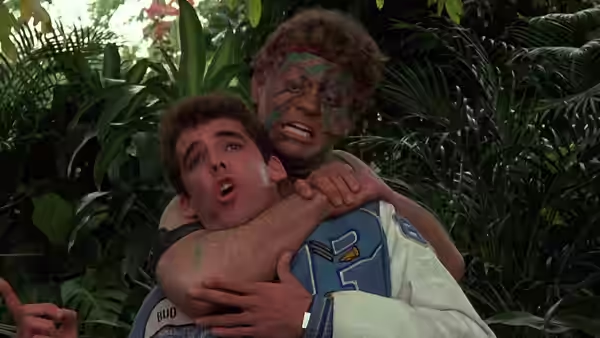
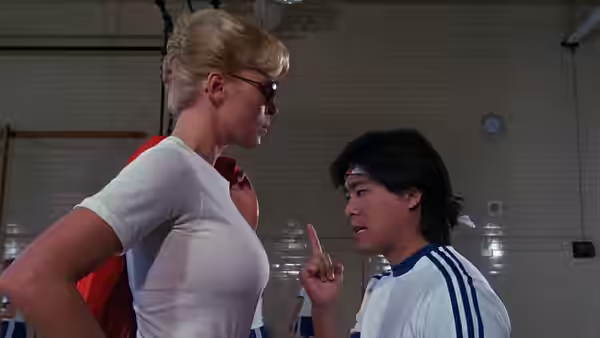
Bobcat Goldthwait, as Cadet Zed, supplies the most persuasive reason to stay. We laughed at his good-natured unruliness, because he seems to enjoy being ridiculous without asking for our approval. There is effort and an appealing lack of vanity in the performance, enough to make some otherwise unpromising material work. He earns affection for a film that relies too heavily on the audience already being fond of its characters.
The larger problem is how rarely those characters seem to matter to each other. Gene Quintano supplies an institutional problem, but the relationships are too thin to give it much force. The audience is asked to care about the academy because it contains people we recognise, which leaves the writing with rather more work to do than it acknowledges. There are too few exchanges that make their shared predicament funny, or give the performers something beyond their established personalities to play.
Robert Saad’s cinematography and Trevor Williams’s production design are serviceable, without offering much to enjoy when the writing runs short. The academy never feels distinctive enough to make its possible closure matter beyond the plot’s immediate needs. That puts still more pressure on the performers to keep the place interesting. An ordinary-looking setting can serve a knockabout comedy perfectly well, but here it leaves us dependent on jokes that are only intermittently amusing.
Bud Molin’s editing delivers an 84-minute film that still feels short of pace. The gaps between worthwhile laughs remain noticeable, despite the modest running time. Robert Folk’s music contributes to the general good cheer, though it cannot make the weaker material funny. Stronger comic situations would have helped more than any adjustment to the cutting or accompaniment; too often, a joke has too little going on for either to improve it.
Against the basic demands of ensemble comedy, the film falls short: its characters’ differences produce too little trouble worth watching. Too much depends on recognising a type and accepting that recognition as the joke. Viewers already fond of these characters may forgive the repetition, and Bobcat Goldthwait rewards some of that patience. For anyone without that attachment, there are better uses for even a short evening.