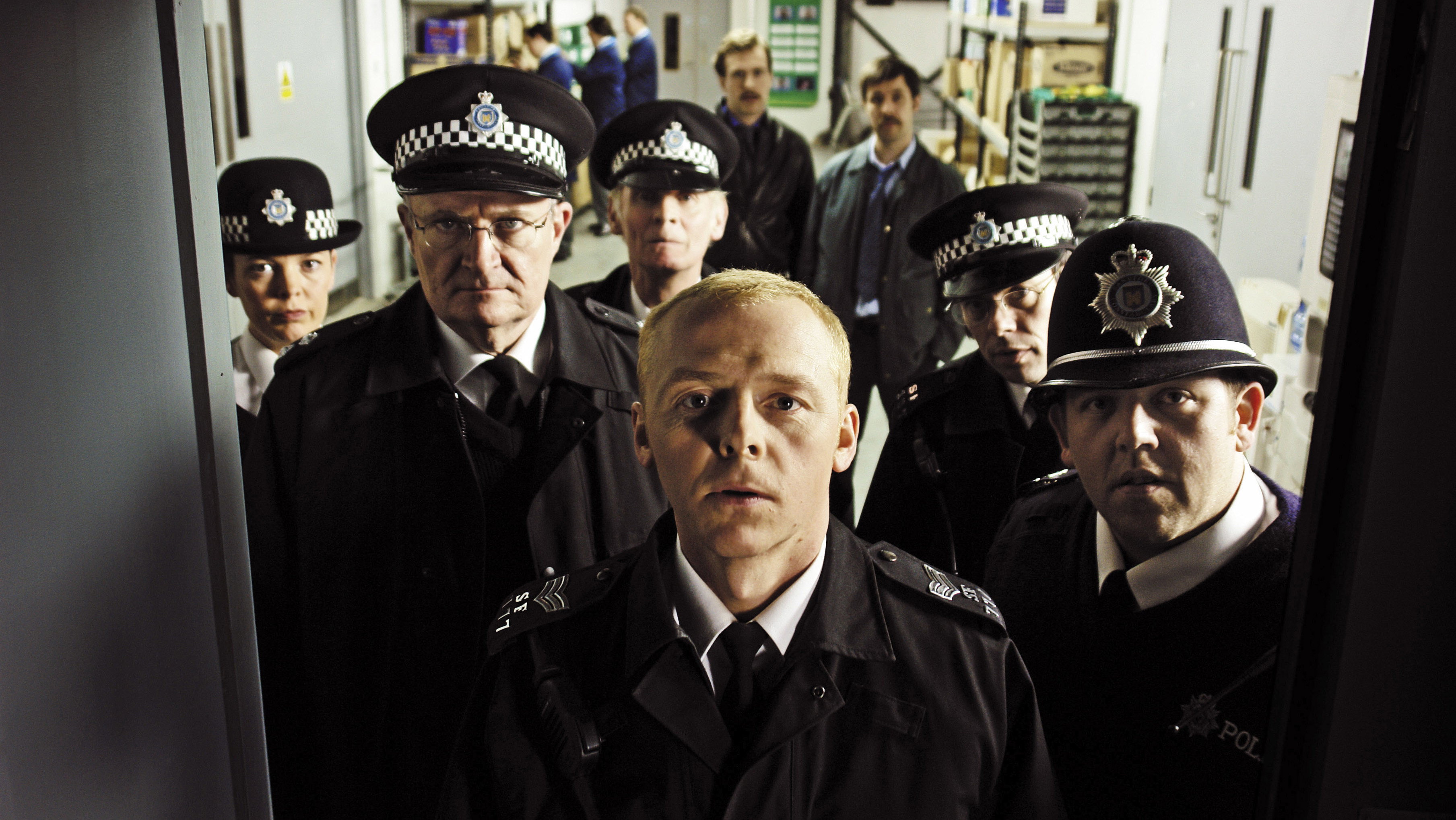
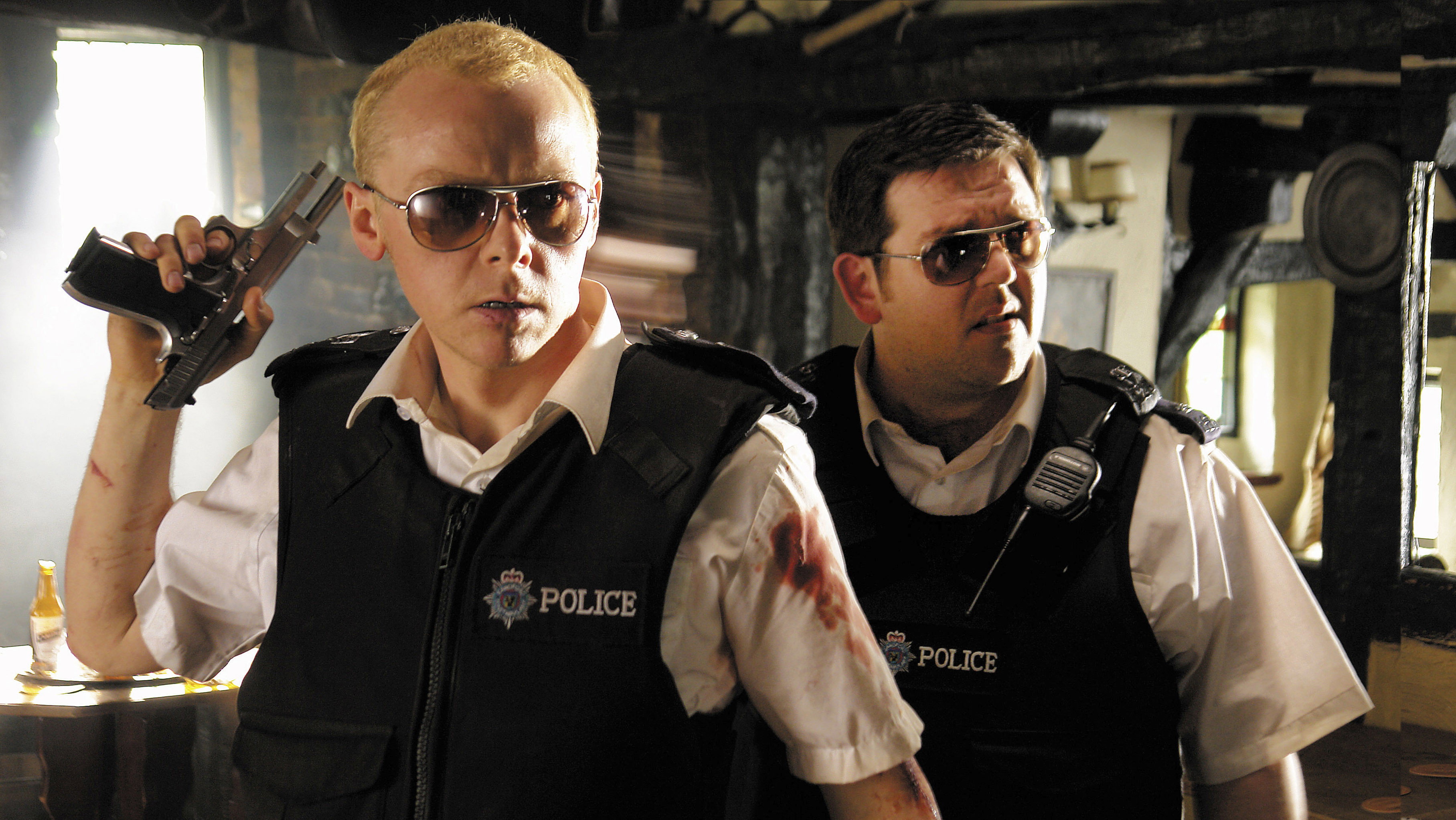
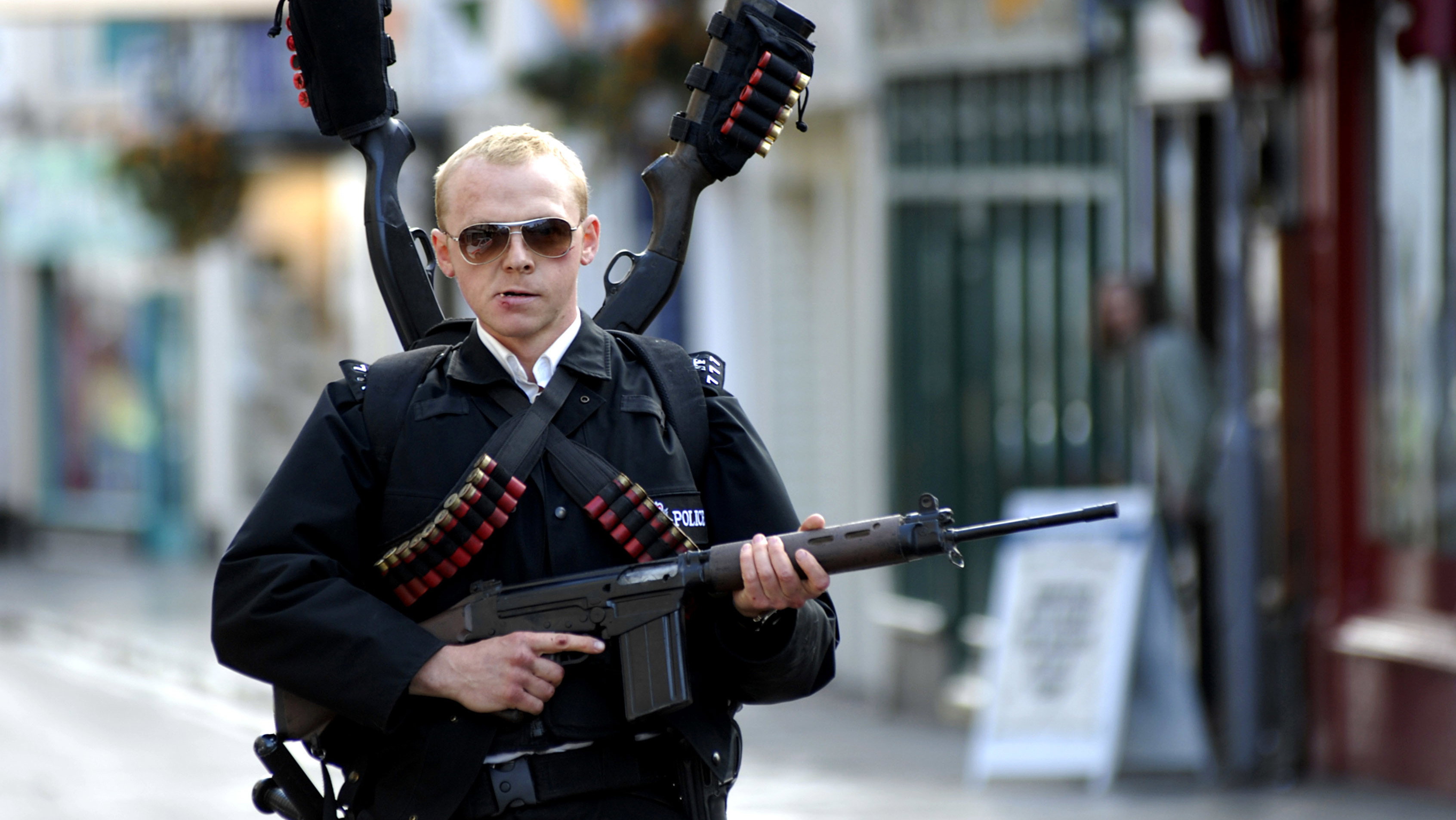
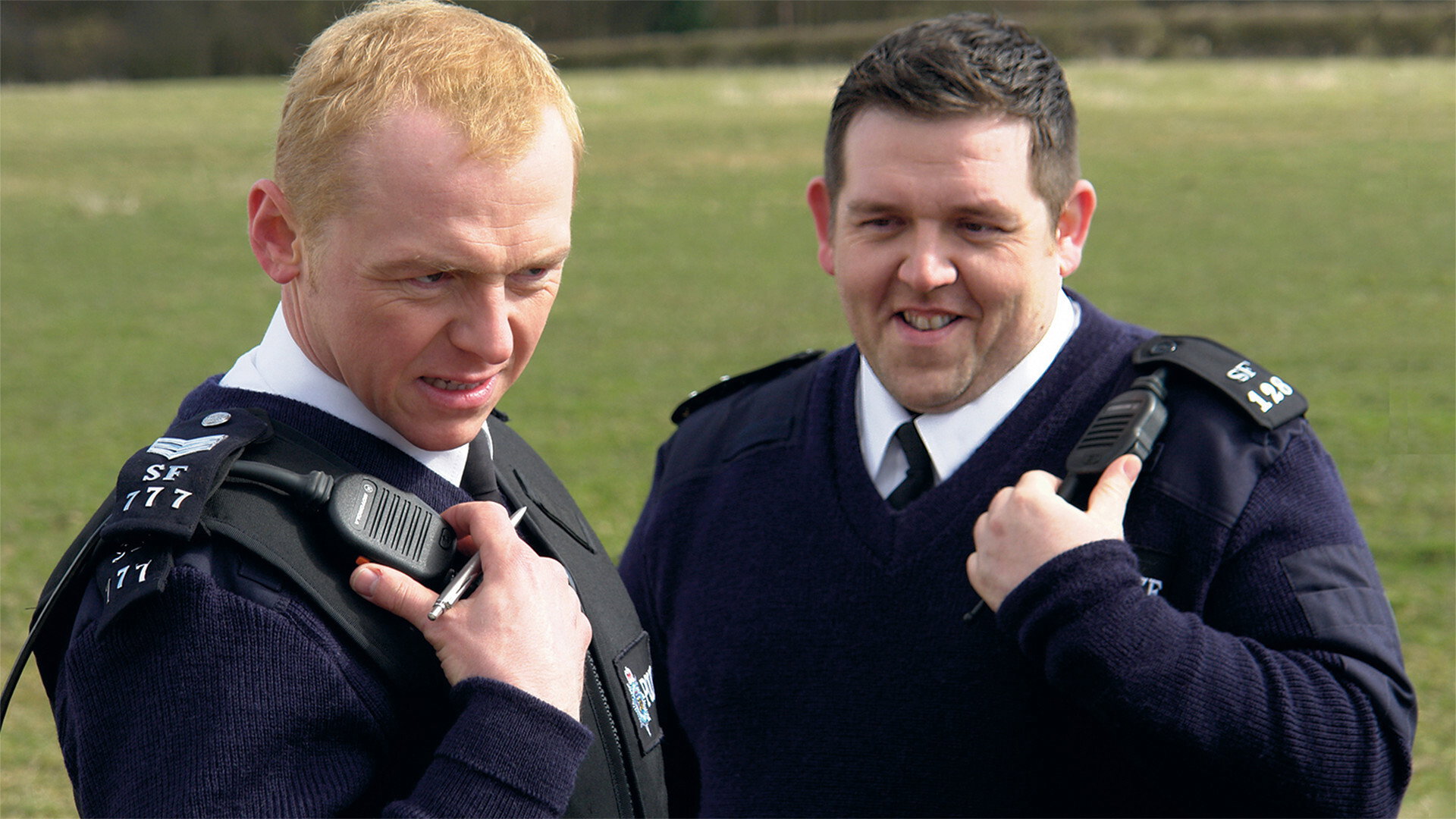
Edgar Wright’s village police comedy is sharp, affectionate and carried by Simon Pegg and Nick Frost. We recommend it, though repeated gags and overextended action make it longer than it needs to be.
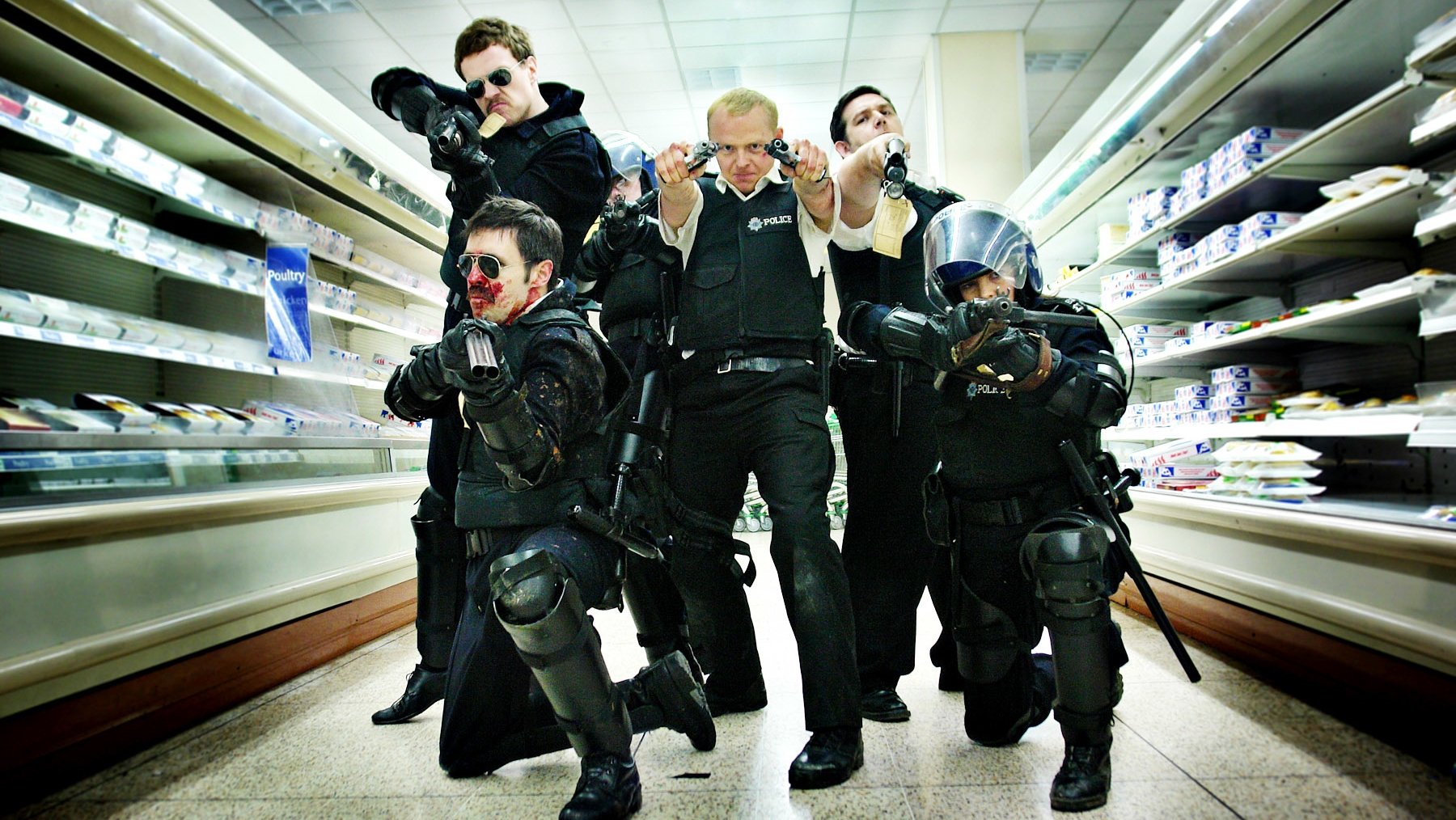
Hot Fuzz is a sharp, warmly acted police comedy that spends a little too long demonstrating how much it knows about action films. Edgar Wright directs as though a posting to an English village deserves the same attention as a metropolitan crime emergency. That is the central joke, and it has more staying power than it ought to. Simon Pegg’s Nicholas Angel takes the job seriously enough to sustain it.
Angel is a high-achieving London officer sent to a sleepy village, where Nick Frost’s Danny Butterman becomes his partner. Pegg’s straight face is essential: he gives us someone whose competence is funny without making competence itself look foolish. Frost makes Danny’s side of the partnership feel welcoming, and the affection between the actors keeps the comedy from becoming a series of demonstrations. Their contrasting temperaments also give Wright room to slow down. We want to spend time with them even when there is no elaborate joke to deliver.
We laughed at Angel noticing that the pub’s customers were too young to be there. Pegg’s refusal to soften the policeman’s seriousness makes enforcing an age restriction seem entirely appropriate material for an action hero. Wright and Pegg’s screenplay gets considerable mileage from that mismatch, allowing routine police work to carry the importance that Angel attaches to it. The shoplifter pursuit offers another chance to put Angel’s skills to work on a smaller scale.
Jess Hall’s cinematography gives the rural setting the emphatic treatment of an action thriller, which is funnier than making it look merely quaint. Marcus Rowland’s production design supplies a convincing everyday setting for those imported mannerisms. The pub scene benefits from feeling like an ordinary place being subjected to unusually thorough policing. These surroundings give Angel’s seriousness something concrete to work against.
Chris Dickens’s editing keeps that exaggeration brisk, while David Arnold’s music helps Wright sustain the action-film seriousness. Both contribute to the joke by treating the material with conviction, rather than constantly asking us to laugh at it. That matters in a genre comedy: contempt for the films being borrowed would soon become tiring. Wright wants their excitement as well as their absurdity. The friendship remains engaging even when the action-film references become busy.
The trouble is that Wright and Pegg keep returning to jokes that have already landed, and the action becomes less funny as it grows more insistent. Dickens can give an individual sequence momentum, but he cannot make every repetition necessary. At 121 minutes, the film gives us too much time to notice how carefully its comic business has been arranged. Some recurring details are flagged so heavily that we are left waiting for the script to use them again.
It helps to know the habits of American police thrillers, but Wright does not make that knowledge an entrance requirement. Angel’s approach to the pub works without a viewing list, as does the appeal of two markedly different men working together. Those who come for the action alone may find that the comedy sets a standard the spectacle cannot quite meet. Come for Pegg and Frost, and be prepared for more action than the jokes always need.