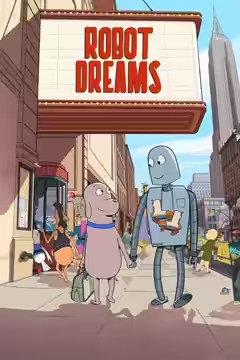
Pablo Berger turns Sara Varon’s graphic novel into a wordless, hand-drawn film about a lonely dog, the robot he builds and the beach that comes between them. It sags in the middle; its last ten minutes hurt us more than we expected.
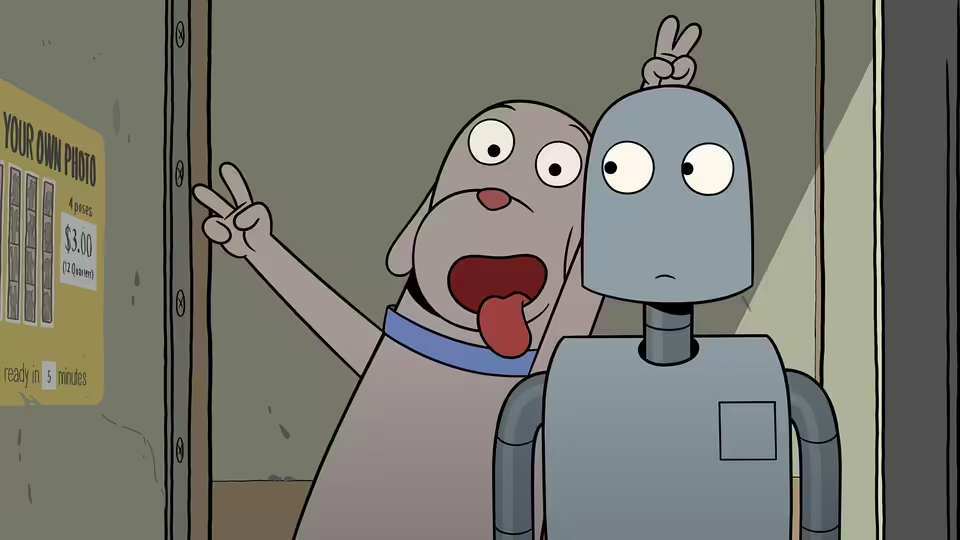
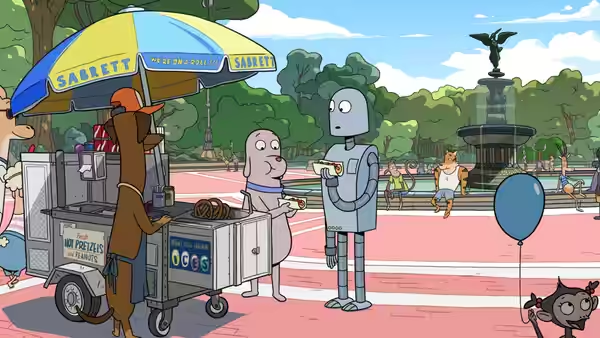
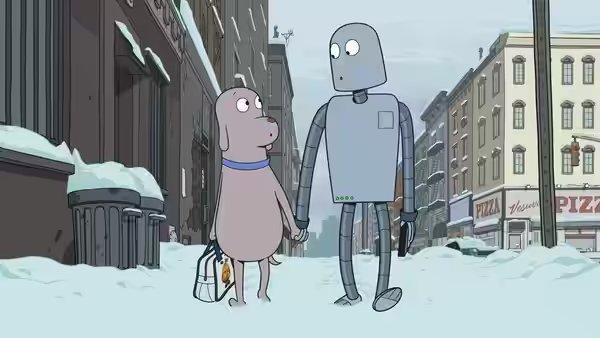
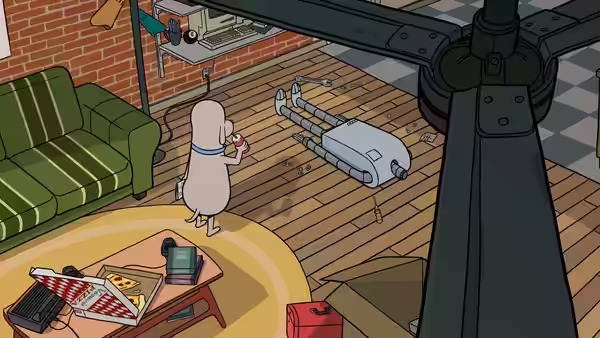
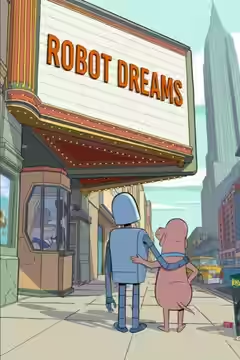
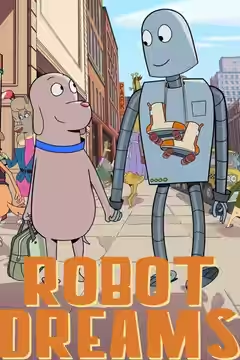
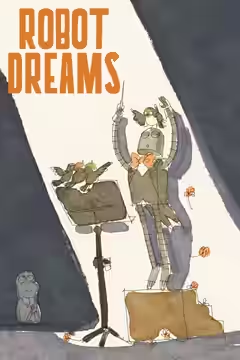
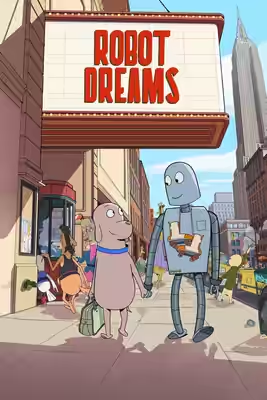
Dog lives alone in a Manhattan flat, in a New York of the 1980s where everyone is an animal and nobody says a word. He eats dinner in front of the television and one night sees an advert for a mail-order robot friend. He sends off for it, assembles it on the living-room floor, and the two of them spend a summer roller-skating in Central Park to Earth, Wind & Fire. Pablo Berger, adapting Sara Varon’s graphic novel, has made a hand-drawn film with no dialogue at all, and it is one of the warmest films we know. We recommend it without much hesitation, and with one warning about who you take.
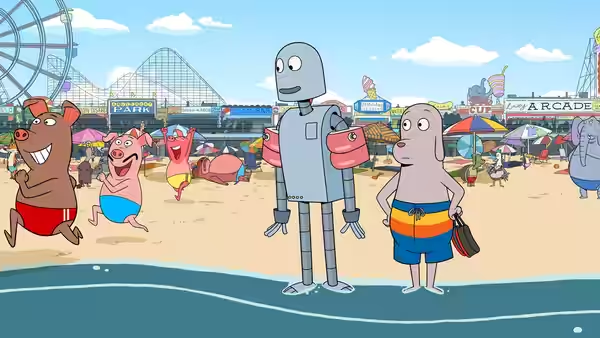
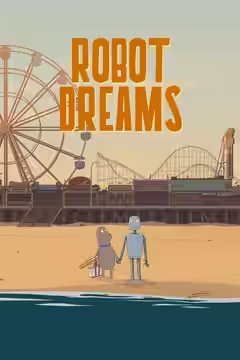
The first act ends at the beach, and we can say this much because the whole film hangs on it. Robot goes in the sea, rusts solid, and cannot be moved. The beach closes for the season the next day, and Dog is left on the wrong side of a locked gate with a friend who can still think and dream but cannot get up. What follows is a film about waiting: Dog through an autumn, a winter and a spring in the city, Robot flat on his back under the sky, both of them trying to fill the time.
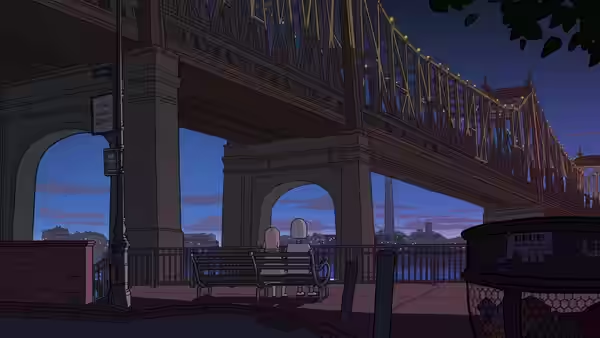
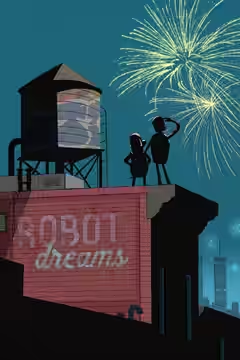
Berger has made a wordless film before, with Blancanieves, and he knows the discipline. Nobody speaks, so everything is carried by the drawing, by Alfonso Vilallonga’s score, and by a sound design that is exact about what a city sounds like. Voice actors are credited, Ivan Labanda among them, but for barks, whirrs and the noise of a robot trying to get to his feet. The animation is flat colours and clean black lines, closer to a comic than to anything from a big studio, and the city has been drawn by people who looked at it hard: the graffiti on the subway cars, the water towers, the skyline with both towers still on it. Fernando Franco cuts the seasons together so that time passes the way it actually does, in small repeated days rather than in montage.
The dreams of the title are the best thing in it. Stuck on the sand, Robot imagines himself home again, or dancing in a chorus line of flowers, or simply able to walk, and Berger lets each dream run just long enough for us to believe it before the sand comes back. Dog, meanwhile, tries to get on. He goes bowling and meets Duck (Graciela Molina); he takes up new company and drops it. The physical comedy is old-fashioned and mostly good. Dog’s efforts to reach Robot through the beach fence made us laugh out loud, and the film is generous with small jokes in the corners of the frame.
It is not all of a piece. At 102 minutes the middle has a shape it repeats: Dog tries something, Robot dreams something, the season changes. Varon’s book is slim and Berger has stretched it, and there are twenty minutes where you can see the stretching. One or two of the episodes in the city are sketches rather than scenes. And the PG certificate is honest but not the whole story. Small children will find long stretches slow, and the sadness here is not the kind that gets fixed. We would take a ten-year-old; we would not take a five-year-old.
Then there is the ending, which we will not describe. We thought we knew where the film was going, and we were partly right, and being partly right did not help. It caught us square. Most of the effect comes from a single choice about what a character does with a piece of music, and the restraint of it, no speech and no swelling of the strings, is what makes it land. We left the cinema quieter than we went in.
Set beside Blancanieves, this is the gentler film and the more affecting one. It has less to prove and it proves it anyway. Most critics have it at roughly this level, and we see no reason to argue. Watch it with someone you have known a long time, and do not plan anything for afterwards.