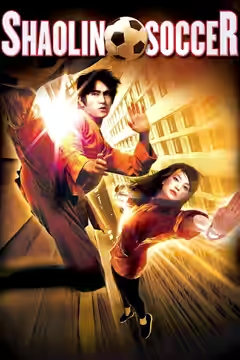
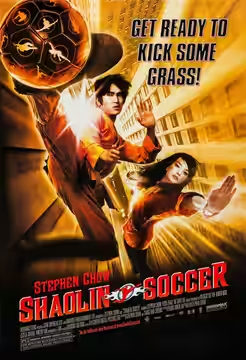
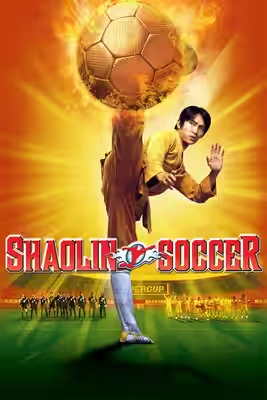
Stephen Chow applies Shaolin kung fu to football and the result is daft, fast and kinder than it has any need to be. Roughly one joke in three misses, the villain has one note, and the football itself never misses at all.
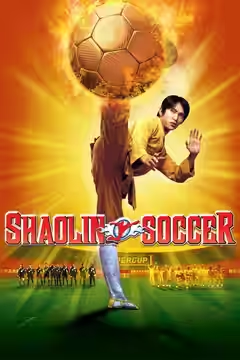
Stephen Chow directs, co-writes and stars, and the idea fits on a beer mat: what if a team of lapsed Shaolin monks played football? Chow is Sing, a rubbish collector who believes kung fu would fix everything from parking to peeling potatoes. Fung (Richard Ng Man-Tat), a former star called Golden Leg until his own leg was broken over a bribe, watches Sing kick an empty can hard enough to worry him and proposes a team. Sing rounds up his five Shaolin brothers, who have drifted into bad jobs, and they enter a tournament controlled by Hung (Patrick Tse Yin), the man who ruined Fung. It is silly, it is quick, and it is better company than most films with twice the sense.
The joke Chow tells over and over is that kung fu is useless until it is not. Sing demonstrates on a street corner, stamps a foot, and nothing happens except people laughing at him. The brothers are introduced one by one in the jobs they have ended up in, and the saddest is Iron Head (Wong Yat-Fei), who works in a nightclub where customers pay to break beer bottles on his head. The script, credited to five writers including Chow, plants small things early and pays them off a reel later, and that patience is what separates it from the slapstick it resembles.
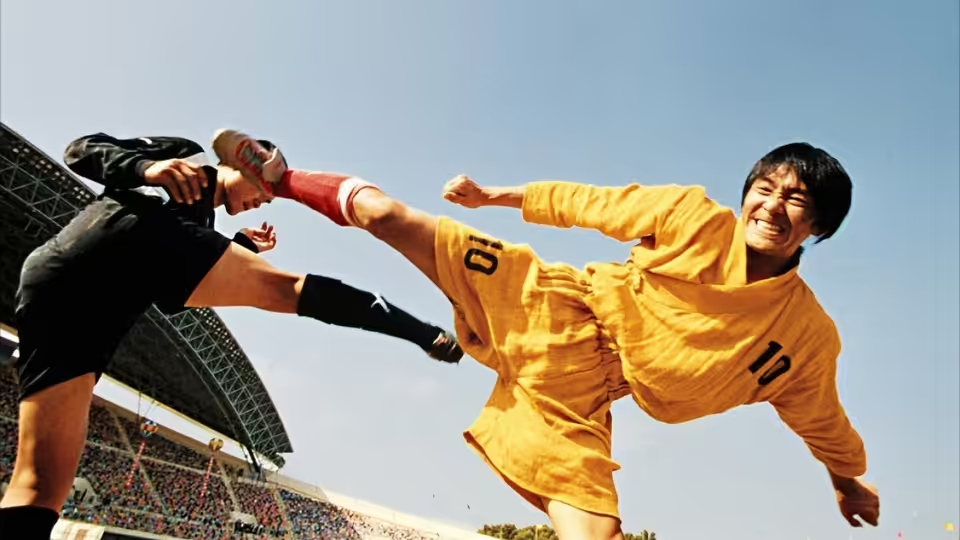
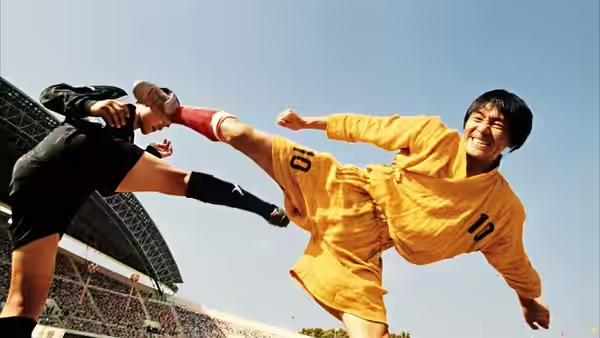
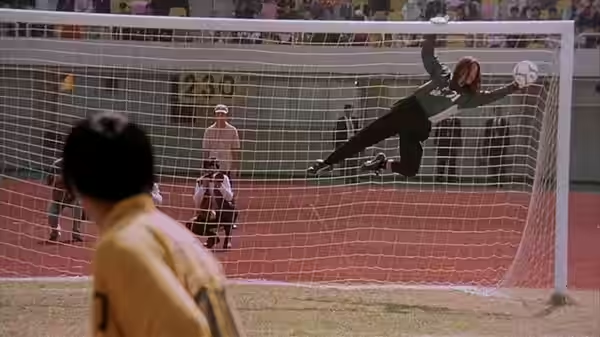
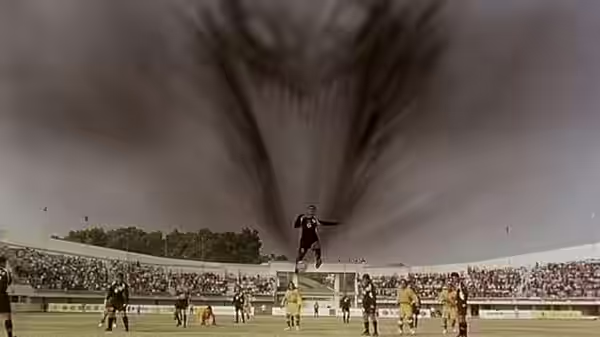
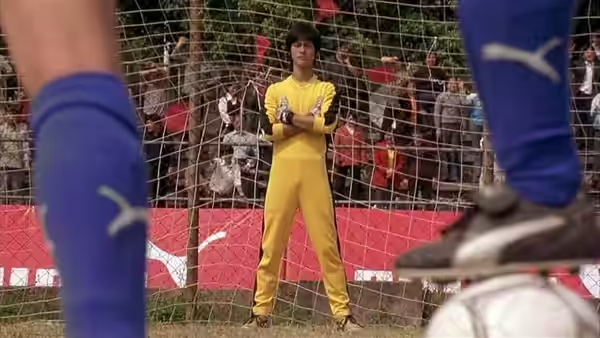
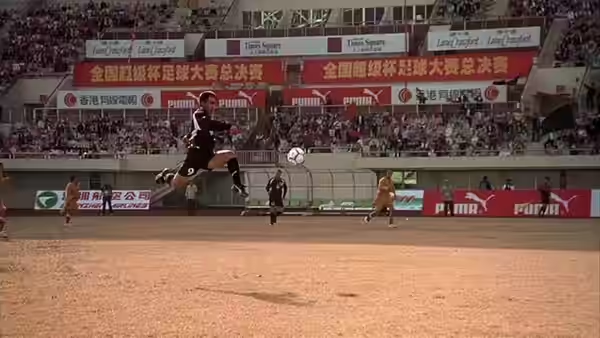
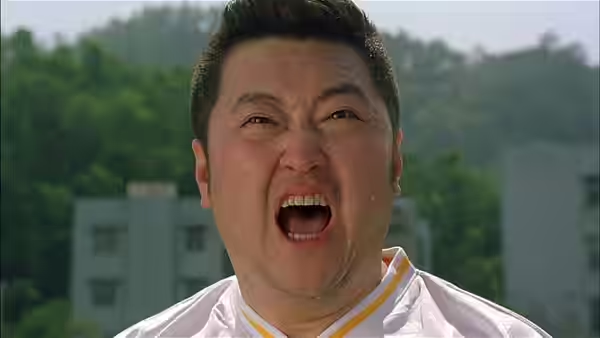
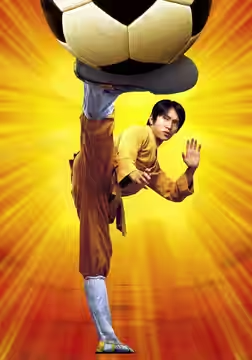
The football is staged as a fight film. Apple Kwan Pak-Suen and Andy Kwong Ting-Wo shoot the pitches wide and low, so the players look small until they leave the ground, and then they fill the frame. The ball goes from a ball to a comet with a tail of fire and tears through the net, and sometimes through the goalkeeper. Hai Kit-Wai cuts each attack as wind-up, strike and impact, with a slow-motion hang in the middle where you can watch the whole pitch react. The effects are of their year and the seams show if you look; we did not look, because no shot is held long enough for doubt. The first match, against a gang of thugs on a scrubby ground, is the best thing in the film. We laughed out loud when Iron Head takes a ball full in the face and something lights up behind Wong Yat-Fei’s eyes. That is the moment the film turns from sad to joyful, and it is done with a look.
Then there is Mui. Zhao Wei plays her as a street vendor who makes steamed buns, kneading the dough in slow tai chi circles with the flour hanging in the air, and who hides her face because of her skin. Sing watches her as if he has found the only other person who thinks like him. The scene at her stall, with no gag in it for the best part of a minute, moved us more than we expected from a film that had just set a football alight. It was the stillness. Chow lets the camera sit for once, and Zhao does the rest with her hands.
What does not work is easy to list. Hung is a villain with one note; Patrick Tse Yin sneers in a leather jacket and is given nothing else, and the film does not seem to mind. The middle of the tournament repeats itself: a team lines up, a team is flattened, the crowd gasps, again. A match against a side of women in false moustaches, Karen Mok among them, is one gag stretched across a whole fixture. At 113 minutes it is a touch long for a story this simple, and the final leans on a device we will not describe, which is louder than it is clever.
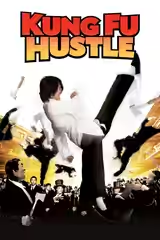
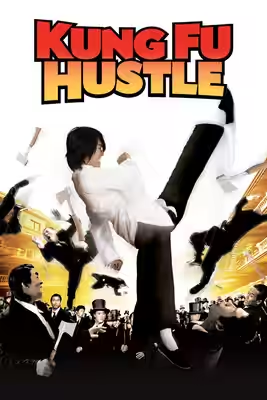
Set against the sports film, which has told the underdog story so often it has worn a groove, this one is unusual in that it does not care about the sport. Nobody learns to pass. The pleasure is in watching misfits find out they were always extraordinary, and Chow is honest enough to let them stay strange. Against Chow’s own later Kung Fu Hustle it is the smaller film and the warmer one.
See it with the sound up and, if you can, with somebody who has never seen it, because watching them work out what the film is prepared to do is half the fun. The 12A is for the bottles.