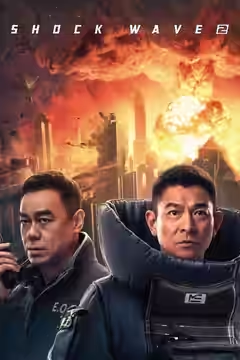
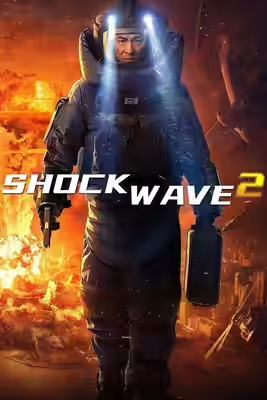
Herman Yau’s bomb thriller earns its thrills through inventive physical action and Andy Lau’s commitment. The plotting is needlessly tangled, though, and its larger questions receive less care than the explosives.
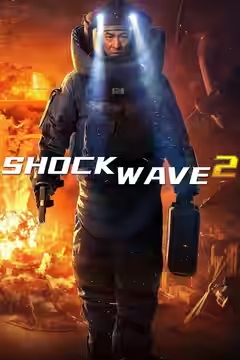
Herman Yau’s Shock Wave 2 is worth considering for its action and Andy Lau’s performance, for anyone willing to tolerate a tangled plot. Bomb disposal supplies a reliable source of suspense, and the threat to Hong Kong gives the film plenty of scope to increase the danger. The trouble is that the writing keeps adding complications when the physical problems are already interesting enough. At 120 minutes, it could afford to explain itself more clearly and ask us to remember less.
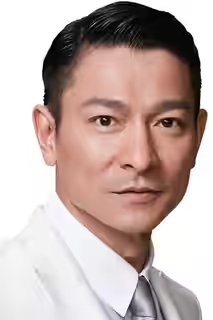
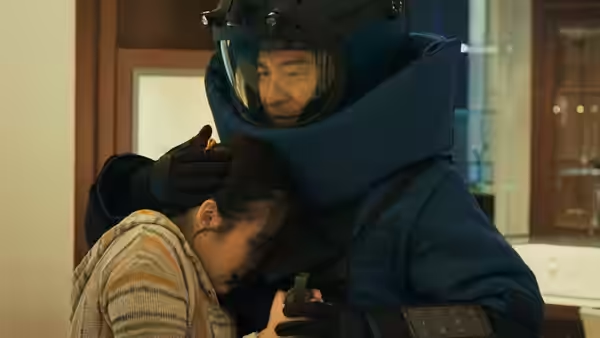
Andy Lau, playing Poon Shing Fung, supplies much of the reason to stay with it. His performance gives the danger a human focus when the scale of the threat could easily make everyone seem incidental. More importantly, the stunt work takes the protagonist’s disability into account without making every feat an invitation to applaud his determination. Physical limitation affects the action, and the film trusts that to be interesting without continually asking for our sympathy.
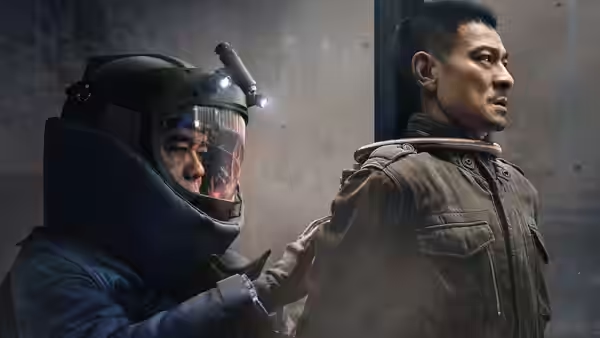
We were properly gripped by the bomb-disposal sequences, because the practical task gives the suspense something definite to work on. These passages benefit from a danger we can understand without having to absorb another explanation first. The ingenuity comes from finding physical difficulties within a familiar action premise, particularly through the demands placed on the disabled protagonist. The handling of explosives supplies enough tension to hold our attention without help from the more elaborate plotting.
Joe Chan Kwong-Hung’s cinematography and Azrael Chung’s editing work effectively in those passages, keeping our attention on the immediate danger. The mounting suspense gives the action a purpose beyond simply keeping the screen occupied. The trouble comes when a busy passage also needs to clarify the story, and the forward movement allows confusion to accumulate. The action remains engaging, but following the wider situation takes more effort than it should, and the energy cannot entirely disguise that problem.
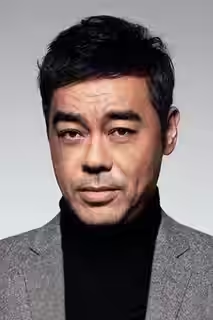
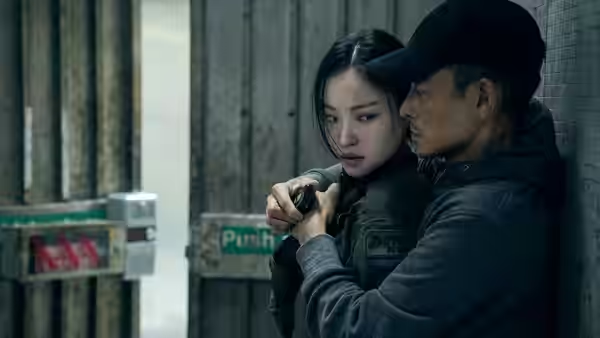
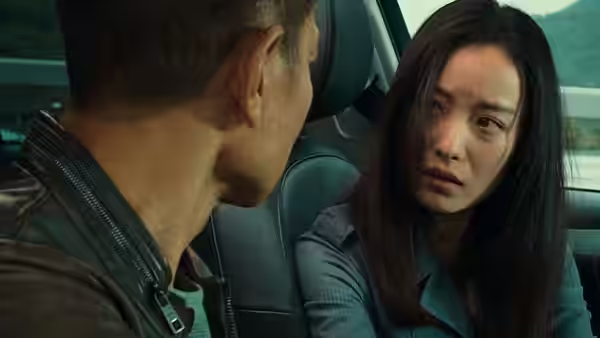
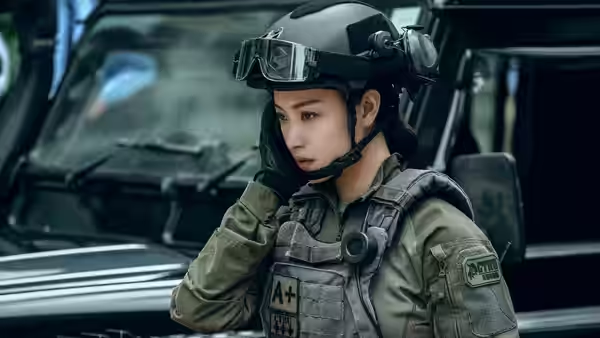
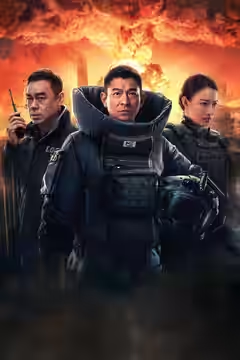
The screenplay, credited to Erica Li, Eric Lee and Herman Yau, is also less curious about its moral questions than its complications initially suggest. A thriller can ask us to reconsider people and events, but something worthwhile needs to emerge from that effort. Here the amount of plot starts to feel disproportionate to what the film has to say about its characters. Sean Lau plays Tung Cheuk Man and Ni Ni plays Pong Ling, yet even a cast with this much presence cannot make every explanation feel necessary.
There is familiar thriller business between the more inventive set pieces, and those stretches test our goodwill. The film recovers whenever it returns to the practical difficulties of dealing with explosives or moving a vulnerable body through danger. That is enough to keep it entertaining, though the involvement comes and goes. Its handling of disability deserves particular credit: it affects how the action works, instead of merely supplying an extra reason to worry about the leading man.
Bomb thrillers already have a useful way of holding an audience: somebody has a job to finish and a compelling reason not to get it wrong. This one is most satisfying when it remembers how much that gives an actor to do, and Andy Lau makes those stretches worth the time. We recommend it to action enthusiasts prepared to tolerate some needless plotting. Anyone hoping the explanations will be as inventive as the stunts should lower that expectation.