Richard Linklater’s Slacker makes following strangers around town an unusually good use of 97 minutes. A few speakers outstay their welcome, but the constant changes of company keep its talk and gentle mockery lively.
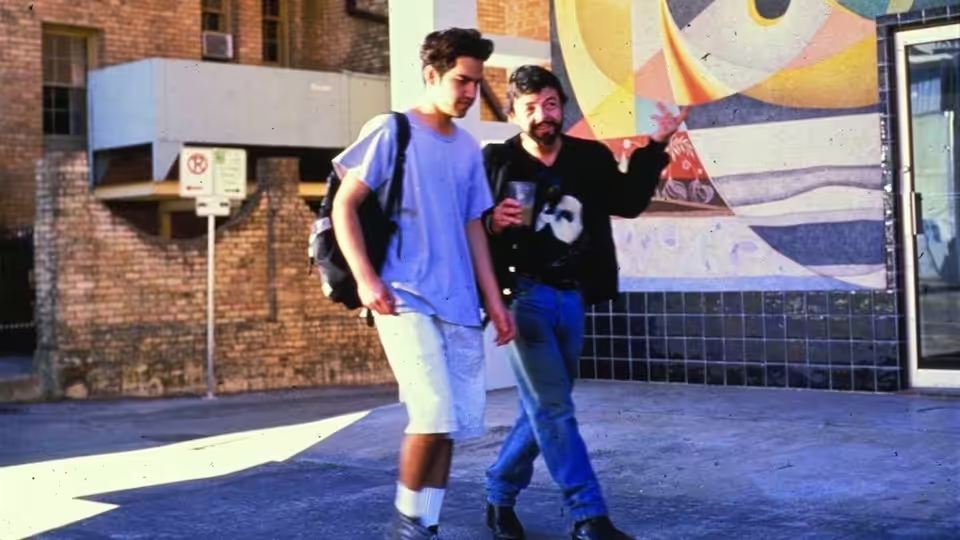
Richard Linklater’s Slacker is funny, patient with odd people and much more carefully organised than its wandering suggests. It moves among the residents of Austin, Texas, leaving one person to follow another, without appointing anyone to carry a conventional plot. The invitation is simple: spend some time listening, then move along when somebody else catches the film’s attention. That sounds like a small pleasure, but Linklater finds enough curiosity and humour in it to sustain most of the film’s 97 minutes.
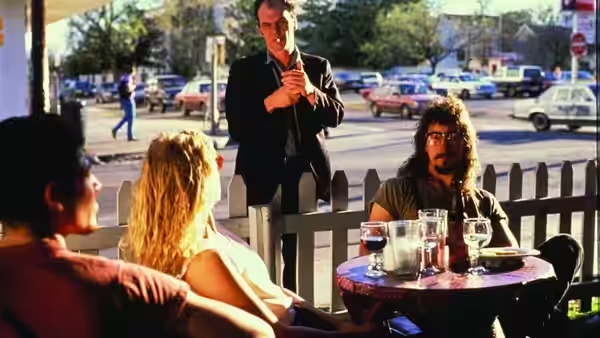
Linklater, who also writes the film, gives these encounters the feeling of conversations overheard just long enough to become interesting. People offer their accounts of how life works, and the succession of speakers lets us notice both their convictions and their eagerness to have an audience. There is an affectionate joke in the amount of mental activity devoted to lives so short on conventional purpose. The film makes room for those ideas without requiring us to believe that every stranger with a theory has discovered something important.
Lee Daniel’s cinematography has a documentary looseness that suits the passing encounters, allowing the change from one person to another to feel casually noticed. Scott Rhodes’s editing keeps those transfers clear: we understand that our attention has shifted without needing a fresh introduction each time. We were delighted by these changes of company. Someone we had barely noticed becomes the person we follow, and the film keeps making us reconsider whom we had assumed was worth watching.
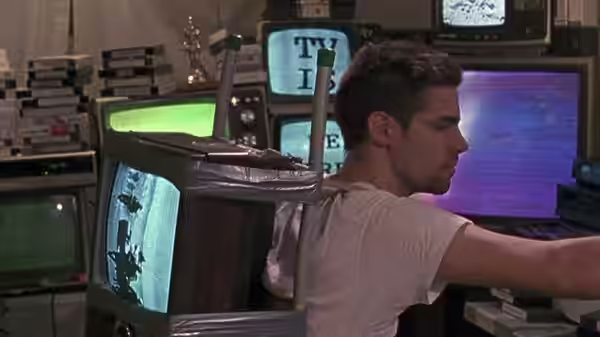
The cast helps by seldom making eccentricity feel like a request for applause. Linklater appears under the credit Should Have Stayed at Bus Station, while Dan Kratochvil is Espresso Czar / Masonic Malcontent, a description almost sufficient to start a conversation by itself. The performances have an uneven, conversational ease that fits a film continually changing whom it asks us to watch. Some of the delivery is awkward, but a more polished ensemble might have made this company seem suspiciously well rehearsed.
Deborah Pastor’s production design helps the people seem at home in their surroundings, even when we have only just met them. The places do not appear to have been prepared for someone to make an entrance, which suits a film so willing to change its subject. The documentary look can feel rough, and occasionally the visual plainness becomes a little dull. Mostly, the lack of fuss makes it easier to watch the people and attend to what they say.
The weakness is the obvious one: changing speakers cannot make every speaker equally interesting. Linklater sometimes gives an idea more time than it earns, and without a developing story there is little else to hold our attention during a dull passage. A few encounters feel pleased with their own peculiarity, as though being unconventional were enough to make a person good company. The humour usually returns before this becomes a serious problem, but the unevenness is there.
For a comedy about people with little apparent direction, Slacker is unusually free of pressure to get them moving. Linklater is interested enough in how they already live and talk to let us spend time with them without demanding a lesson. That patience makes the duller passages easier to accept, though it will not persuade anyone who needs a plot. Watch it with someone who enjoys talking to strangers.