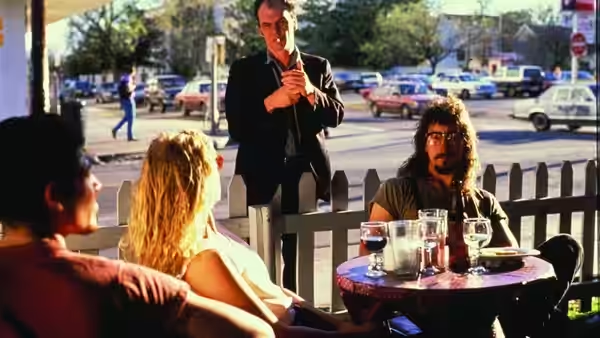
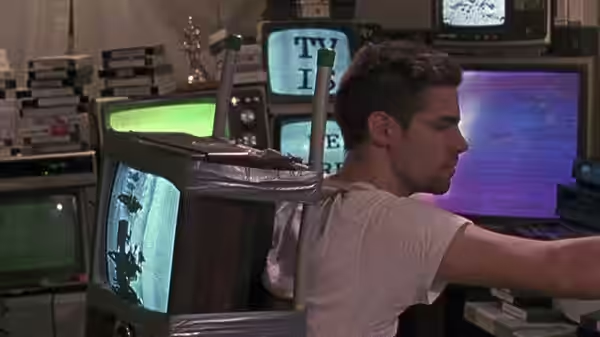
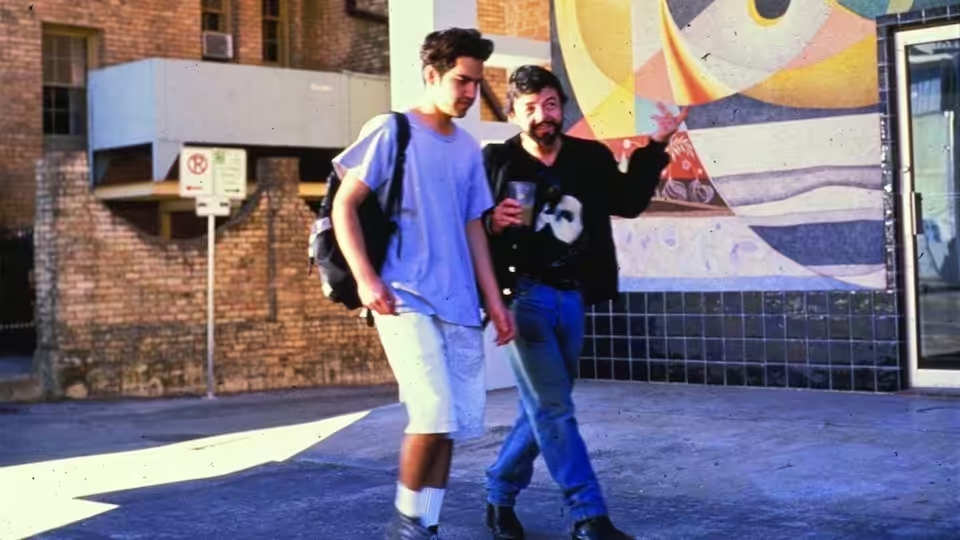
Two young men walking past a colorful mural on a city street
Film review

Slacker

1990 · Directed by Richard Linklater · 1h 37m

In a sentenceAn entire town of people who can turn a passing hello into a lecture, and we rather like their company

In Austin, Texas, a succession of residents talk about their lives, their beliefs and the way the world works. The film follows one person, then picks up another, moving through encounters without settling on a central character or a single storyline. Dreamers, outsiders and people with little interest in conventional working life share their theories and occupy one another’s time. Richard Linklater appears as Should Have Stayed at Bus Station, alongside Rudy Basquez as Taxi Driver and Dan Kratochvil as Espresso Czar / Masonic Malcontent.

Fi1m review

Richard Linklater’s Slacker makes following strangers around town an unusually good use of 97 minutes. A few speakers outstay their welcome, but the constant changes of company keep its talk and gentle mockery lively.

Richard Linklater’s Slacker is funny, patient with odd people and much more carefully organised than its wandering suggests. It moves among the residents of Austin, Texas, leaving one person to follow another, without appointing anyone to carry a conventional plot. The invitation is simple: spend some time listening, then move along when somebody else catches the film’s attention. That sounds like a small pleasure, but Linklater finds enough curiosity and humour in it to sustain most of the film’s 97 minutes.

Linklater, who also writes the film, gives these encounters the feeling of conversations overheard just long enough to become interesting. People offer their accounts of how life works, and the succession of speakers lets us notice both their convictions and their eagerness to have an audience. There is an affectionate joke in the amount of mental activity devoted to lives so short on conventional purpose. The film makes room for those ideas without requiring us to believe that every stranger with a theory has discovered something important.

Lee Daniel’s cinematography has a documentary looseness that suits the passing encounters, allowing the change from one person to another to feel casually noticed. Scott Rhodes’s editing keeps those transfers clear: we understand that our attention has shifted without needing a fresh introduction each time. We were delighted by these changes of company. Someone we had barely noticed becomes the person we follow, and the film keeps making us reconsider whom we had assumed was worth watching.

The cast helps by seldom making eccentricity feel like a request for applause. Linklater appears under the credit Should Have Stayed at Bus Station, while Dan Kratochvil is Espresso Czar / Masonic Malcontent, a description almost sufficient to start a conversation by itself. The performances have an uneven, conversational ease that fits a film continually changing whom it asks us to watch. Some of the delivery is awkward, but a more polished ensemble might have made this company seem suspiciously well rehearsed.

Deborah Pastor’s production design helps the people seem at home in their surroundings, even when we have only just met them. The places do not appear to have been prepared for someone to make an entrance, which suits a film so willing to change its subject. The documentary look can feel rough, and occasionally the visual plainness becomes a little dull. Mostly, the lack of fuss makes it easier to watch the people and attend to what they say.

The weakness is the obvious one: changing speakers cannot make every speaker equally interesting. Linklater sometimes gives an idea more time than it earns, and without a developing story there is little else to hold our attention during a dull passage. A few encounters feel pleased with their own peculiarity, as though being unconventional were enough to make a person good company. The humour usually returns before this becomes a serious problem, but the unevenness is there.

For a comedy about people with little apparent direction, Slacker is unusually free of pressure to get them moving. Linklater is interested enough in how they already live and talk to let us spend time with them without demanding a lesson. That patience makes the duller passages easier to accept, though it will not persuade anyone who needs a plot. Watch it with someone who enjoys talking to strangers.

Critical consensus AI synthesised

71
Positive
7
Mixed
1
Negative
1

Most critics respond warmly to Slacker’s wandering portrait of Austin, with praise clustering around Richard Linklater’s relay-like movement from one eccentric resident to another. The favourable reviews find careful organisation beneath the apparent aimlessness, along with humour and an affectionate, lightly satirical interest in the characters’ beliefs. Several also value the documentary-like style and naturalistic performances, finding that the encounters build a convincing picture of people whose ambitions rarely take conventional forms.

The spread is wide, however, and the lack of a continuing story is the chief dividing point. Even some sympathetic reviews find that interest fluctuates with whoever happens to be speaking, while others see the loose structure as essential to the film’s appeal. The New York Times finds that funny passages eventually give way to monotony; the Los Angeles Times is more firmly opposed, judging the local colour insufficient to make the aimless company engaging.

The AV Club
25 September 2013 · A · Mike D'Angelo
95

The critic praises the film's unusual baton-passing structure and its inventory of idiosyncratic Austin characters as dreamers and misfits rather than true slackers. Linklater's affectionate yet lightly satirical take on their worldviews makes the episodic encounters cohere into a fun, homogeneous whole.

Read the full review →
Slant Magazine
22 September 2013 · Budd Wilkins
80*

The critic views Slacker as a profoundly philosophical film with a round-robin structure that explores characters' worldviews and the possibilities of human freedom, borrowing from Buñuel and Ophüls. It celebrates a curdled radicalism and principled nonparticipation while sowing seeds for Linklater's later work.

Read the full review →
The Guardian
3 December 1992 · Derek Malcolm
80*

The critic calls it easily the most original American independent debut of the year and by some way the most entertaining. He singles out its free-form, relay-like structure of vignettes with around a hundred characters passing the baton, all planned like a military exercise despite its low budget.

Read the full review →
Time Out
10 September 2012 · NF
80*

The critic describes the film as a freewheeling, documentary-style celebration of the eccentric residents of Austin, Texas. It finds the studied eccentricity oddly compelling despite its home-movie quality.

Read the full review →
Variety
31 December 1990
70*

It is one of the freshest independent films in some time thanks to its highly idiosyncratic non-narrative approach and fluid style shifting between characters. The lack of storyline means interest rises and falls depending on who is on screen.

Read the full review →
The New York Times
5 July 1991 · Vincent Canby
55*

The film is a series of unconnected vignettes featuring eccentric characters with no narrative thread. It offers some funny moments and effective nonprofessional performances drawn from the director's notebooks, but charm gives way to monotony.

Read the full review →

Straight answers AI written, from our review

Is Slacker worth watching?
Slacker is worth watching for anyone happy to spend 97 minutes listening to strangers talk, and we scored it 81. Richard Linklater follows one Austin resident, then another, without a central character or plot, and the constant changes of company keep it funny and lively. Some speakers outstay their welcome, and anyone who needs a story will grow restless.
How long is Slacker, and what is it rated?
Slacker runs 1h 37m. It is a drama and comedy film.
Where can I watch Slacker in Singapore?
Slacker is not on any streaming or rental service in Singapore at the moment. It is available in 2 other countries; change your country at the top of the page to see where. Availability is checked daily.
How violent or frightening is Slacker, and is it suitable for children?
Slacker has no UK certificate and is rated R in the United States, and the review notes nothing violent or frightening in it. The film is almost entirely conversation, so the adult rating most likely reflects language rather than anything alarming. Children would simply be bored; it suits teenagers and adults who enjoy talk.
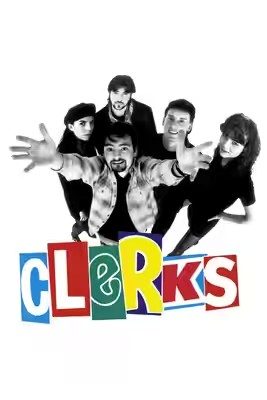
How does Slacker compare to Clerks?
Slacker is the gentler and better organised of the two, while Clerks is the more abrasive. Both are convinced an ordinary day deserves exhaustive discussion, but Linklater keeps moving between strangers, whereas Kevin Smith stays behind one counter with two clerks. Choose Slacker for warmth and variety, Clerks for sharper, coarser jokes.
What should I watch after Slacker?
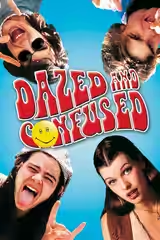
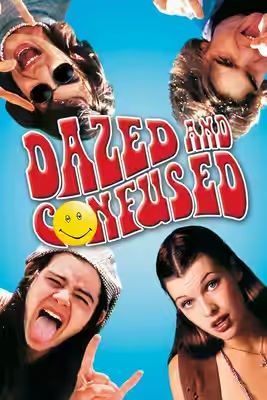
After Slacker, try Clerks (1994, Fi1m 82): More abrasive company, equally convinced that an ordinary day deserves exhaustive discussion. Then Dazed and Confused (1993, Fi1m 86): Linklater gives another loose gathering time to talk, posture and reveal themselves.

Cast

If you liked this, try…

  1. The Phantom of Liberty (1974) · not reviewed yetOne encounter gives way to another, with a sharper appetite for social absurdity.

  2. Clerks (1994, Fi1m 82)More abrasive company, equally convinced that an ordinary day deserves exhaustive discussion.

  3. Dazed and Confused (1993, Fi1m 86)Linklater gives another loose gathering time to talk, posture and reveal themselves.

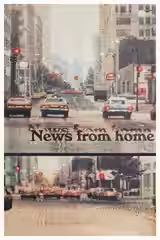
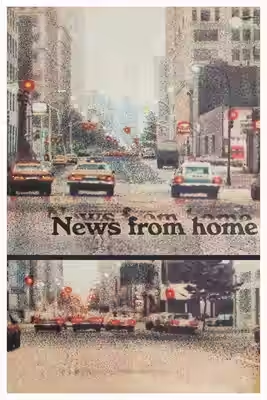
  4. News from Home (1976) · not reviewed yetNew York streets and a mother’s letters reward the same patient attention.

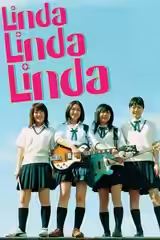
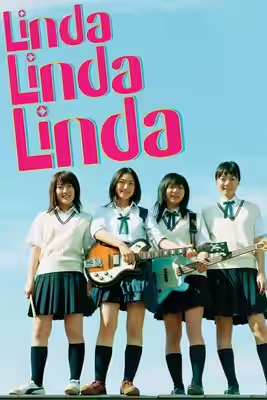
  5. Linda Linda Linda (2005) · not reviewed yetJapanese schoolgirls rehearse for a concert; the waiting around matters just as much.

Free account

Know what to watch tonight

Two lists that know where things are streaming, collections you can share, your own score beside ours, and Discover that remembers what you have seen.

  • Want to see, sorted by what is streaming now
  • Seen, with your score out of ten
  • No adverts, ever