Jon Hamm does what he can as a detective who cannot let go, and Josh Lucas does more as a father who cannot cope. Anders Anderson’s thriller runs the two stories side by side towards an answer you will have guessed by the half-hour.
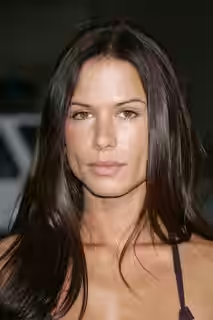
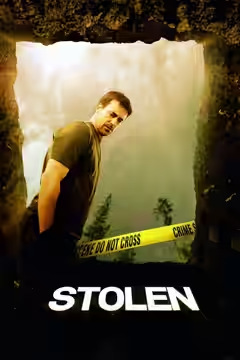
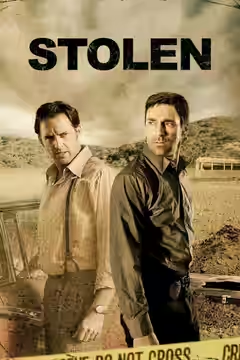
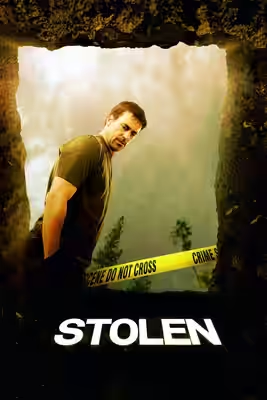
Stolen, which has also gone out under the title Stolen Lives, is a mystery with two clocks running. In the present, Tom Adkins Sr. (Jon Hamm) is a detective haunted by his son’s disappearance, and he has let his marriage to Barbara (Rhona Mitra) go cold in the process. In 1958, Matthew Wakefield (Josh Lucas) is a father with no money, no wife and a son, John (Jimmy Bennett), who does not think the way other boys do. A box of bones dug out of a building site joins the two. Anders Anderson directs from a script by Glenn Taranto, and the whole thing runs 97 minutes, which is the right length for a film with one idea.
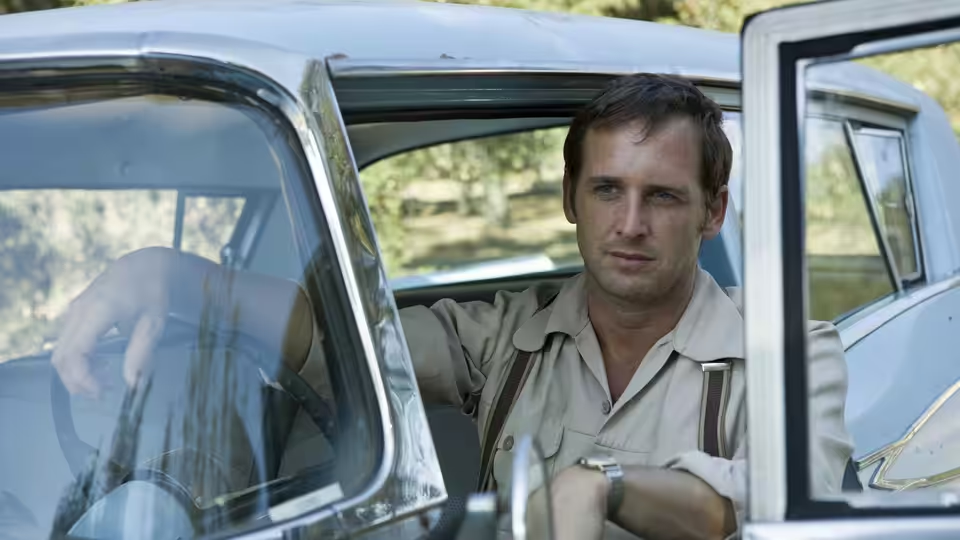
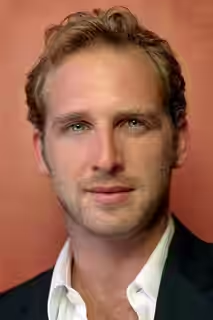
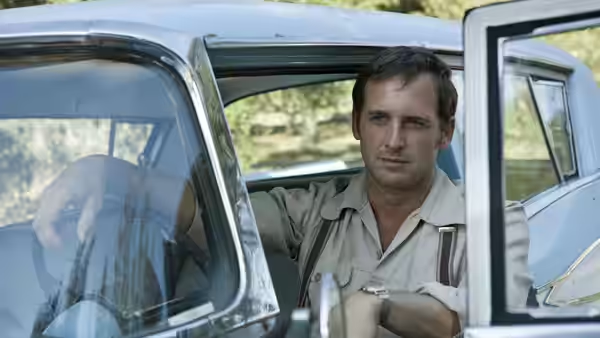
The 1958 half is the better half, and not by a little. Lucas plays Matthew as a man who is tired all the way down, who loves the boy and cannot always stand him, and Bennett gives John a stillness that makes the men around him uneasy. Jessica Chastain, as the waitress Sally Ann, has a handful of scenes and makes a person out of them. Jennifer Spence’s production design keeps the period to a boarding house, a diner and a raw building site, and Lisa Norcia dresses everyone in worn work shirts and one good dress, which is about the right amount of 1958 for a film of this size.
We will own that one scene got us. Matthew and John are alone in a rented room with nowhere to go next, the father talking and the boy not answering, and Lucas plays it without raising his voice. For a minute the film is about something true, which is how hard it is to be the only person responsible for a child the world has no room for. We felt that, and we had not expected to. Then the film cut back to the present and the feeling went with it.
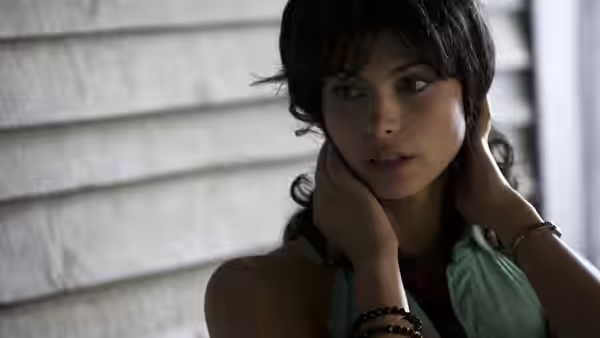
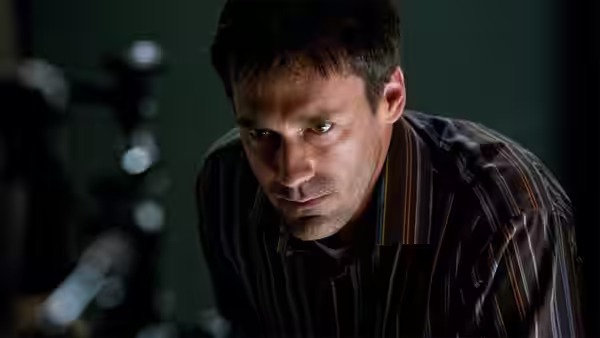
The present is where the trouble is. Hamm is given one note, the man who cannot let go, and he plays it with the stillness he is known for, but Taranto’s script never gives him a second note to set against it. Barbara exists to tell him to come home. Jonas (Michael Cudlitz) exists to tell him to drop the case. Rose Montgomery (Morena Baccarin) exists to hand him a piece of the past. Andy Steinman lights these scenes flat and blue-grey, every office and kitchen the same, and after a while we could not tell one room from another, which we do not think was the plan.
The cutting does the real damage. Gary Mau goes back and forth between the decades with such regularity, a scene of Tom and then a scene of Matthew and then a scene of Tom, that the film tells you the two stories are one story long before it means to. Trevor Morris’s score underlines every crossing with strings, so that each time a character pauses we are warned something sad is coming. By the half-hour we had a theory. By the hour we were waiting for the film to catch up with it, and when it did we were not surprised, and then we were a little cross at having been asked to wait.
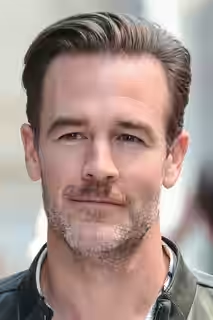
James Van Der Beek turns up in the 1958 half as a drifter the credits call Diploma / Roggiani, with a soft voice and an interest in the boy, and the way the film handles him tells you how it thinks: he is there to be looked at and worried about. We will not say more than that. We will say that the solution, when it arrives, does not bear the weight of two timelines, and that the film seems to know this, because it hurries through it.
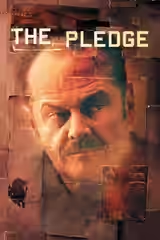
The better films in this line, the ones about fathers and missing children, keep their secret until the end and then make the secret hurt. Mystic River does it. The Pledge does it by refusing to give one. This film gives its secret away by accident, through the rhythm of its own editing, and has nothing to put in its place.
If Lucas and a quiet boy on a building site in 1958 sounds like an evening, there is a decent hour of a different film in here. Watch it for that, and keep your theory to yourself; the film will get there in its own time.