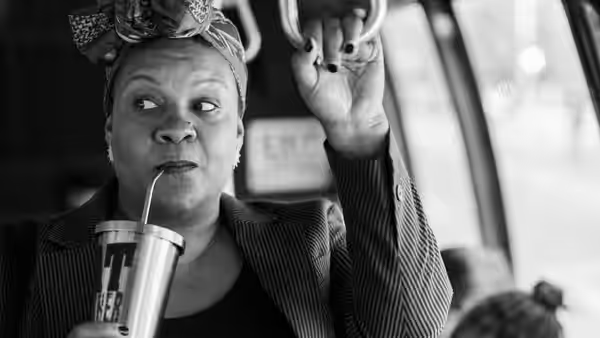
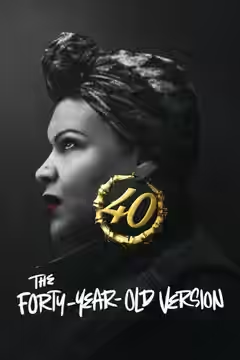
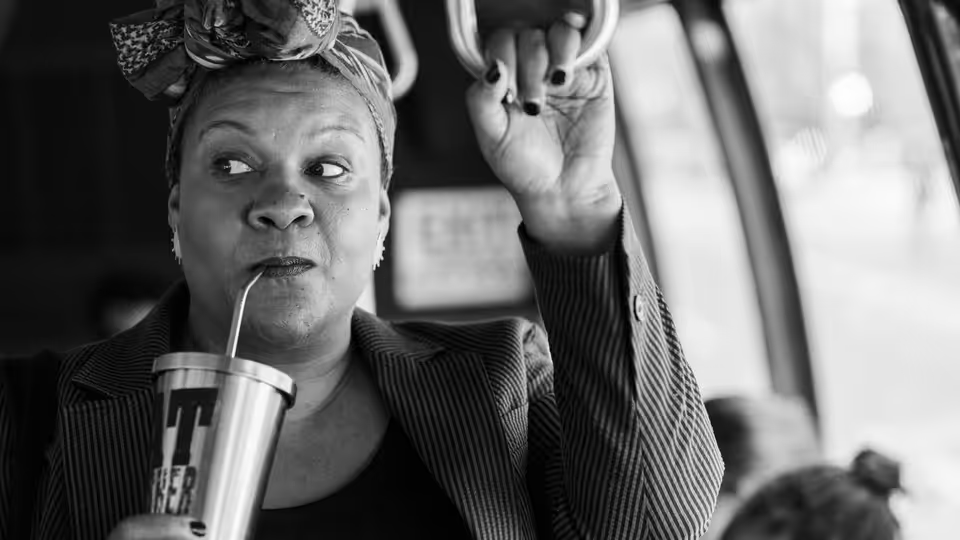
Radha (Radha Blank) sips from a cup while gripping an overhead strap on public transit
Film review

The Forty-Year-Old Version

2020 · Directed by Radha Blank · 2h 03m

In a sentenceThe rapping is good; the career advice is another matter

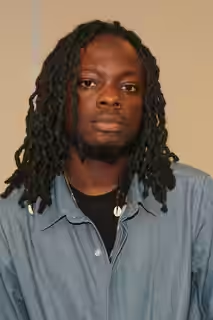
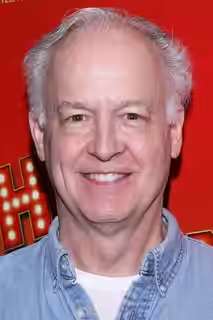
Radha (Radha Blank), a middle-aged Black artist in New York, wants to make work that sounds like her. The people who control access to an audience have other ideas, particularly about which Black stories they want to hear. As she tries rap, the pressure to reshape her work for white audiences gives her plenty to write about. Archie (Peter Y. Kim), D (Oswin Benjamin) and J. Whitman (Reed Birney) figure in her search for a way forward. Making a new start means deciding how much she is prepared to change to get her work heard.

Plays from YouTube when you press play; nothing loads from them until then.

Fi1m review

Radha Blank’s comedy about a Black artist finding her voice is funny, pointed and generous towards its lead. The rap lyrics and New York setting reward the attention, though the loose storytelling asks for more of it than necessary.

The Forty-Year-Old Version is a funny, warm comedy about an artist who has had enough of being told what she ought to make. Radha Blank writes, directs and plays Radha, a middle-aged Black woman trying to find room for her work in New York. Rap gives her another way to speak, and the film is at its sharpest when she stops being accommodating. We recommend it, with patience advised for a story that takes longer than it needs to find its way.

The pressure on Radha is specific: Black stories are welcome, provided they suit the expectations of white audiences. Radha Blank understands how this can be presented as helpful advice, and how exhausting it is to keep explaining why the advice is unwelcome. We laughed at the well-meaning liberals, then felt cross about the ease with which their preferences become somebody else’s professional problem. The comedy works because the people doing the steering can remain quite satisfied with their own decency.

Radha Blank also has the sense to leave Radha open to ridicule. Her performance is candid and self-deprecating, with enough prickliness to prevent the film becoming an extended request for approval. The rap lyrics give that humour a sharper shape, allowing irritation and ambition to become something she can perform rather than merely discuss. There is pleasure in watching an artist enjoy her own abilities, particularly when the film has been so clear about the pressures placed on them.

Eric Branco’s black-and-white cinematography gives the New York setting care and distinction. The compositions are deliberate, yet there is room within them for the neighbourhood characters whose presence keeps the city from feeling like scenery. Valeria De Felice’s production design helps establish a place people actually inhabit, without competing with the performances. The film’s affection for these surroundings is one of its quieter pleasures, especially when the satire has good reason to be angry.

Robert Grigsby Wilson’s editing is less persuasive about what needs to stay. At 123 minutes, the film gives its digressions enough space to weaken the pull of Radha’s central difficulty, and some supporting threads feel insufficiently developed despite the generous running time. We wanted fewer returns to the same frustration, because it is established so clearly. The later stretches also explain things that the earlier comedy has already made plain.

That looseness matters because Radha Blank is attempting something more interesting than a simple encouragement to follow a dream. The familiar creative-reinvention comedy often treats confidence as the missing ingredient; here the question of who gets to approve the work keeps intruding. An artist can find the courage to speak and still have to bargain over what an audience will be allowed to hear. The film keeps that difficulty funny without making it painless, although we would have trusted the jokes to carry more of it unaided.

This is for anyone who likes a comedy to notice who has the power in a conversation. It is also generous enough to enjoy a person who is still working out what to do with her talent. Come for the rapping and the bad advice; allow a little extra time for the conversations.
Critical consensus AI synthesised

82
Positive
17
Mixed
1
Negative
0

Most critics respond warmly to The Forty-Year-Old Version, with praise centred on Radha Blank’s funny, self-deprecating performance and sharp writing about artistic compromise. The reviews repeatedly value its specific account of a Black woman finding her voice while facing pressure to make her work palatable to white audiences. Its black-and-white photography and attentive portrayal of New York neighbourhoods also draw praise, alongside rap lyrics that give its observations wit and bite.

The reservations concern length and structure rather than Blank’s perspective. Several critics find the storytelling loose, with underdeveloped subplots and an overstretched final act. Variety considers it about half an hour too long, but finds that Blank’s distinctive voice makes it work. Polygon is more troubled by a final act it finds overlong and overly didactic. The spread is chiefly between enthusiasm and qualified approval: these complaints rarely overturn the warmth towards Blank’s performance and her treatment of creative freedom.

Little White Lies
30 September 2020 · 4/5/4 · Cheyenne Bart-Stewart
100

The critic calls the film a heartfelt, sharp triumph about artistic reinvention and who gets to tell Black stories. They praise its satire of well-meaning liberals and its evocative portrait of New York, while noting some pacing issues and undercooked subplots.

Read the full review →
Radio Times
★★★★★ · Emma Simmonds
100

The critic calls the film a knockout debut. They praise its monochrome cinematography and Radha’s sublime rap lyrics.

Read the full review →
The AV Club
8 October 2020 · A- · Shannon Miller
90

The critic calls the film a stunning, sincere comedy about artistic compromise, praising its truthful and compassionate portrayal of marginalized artists. She particularly singles out Radha Blank’s fierce wit and the film’s authentic Brooklyn atmosphere.

Read the full review →
The New Yorker
9 October 2020 · Richard Brody
90*

Brody finds the film an enjoyable, self-aware work about artistic expression and compromise. He especially praises its visual composition and the moving scene in which Radha and D commemorate their mothers through improvised rhymes.

Read the full review →
Empire
30 September 2020 · Hanna Flint
85*

Flint gives the film an enthusiastic verdict, calling it endearing, erudite and humorous. She especially praises Radha Blank’s witty rap persona and the film’s fresh perspective on the artist’s struggle.

Read the full review →
Los Angeles Times
1 October 2020 · Justin Chang
85*

Chang gives the film a strongly positive verdict, praising its sharp, funny, and movingly specific portrait of an artist finding her voice. He singles out Blank’s elegant black-and-white cinematography and deft satire of artistic compromise and cultural privilege.

Read the full review →

Straight answers AI written, from our review

Is The Forty-Year-Old Version worth watching?
The Forty-Year-Old Version is worth watching for its sharp, warm comedy about artistic compromise, and we score it 80 out of 100. We recommend it for the rap lyrics, Radha Blank’s self-deprecating performance and its pointed account of who controls access to an audience, though the storytelling takes longer than it needs to.
How long is The Forty-Year-Old Version, and what is it rated?
The Forty-Year-Old Version runs 2h 03m. It is a comedy and drama film.
Where can I watch The Forty-Year-Old Version in Estonia?
The Forty-Year-Old Version is streaming on Netflix in Estonia. Availability is checked daily; the links above go straight to each service.
How violent or frightening is The Forty-Year-Old Version, and is it suitable for children?
The Forty-Year-Old Version carries a US R certificate, so we would not recommend it as a children’s film. That rating indicates adult material but does not establish how violent or frightening it is; we cannot give a more specific warning about either, or assure parents that its comic premise makes it suitable for younger viewers.
How does The Forty-Year-Old Version compare to Frances Ha?
The Forty-Year-Old Version offers more pointed comedy about artistic gatekeeping than Frances Ha, while we find the latter’s central friendship more affecting. Both follow comic heroines navigating uncertain prospects in New York. We recommend Frances Ha for its emotional pull and The Forty-Year-Old Version for its rap lyrics and scrutiny of whose stories get heard, with patience advised for its loose storytelling.
What should I watch after The Forty-Year-Old Version?
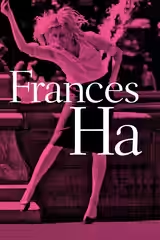
After The Forty-Year-Old Version, try Frances Ha (2012, Fi1m 82): New York, uncertain prospects and a comic heroine who keeps getting in her own way. Then Cléo from 5 to 7 (1962, Fi1m 88): A singer’s anxious walk through Paris leaves room for wit and uncomfortable self-examination.

Cast

Awards

Sundance U.S. Directing Award: Dramatic, 2020

Won
Sundance U.S. Directing Award: Dramatic

If you liked this, try…

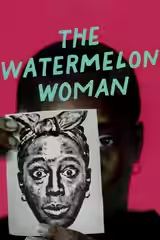
  1. The Watermelon Woman (1996) · not reviewed yetAnother funny, personal account of a Black woman making room for her own stories.

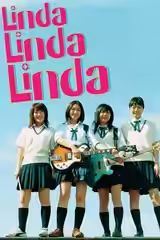
  2. Linda Linda Linda (2005) · not reviewed yetA Japanese school band finds camaraderie in the awkward business of making music.

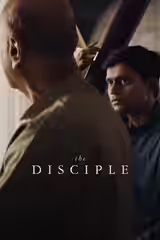
  3. The Disciple (2020) · not reviewed yetA more sombre look at musical ambition and the difficulty of judging yourself.

  4. Frances Ha (2012, Fi1m 82)New York, uncertain prospects and a comic heroine who keeps getting in her own way.

  5. Cléo from 5 to 7 (1962, Fi1m 88)A singer’s anxious walk through Paris leaves room for wit and uncomfortable self-examination.