Radha Blank’s comedy about a Black artist finding her voice is funny, pointed and generous towards its lead. The rap lyrics and New York setting reward the attention, though the loose storytelling asks for more of it than necessary.
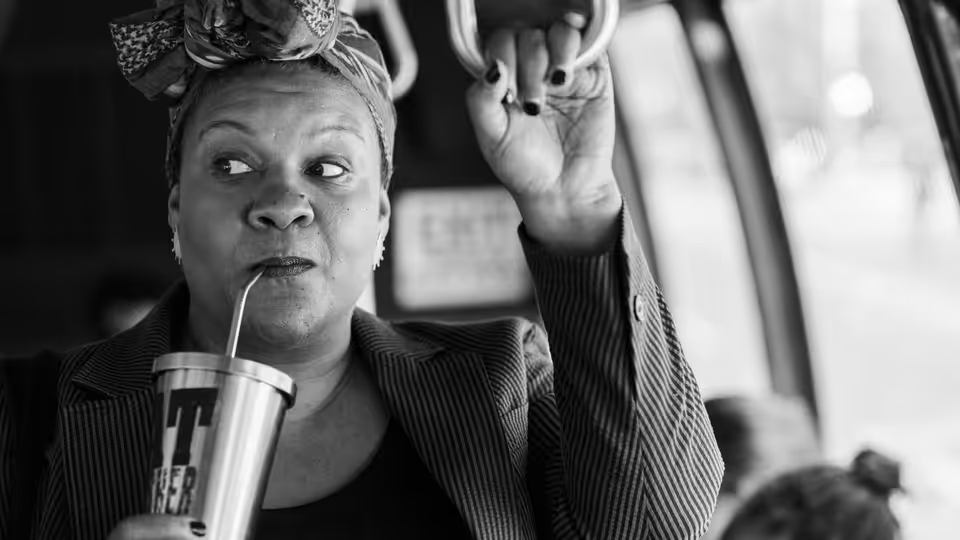
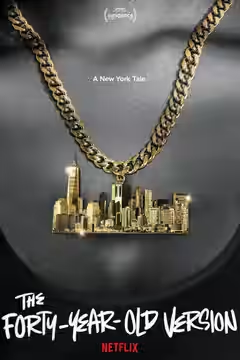
The Forty-Year-Old Version is a funny, warm comedy about an artist who has had enough of being told what she ought to make. Radha Blank writes, directs and plays Radha, a middle-aged Black woman trying to find room for her work in New York. Rap gives her another way to speak, and the film is at its sharpest when she stops being accommodating. We recommend it, with patience advised for a story that takes longer than it needs to find its way.
The pressure on Radha is specific: Black stories are welcome, provided they suit the expectations of white audiences. Radha Blank understands how this can be presented as helpful advice, and how exhausting it is to keep explaining why the advice is unwelcome. We laughed at the well-meaning liberals, then felt cross about the ease with which their preferences become somebody else’s professional problem. The comedy works because the people doing the steering can remain quite satisfied with their own decency.
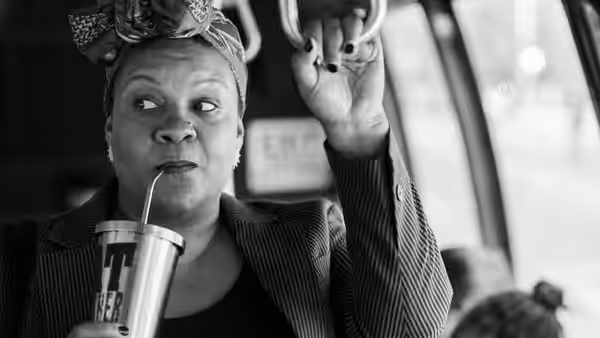
Radha Blank also has the sense to leave Radha open to ridicule. Her performance is candid and self-deprecating, with enough prickliness to prevent the film becoming an extended request for approval. The rap lyrics give that humour a sharper shape, allowing irritation and ambition to become something she can perform rather than merely discuss. There is pleasure in watching an artist enjoy her own abilities, particularly when the film has been so clear about the pressures placed on them.
Eric Branco’s black-and-white cinematography gives the New York setting care and distinction. The compositions are deliberate, yet there is room within them for the neighbourhood characters whose presence keeps the city from feeling like scenery. Valeria De Felice’s production design helps establish a place people actually inhabit, without competing with the performances. The film’s affection for these surroundings is one of its quieter pleasures, especially when the satire has good reason to be angry.
Robert Grigsby Wilson’s editing is less persuasive about what needs to stay. At 123 minutes, the film gives its digressions enough space to weaken the pull of Radha’s central difficulty, and some supporting threads feel insufficiently developed despite the generous running time. We wanted fewer returns to the same frustration, because it is established so clearly. The later stretches also explain things that the earlier comedy has already made plain.
That looseness matters because Radha Blank is attempting something more interesting than a simple encouragement to follow a dream. The familiar creative-reinvention comedy often treats confidence as the missing ingredient; here the question of who gets to approve the work keeps intruding. An artist can find the courage to speak and still have to bargain over what an audience will be allowed to hear. The film keeps that difficulty funny without making it painless, although we would have trusted the jokes to carry more of it unaided.
This is for anyone who likes a comedy to notice who has the power in a conversation. It is also generous enough to enjoy a person who is still working out what to do with her talent. Come for the rapping and the bad advice; allow a little extra time for the conversations.