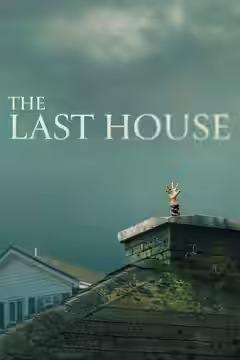
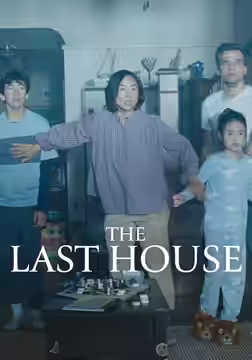
Louis Leterrier shuts a family in a house and, for the best part of an hour, trusts that to be enough. It is. Then the film shows us what is outside, and a patient domestic thriller becomes a routine monster picture with a hurried ending.
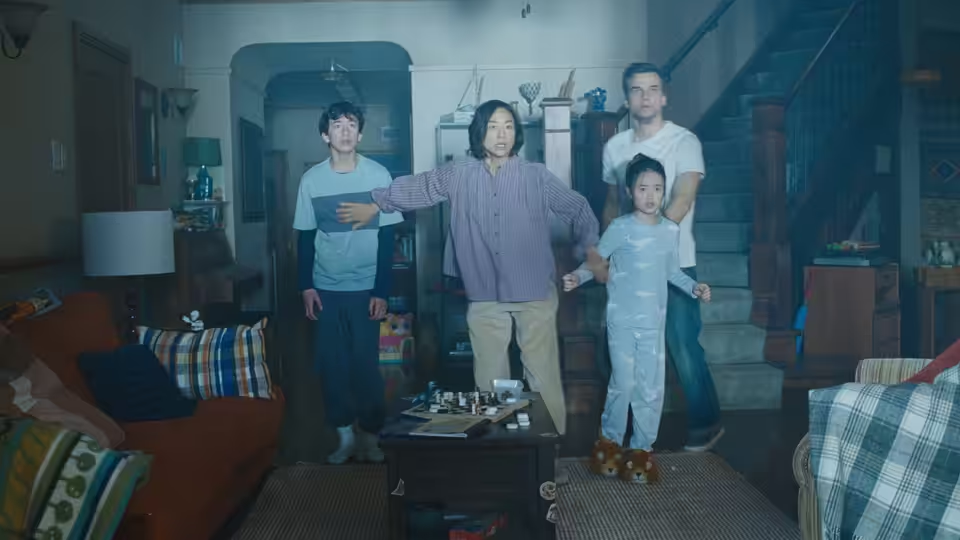
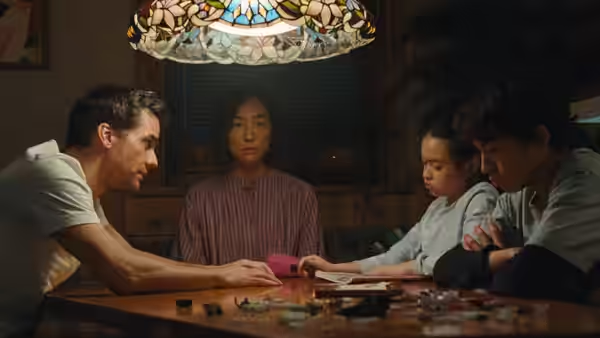
Louis Leterrier’s The Last House asks the question on its own poster, “How long can you survive?”, and for about forty minutes it is a decent question. Matthew Robinson’s script puts a family of four in a house, shuts the door on them and lets them work out what is left in the cupboards. It is plainly about the lockdown years, and it has the sense not to say so aloud. Then the film decides that a family in a house is not enough, and what it adds is a good deal less interesting than what it had.
Greta Lee plays Ann as the one who keeps count, and she lets the dread show through the arithmetic rather than around it. Wagner Moura’s Jason is the fixer, cheerful for the children and less so once they are asleep, and the two of them are good enough that the first act works as a study of a marriage under pressure. Riley Chung and Noah Alexander Sosnowski play Ruth and Graham as children who treat confinement as a game until they do not, and the scenes where they stop are the best small things the film does.
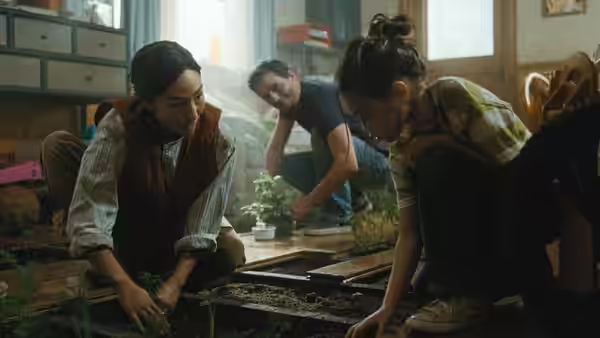
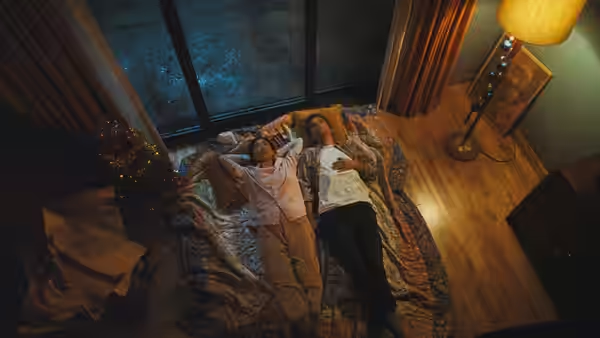
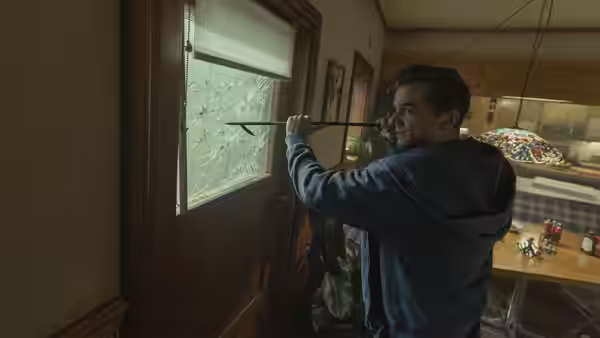
Kevin Jenkins’s production design does much of the real work. The house fills up slowly with the evidence of making do, and the years show on the rooms before they show on the children. Pål Ulvik Rokseth shoots almost nothing beyond the windows, so that the outside stays unseen and unexplained, and for a stretch that restraint holds. We were tense, more than we expected to be, through the passage where nobody knows what is out there and the film has the patience not to tell us. Yair Elazar Glotman’s score stays low and sparing there, and the quiet between the family’s routines is doing the frightening.
The film’s boldest choice is time. Ruth and Graham are recast as they grow, Emma Ho and Gabriel Barbosa taking over the teenage years, and the idea of children growing up inside four walls is the one thing here that a more cautious film would not have attempted. Adam Gough cuts the jumps cleanly and without fuss. But Robinson’s script treats each new age as a fresh start rather than the sum of what came before, so a family that has been shut in for years arrives at its later scenes with no grudges, no secrets and no damage worth the name. That is where it lost us. We were bored, and then we were irritated about being bored, because the premise had earned better.
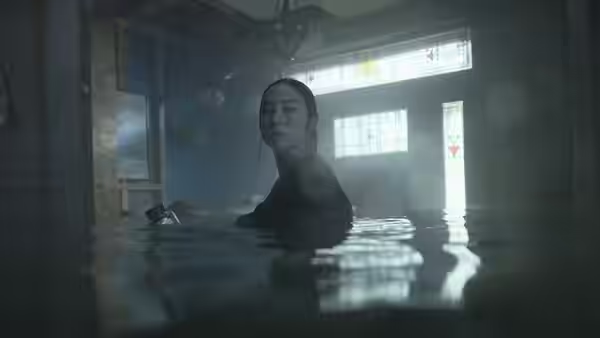
Then there is what is outside. We will not say what it turns out to be, only that the film eventually shows it to us and that we wished it had not. The creature work is ordinary, the kind of thing the earlier reticence seemed to promise we would be spared, and once it is on screen the household stops being a pressure cooker and becomes a set. The final act is rushed. A 110-minute film that spent its first half asking us to be patient ends as though someone had shouted the running time from the next room.
Leterrier is a director of momentum, with Now You See Me and Fast X among his credits, and he handles the slow, watchful material here better than his record would suggest. The trouble is that the material rewards patience and he does not keep it up. Jane Petrie’s costumes tell the story of the years more honestly than the script does, the same clothes worn down and passed along, and it says something that a wardrobe carries more consequence than the dialogue.
The reviews so far split almost evenly between people who liked the family and people who resented the monster, and we find ourselves in both camps. The 12 certificate is honest: this is horror for a household rather than a horror crowd, and the scares are mild. Watch it with someone you spent lockdown with, and consider stopping when the family stops being the point; you will know the moment.