Guy Ritchie sends Henry Cavill and four friends to sink a ship and kill everyone in reach, and stages it as a lark. The action is clean and the company good, but nothing anyone does costs anything, and two hours of that wears thin.
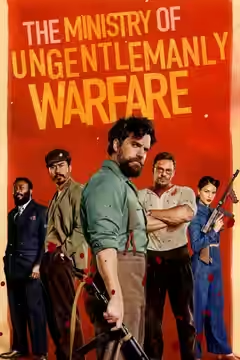
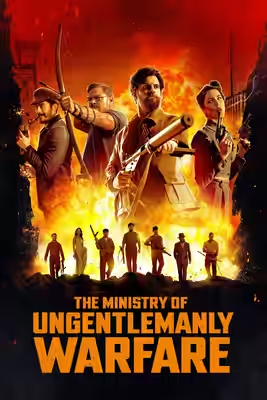
Guy Ritchie has found the one wartime story that might have been written for him: a gang of well-spoken misfits, an official licence to misbehave, and a great many Germans standing in the way. The Ministry of Ungentlemanly Warfare follows Gus March-Phillips (Henry Cavill), sent by Churchill (Rory Kinnear) and Brigadier Gubbins (Cary Elwes) to sail to the Spanish island of Fernando Po and sink the ship supplying the U-boats that are strangling the Atlantic convoys. Nobody in London can know. That is the whole plot, and at 120 minutes the film has rather more room than it needs for it.
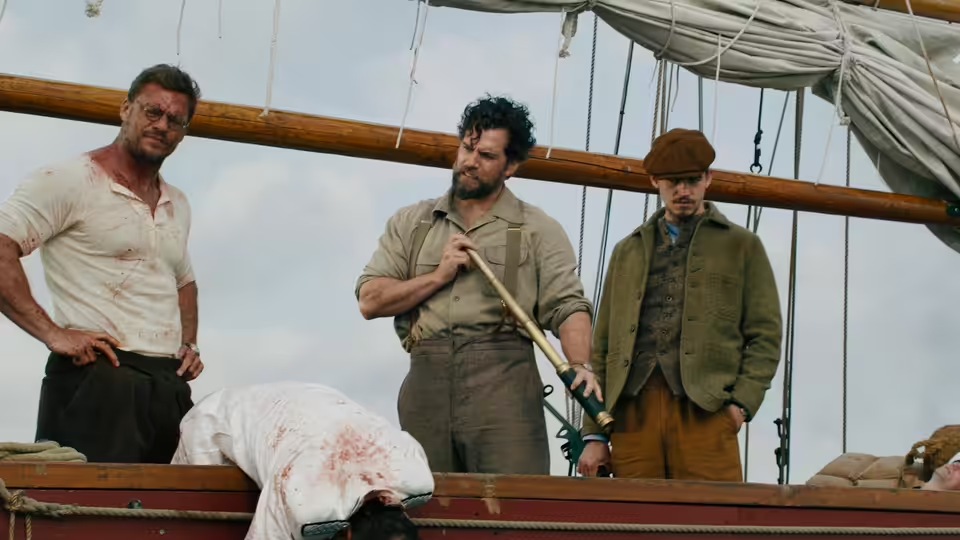
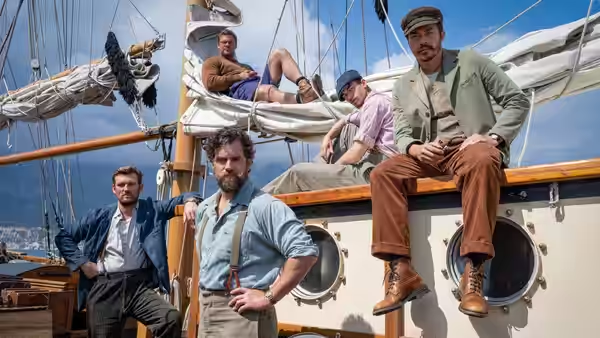
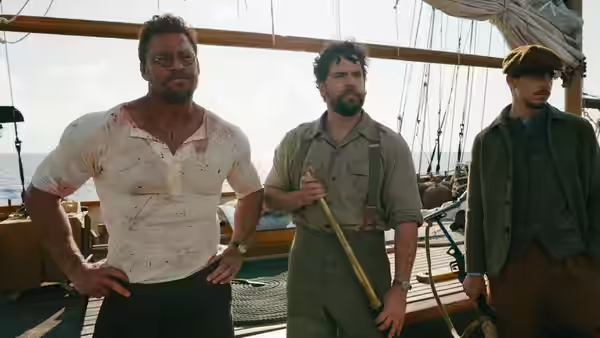
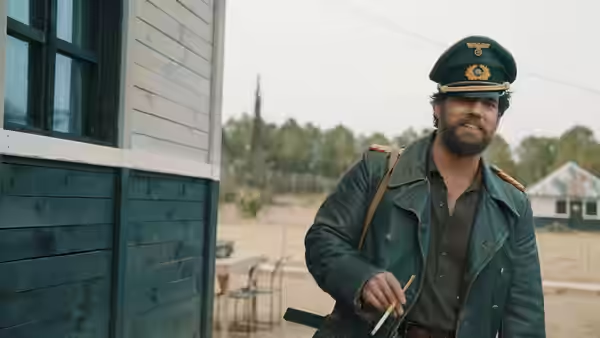
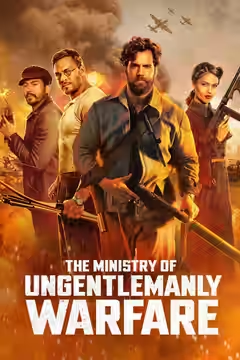
Cavill is having a better time than he has had in years. He wears his moustache like a stage prop, smokes through every briefing and delivers his lines as a man who has already decided the meeting is over. Alan Ritchson, as the Dane Anders Lassen, is the film’s one real invention: an enormous, courteous killer who greets people warmly and then puts an axe in them. Henry Golding’s Alvarez blows things up and grins about it. Alex Pettyfer’s Appleyard and Hero Fiennes Tiffin’s Hayes make up the numbers with good grace.
Ed Wild shoots the whole thing in a warm, honeyed light, night raids included, so the war looks like somewhere you might book a fortnight. Chris Benstead’s score is a jaunty affair of whistling, twanging guitar and brass, and James Herbert cuts the fights to it: a stab on the downbeat, a cutaway before the body hits the deck. It is clean, legible work. You always know who is shooting whom, which is more than many action films this size can say.
And yet. We laughed when Ritchson, plugged full of arrows, plucked one out and carried on, and then somewhere around the fortieth dead German we noticed we had stopped feeling anything at all, amusement included. The reason is on screen. Ritchie stages every death the same way, at the same speed, with nobody on either side reacting to it. The Germans die by the dozen and the British never so much as get their shirts dirty, and a mission in which nothing can go wrong is not a mission.
The other half of the film is on the island, where Marjorie Stewart (Eiza González) and Richard Heron (Babs Olusanmokun) are meant to be keeping the commandant Heinrich Luhr (Til Schweiger) occupied. González sings, changes gowns and flirts; Schweiger glowers and threatens. These scenes are where the tension ought to live, and they are the slackest thing in the film. Martyn John’s Fernando Po is a clean white harbour with a casino and a quayside, and none of it looks as if anyone lived there before the crew arrived. Danny Sapani, as the local fixer KB, gets the best dry lines and too few of them.
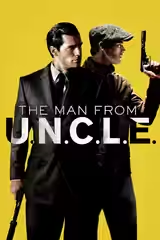
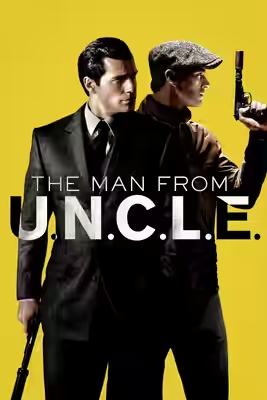
Ritchie’s best films run on talk. Lock, Stock and Two Smoking Barrels (1998) was a small crime picture that kept you leaning in for the next line, and The Man from U.N.C.L.E. (2015), also with Cavill, was a spy caper that knew flirting was more fun than fighting. Here, with four credited screenwriters, the dialogue is mostly logistics and the jokes are mostly killings. Freddie Fox’s Ian Fleming hovers at the edges as a wink to the audience, and the film would rather we noticed the wink than anything he says.
Most critics have landed about where we have, half amused and half unbothered, and the split in the reviews comes down to how much you mind watching a war in which the war is never in doubt. It is a pleasant enough two hours with people who look good in linen, and it goes down easily at home, where the flatness matters less. The men it is based on took real risks. The film takes none.