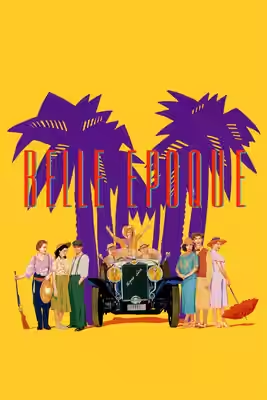
Michael Palin and Maggie Smith supply welcome comic company, but this genteel farce never gathers enough speed. The period presentation is assured; the screenplay leaves too much of the work to its cast.
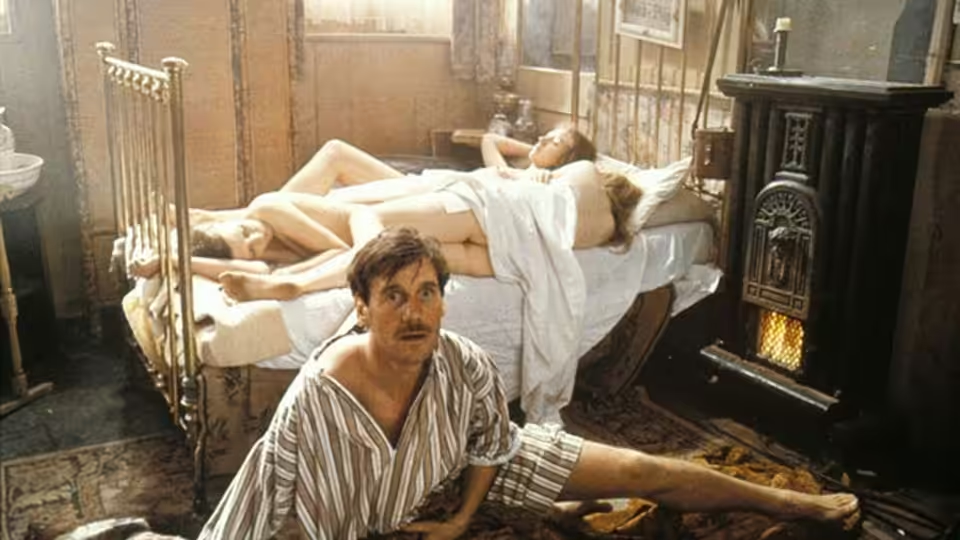
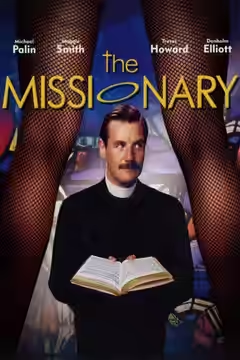
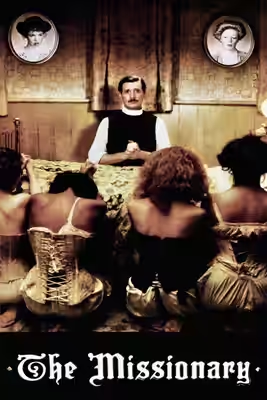
Richard Loncraine’s The Missionary is a mild, uneven period comedy with a cast that deserves a better supply of jokes. Michael Palin writes and stars as The Reverend Charles Fortescue, bringing enough personal charm to make the film’s failings faintly exasperating. The promise of a saucy farce is there, but the script keeps moving without building much comic pressure. It is an agreeable film to spend a little time with, and a difficult one to recommend for the whole of its 90 minutes.
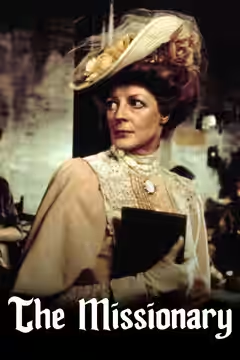
Maggie Smith, playing Lady Isabel Ames, provides the strongest reason to persevere. Her performance has a comic assurance that makes the material seem more substantial while she has hold of it, and the film benefits from giving us someone so enjoyable to watch. Palin is good company too, with a performer’s appeal that survives his uneven writing. Their work supplies individual pleasures, although the comedy depends too heavily on our liking the people delivering it.
The screenplay’s weakness is its reluctance to develop what it starts. A farce needs complications that grow, so that a joke can leave a character in a worse position and make the next joke possible; here, the wandering construction makes too much feel incidental. We were frustrated by that drift, because the performers repeatedly suggest comic possibilities the writing does not pursue. The problem is not that the humour is gentle, or that every exchange needs a laugh, but that too little seems to gather force.
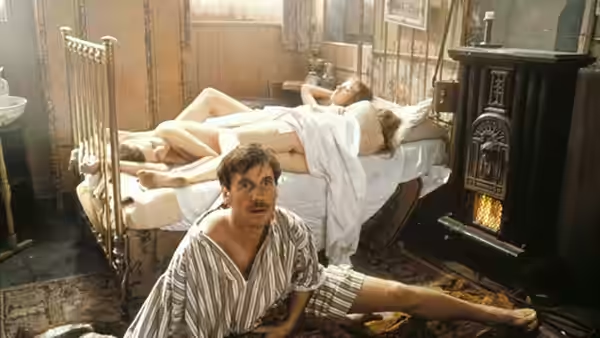
The period presentation is more assured, with Peter Hannan responsible for the cinematography and Norman Garwood for the production design. Along with Shuna Harwood’s costumes, their work gives Loncraine a setting that looks considered and makes the film easy to settle into. That care is welcome in a comedy which could easily have treated its surroundings as an excuse for fancy dress. The visual presentation remains a source of pleasure through the less rewarding stretches of the writing.
Paul Green’s editing cannot quite turn the separate amusements into a satisfying comic progression. The film feels loose in a way that its modest running time does not excuse, and the pauses between rewards give us too much opportunity to notice it. Mike Moran’s music makes less of an impression than the cast and does little to make those diversions feel connected. The difficulty keeps coming back to a screenplay that needs to do more with the situations it introduces.
Against the basic demands of farce, the film is too content to amble. There is room in the genre for mildness, and the cast and period styling make that approach inviting, but sustained comic invention is a reasonable thing to ask of a comedy. The talented company prevents the film from becoming a chore, without making its missed opportunities any less apparent. If Smith and Palin are the attraction, their performances may be enough; anyone after a sustained farce should choose something else.