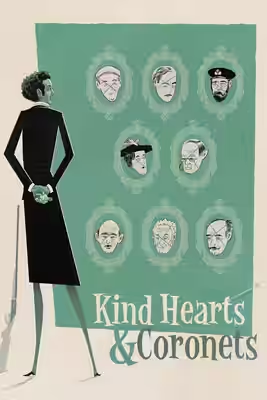
Robert Hamer’s comedy about killing for a dukedom is precise, cruel and persistently funny. Dennis Price makes its appalling logic sound reasonable, although the delight in Louis’s scheming sometimes leaves the other characters short of attention.
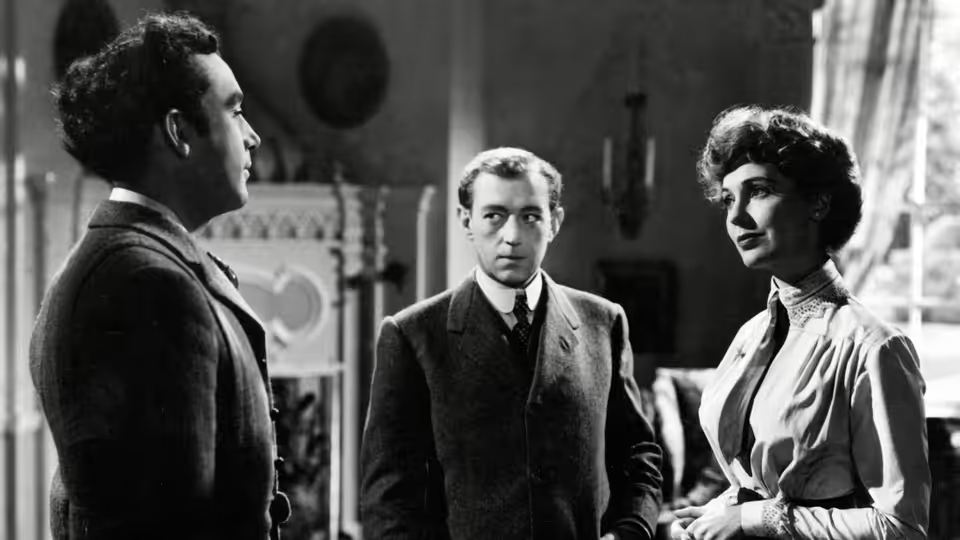
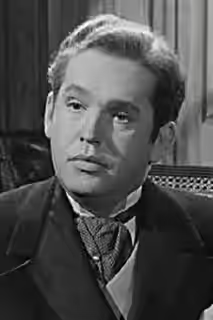
Robert Hamer’s Kind Hearts and Coronets is a murder comedy that trusts us to recognise wickedness without having it pointed out. It is consistently funny, and its composure makes the cruelty more disturbing. Louis Mazzini, played by Dennis Price, regards the D’Ascoynes between him and a dukedom as a problem with a practical solution. Hamer and his fellow screenwriter John Dighton let him explain himself. The pleasure is in hearing how little adjustment his gentlemanly vocabulary requires to accommodate murder.
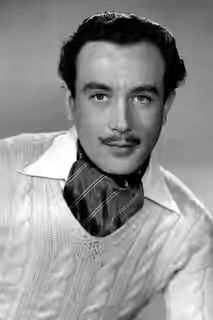
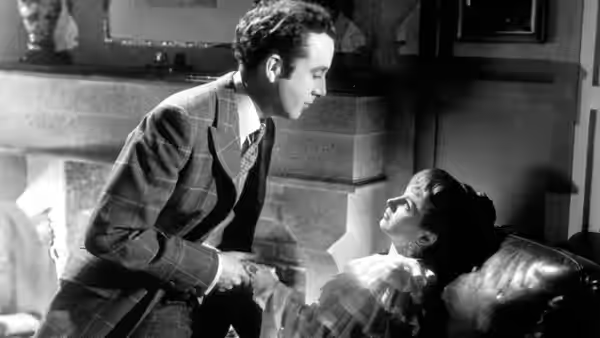
Price is the reason we accept so much of this. His account of Louis’s ambitions is so orderly, so free of the usual signs of villainy, that we begin to follow his reasoning before examining it. We laughed at Louis’s calm narration of his murderous ambitions, then felt rather grubby about having accepted his terms so readily. That is a credit to Price’s refusal to signal when we should recoil, and to dialogue that lets Louis sound intelligent without making him right.
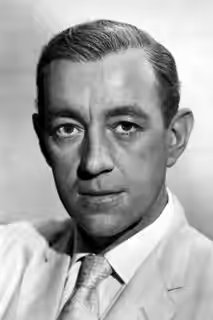
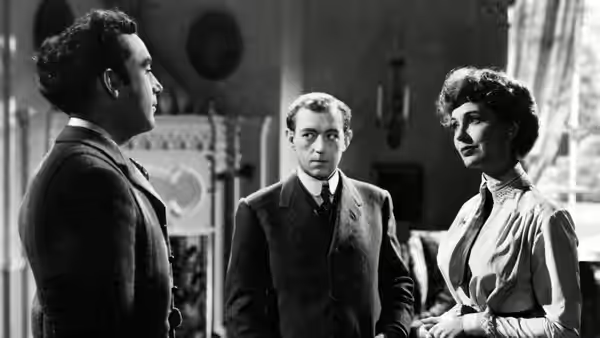
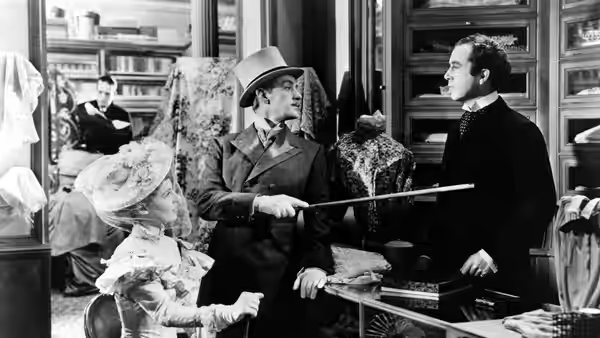
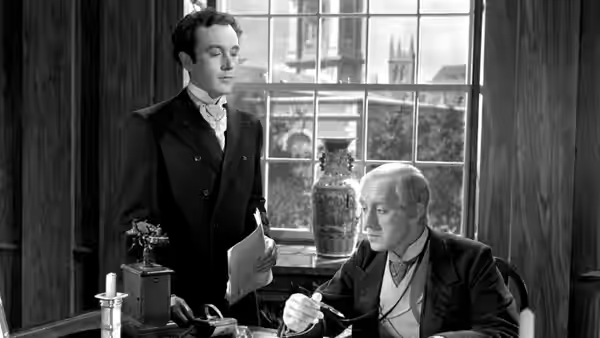
Guinness plays eight D’Ascoynes, among them the duke, the banker, the parson and Lady Agatha. It could easily become a sequence of disguises waiting for applause, but the changes of voice and posture give each relative a separate claim on our attention. He is particularly good at suggesting people who have never needed to question their own importance. We recognise the family resemblance without losing the differences. Their separate voices and habits keep the encounters from becoming interchangeable.
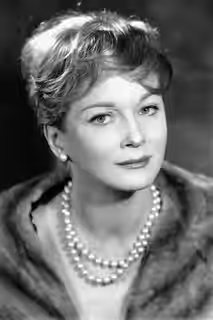
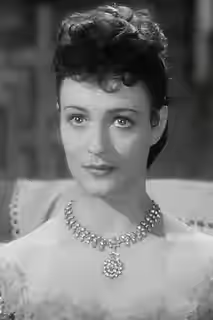
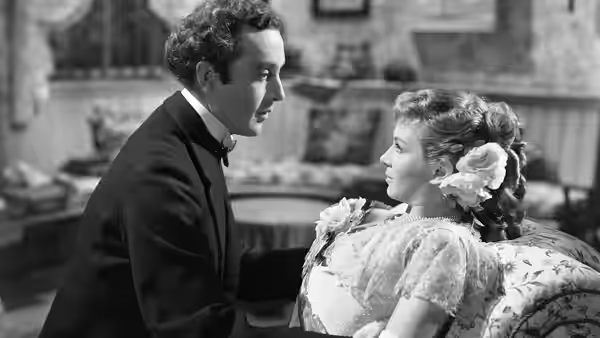
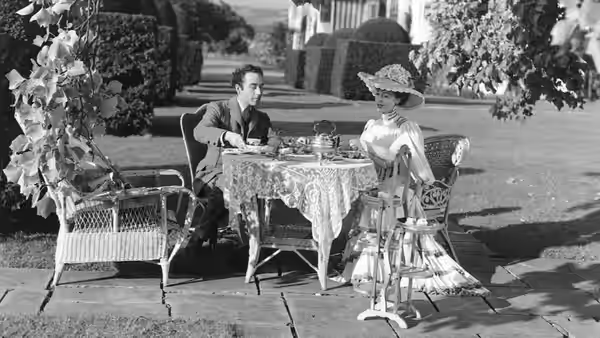
Joan Greenwood’s Sibella brings a welcome complication to all this male self-assurance. Greenwood makes the dialogue sound as though she has already considered what the other person will say and decided how much of it to believe. Valerie Hobson’s Edith D’Ascoyne is a cooler presence, and the contrast helps vary the scenes around Price. Neither woman is allowed the space Louis gets to account for herself. That is a limitation worth noting in a film so alert to the ways people excuse their own behaviour.
Douglas Slocombe’s photography gives the performances room to work; the restraint of the framing suits a comedy in which a small change of expression matters. Peter Tanner’s editing is similarly attentive to the actors, allowing the polite phrasing to register without labouring every joke. We can enjoy Guinness’s variations without feeling that the film has stopped for a guest appearance. Ernest Irving’s music is most effective when it leaves that conversational pace undisturbed. The words remain easy to attend to, which matters when so much of the humour depends on how something is said.
The social satire is especially sharp because Louis wants admission to the class he resents, and Price never makes that ambition seem generous. A gentler comedy might allow us to mistake an agreeable outsider for a reformer; Hamer gives us little reason to make that mistake. There is a cost to such steady coldness, though. Once Louis’s reasoning is clear, a few passages offer another example of his composure when we would welcome a change.
A crime comedy can become tiresome when it keeps asking us to admire its own bad taste. Hamer trusts the actors and the writing enough to spare us that insistence. Watch it with someone whose sense of humour you think you know.