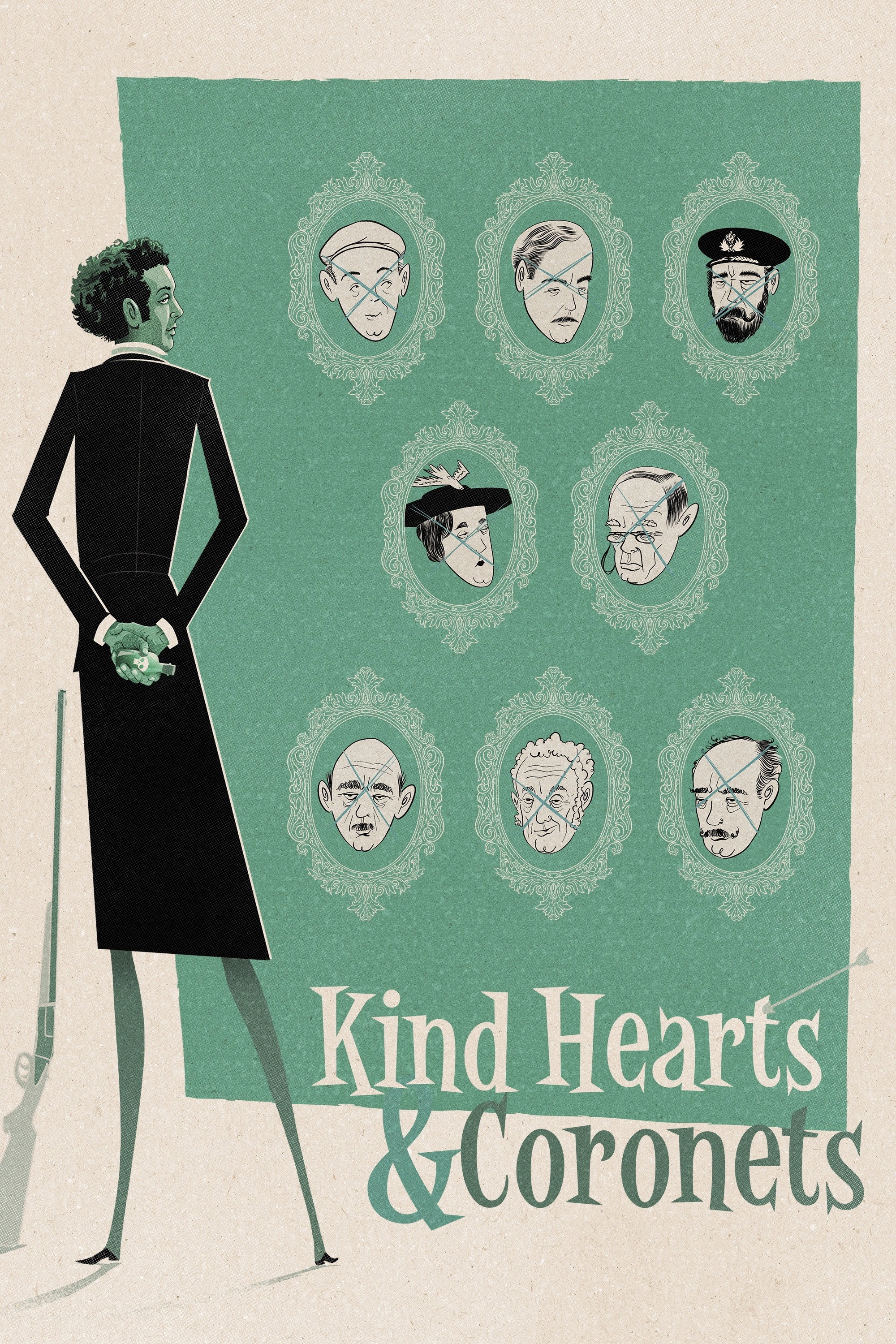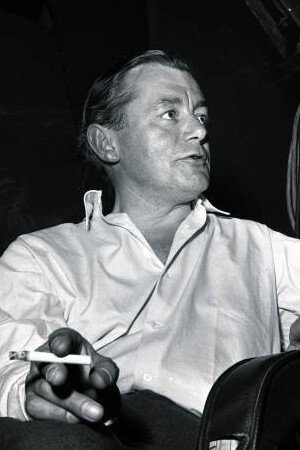
Robert Hamer is at his sharpest when respectable speech makes appalling behaviour sound reasonable. We rate his black comedy highly; his films about East End and Thames-side life deserve attention beside it.
Fi1m perspective
Dennis Price's Louis Mazzini talks about removing the relatives between him and a dukedom with the composure of someone explaining an ordinary inconvenience. In Kind Hearts and Coronets (1949), Robert Hamer and fellow screenwriter John Dighton let that explanation proceed without telling us when to disapprove. We laughed, then felt uneasy at how readily Price's courteous reasoning had carried us along. Hamer gives the actor time to make murder sound manageable, and the comedy is sharper because Louis sees so little to trouble him.
That interest in what lies behind respectable appearances was already present in Hamer's haunted-mirror episode for Dead of Night (1945). His Ealing work also included Pink String and Sealing Wax (1945) and It Always Rains on Sunday (1947), the latter a portrait of East End life. The emotionally charged realism of It Always Rains on Sunday is worth remembering when the precision of Kind Hearts and Coronets threatens to define him entirely.
In Kind Hearts and Coronets, Hamer never asks us to forgive Louis because he is funny. Louis wants to enter the class he despises, and Price gives us little excuse to mistake him for a man bent on improving it. Alec Guinness's multiple roles attract attention, but the writing Hamer shares with Dighton is just as important: the gentlemanly vocabulary barely changes when the subject becomes killing. There is no need to keep signalling how outrageous this is, and Hamer does not.
There are limits to this control. Once we understand Louis's reasoning, a few passages merely confirm how composed he is, while other characters could use more attention. We would welcome a change of emphasis, though Hamer's trust in the performers keeps the film funny even when the point has already been made.
Hamer left Ealing after His Excellency (1952); his subsequent films included The Long Memory (1953), a story of vengeance and redemption set on the Thames estuary. That setting is another reason to look beyond the dukedom when considering his work. Start with Kind Hearts and Coronets, then try It Always Rains on Sunday for a less detached Hamer.
Biography
Robert Hamer was a British film director and screenwriter. Born in Kidderminster, Worcestershire, on 31 March 1911, he died in London on 4 December 1963. He began his career in 1934 as a cutting room assistant and worked as a film editor from 1935, including on Alfred Hitchcock's Jamaica Inn (1939). He later contributed to documentaries for the GPO Film Unit.
Hamer joined Ealing Studios in the early 1940s. He directed the 'haunted mirror' segment of Dead of Night (1945) and went on to direct and write several features there, including Pink String and Sealing Wax (1945), It Always Rains on Sunday (1947) and Kind Hearts and Coronets (1949), the last also co-written with John Dighton. His other directing credits include The Scapegoat (1959) and School for Scoundrels (1960).