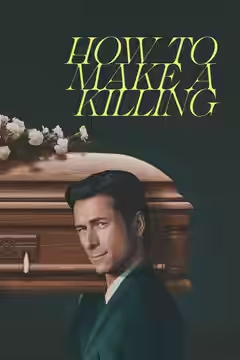
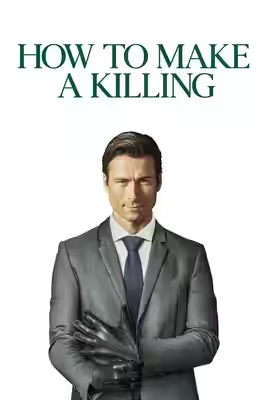
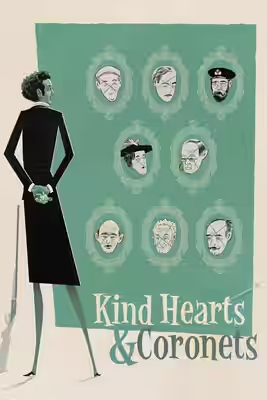
John Patton Ford moves Kind Hearts and Coronets to modern New York and keeps the plot, the pace and the body count while losing the chill. Powell and Qualley make it a pleasant evening; a film about killing seven people should be more than pleasant.
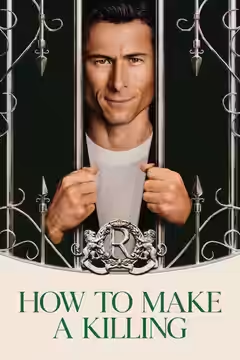
John Patton Ford has taken Kind Hearts and Coronets, Robert Hamer’s 1949 Ealing comedy in which a disinherited young man murders his way up the family tree, and moved it to present-day New York. Becket Redfellow (Glen Powell) has been cut out of a fortune the film puts at twenty-eight billion dollars, and seven relatives stand between him and it. He sets about reducing the number. The idea still works: the rich are as easy to dislike now as they were in 1949, and a handsome man killing them one at a time is still a good joke. Ford wrote the script as well as directing it, and the script is where the trouble is.
It is a watchable film. Powell is easy company, Margaret Qualley is better than that, and at 105 minutes it does not hang about. We were never bored. We were also never once worried, and for a comedy about a man killing seven people that is a strange thing to have to report.
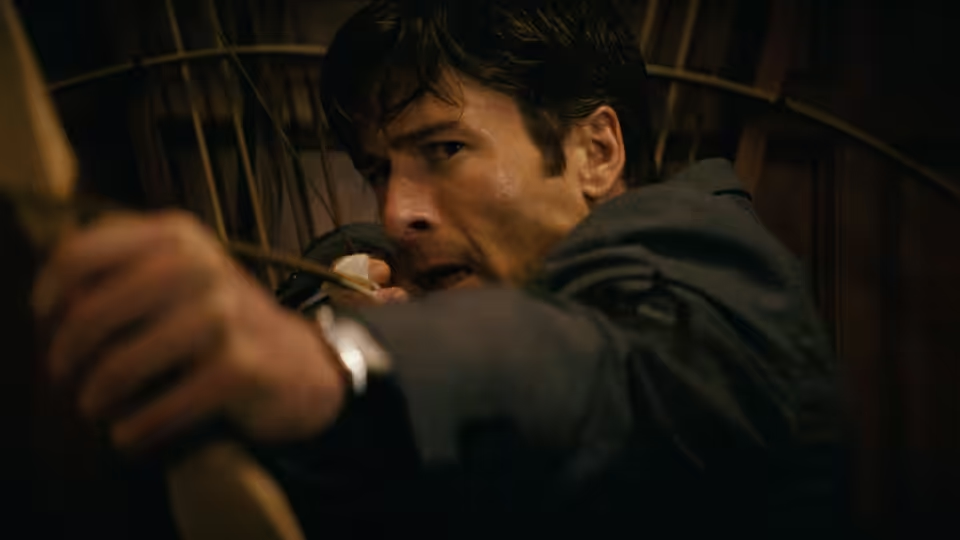
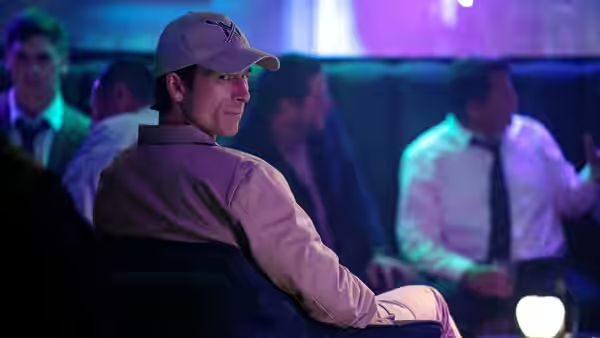
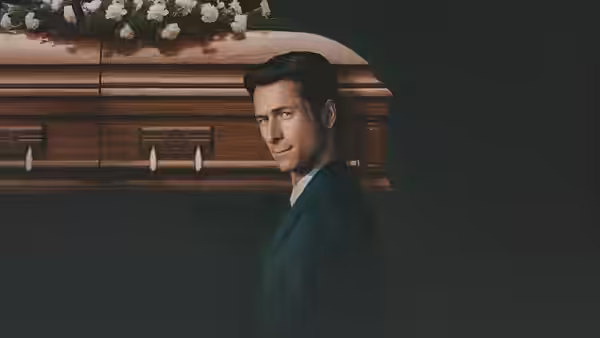
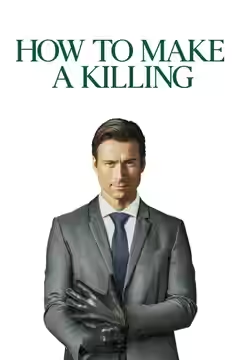
Powell plays Becket as a man who decided some time ago not to be flustered by anything. He is calm, well dressed and faintly bored, which is a reasonable way to play the part but leaves him nowhere to go. Dennis Price, in the original, let you see how much he was enjoying himself. Powell keeps the enjoyment private. He plans, he arranges, he waits, and we watched him do all of it with interest and no fear of him whatsoever.
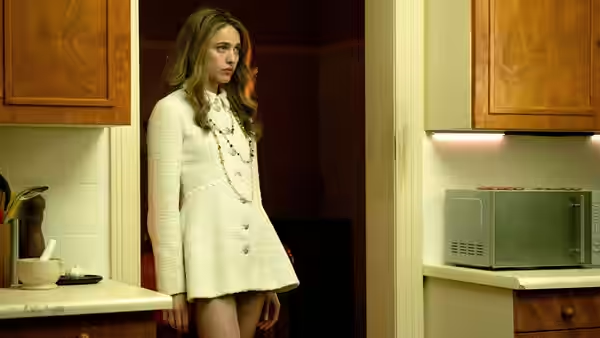
Qualley is the reason the middle of the film has a pulse. She plays Julia as a schemer who has worked Becket out before he has finished his first sentence, and she lets us see her relishing it in a way he never does. We laughed properly twice, both times at her, and both times at a look rather than a line. Jessica Henwick’s Ruth is written thinner, and Henwick does what she can with the space she is given.
The relatives are played by good actors who get a scene or two each. Bill Camp, Ed Harris, Zach Woods and Topher Grace are all Redfellows, and none of them is on screen long enough to be missed when they go. Alec Guinness played eight of the family in 1949, and half the joke was watching the same face come back to be killed again. Ford has cast seven faces instead, which is the more expensive choice and the less funny one. Harrison Atkins cuts the killings quick and clean and keeps the whole picture moving at a clip; the cost is that nothing goes wrong for long enough to frighten anybody.
Todd Banhazl shoots the money the way money likes to be shot, in clean light through tall windows, and Christian Huband’s rooms are the kind in which nobody has ever left a mug on a table. Jo Katsaras dresses the family in clothes that cost more than they look. It is all handsome, and a week later we could not describe a single room. Emile Mosseri’s score is light and pleasant and keeps telling us not to worry, which is the last thing this film should be telling us.
Ford’s first film, Emily the Criminal from 2022, was small, quick and mean, and it understood that a thriller needs somebody in it to be in trouble. Here nobody is. The film rarely lets Becket come close to being caught, the family are never close to clever, and the satire, which Ford plainly cares about, comes down to the news that rich people are unpleasant. We had heard.
Most critics have been a little harder on it than we are, and we see why; the Ealing film is a high bar and this one does not stretch for it. On its own terms it is a pleasant hundred minutes with two attractive people and some expensive rooms. If you do watch it, watch it at home with someone who has not seen the original, and afterwards show them the original.