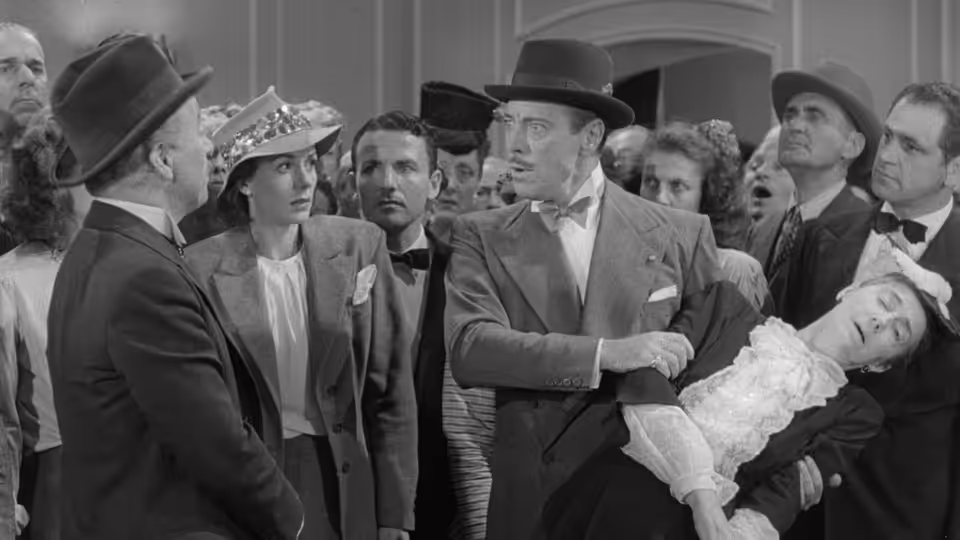
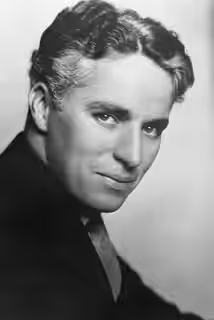
Charlie Chaplin makes a murderer’s good manners alarmingly funny, with Martha Raye giving his precision something to contend with. The comedy is sharp enough to recommend warmly, though the political explanations can become a lecture.
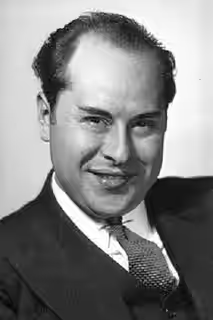
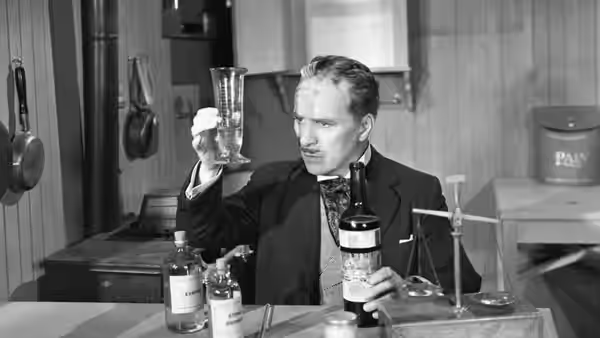
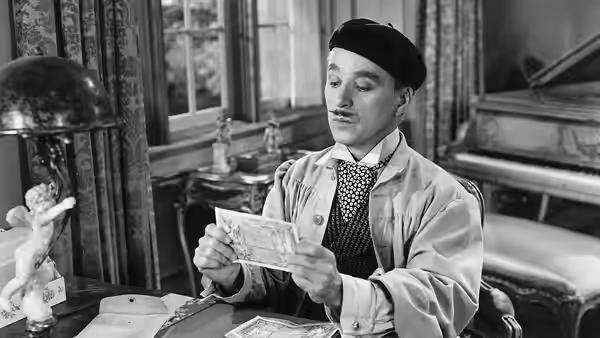
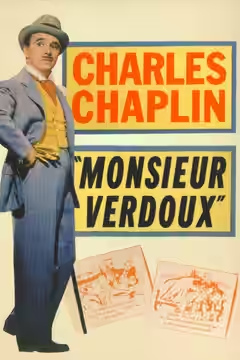
Monsieur Verdoux is a sharp, disquieting comedy with a weakness for explaining itself. Charlie Chaplin plays Henri Verdoux, a man who marries wealthy women and treats murder as a practical means of making money. Chaplin asks us to enjoy the man’s composure while keeping his purpose in view, a difficult arrangement which works because the performance is so exact. Its political talk grows heavy, but Chaplin’s timing keeps earning our attention.
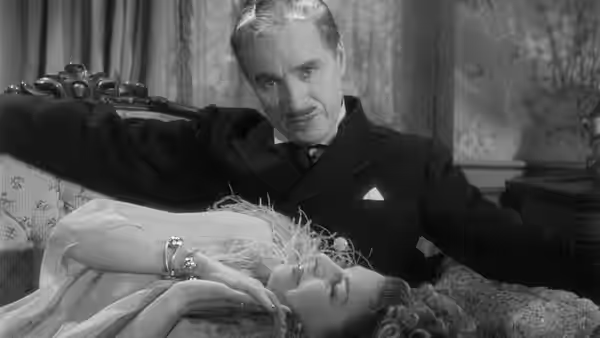
The unsettling thing about Chaplin here is the courtesy. Verdoux’s refinement gives him a way to make appalling intentions appear almost reasonable, and Chaplin does not keep signalling that we ought to recoil. We laughed at Verdoux’s elaborate courtesy, then felt uncomfortable about how easily it had worked on us. His careful manners encourage us to appreciate the effort he puts into charming women, although we know why he wants their confidence.
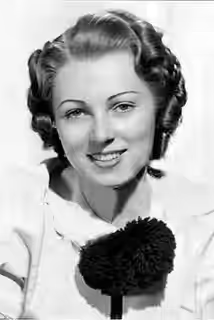
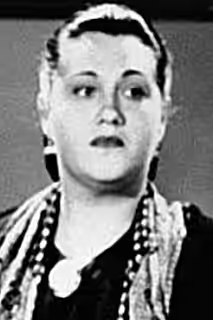
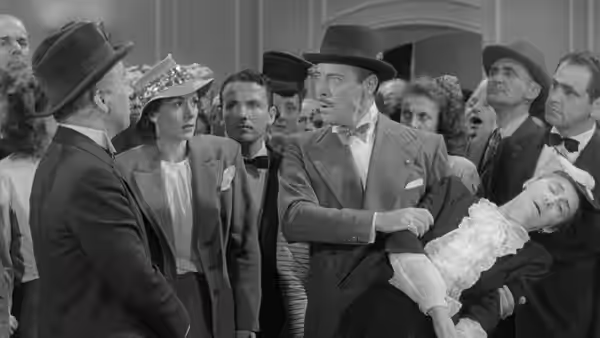
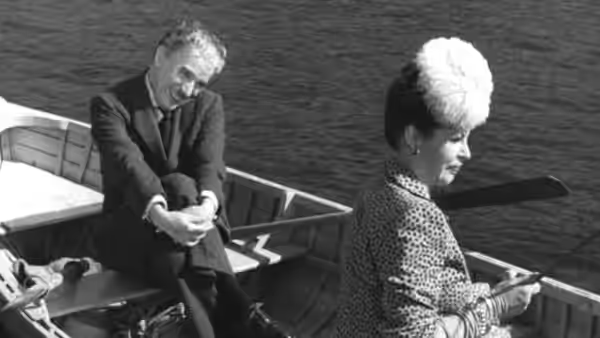
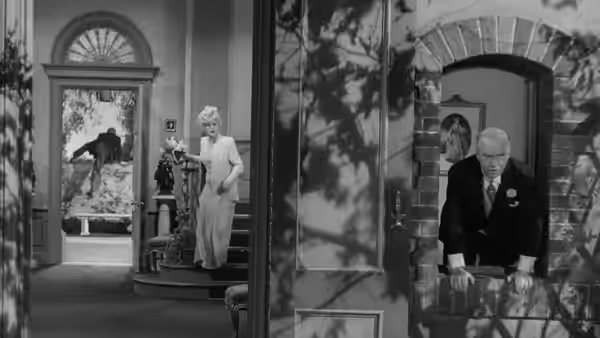
Martha Raye, as Annabella Bonheur, is the welcome disturbance in all this careful behaviour. Her scenes give Chaplin’s visual comedy room to develop, and the pleasure comes from watching his assurance become harder work. Raye has enough comic force to make his attempts to control a scene look faintly ridiculous, which saves the film from becoming too pleased with its clever leading man. The gags are carefully worked out, but the performers make the difficulties between them feel spontaneous.
Roland Totheroh and Curt Courant’s cinematography serves that physical comedy well. The pictures give Chaplin’s gestures their due without asking us to admire the photography separately. Willard Nico’s editing is most effective within the comic encounters, where the difference between a joke arriving early and arriving on time matters. The joins between episodes are less satisfying, and the film sometimes seems to begin again when it ought to be gathering force.
Chaplin also supplies the music, and his score is a considerable help. It gives the film some ease without making Verdoux’s behaviour any easier to excuse. There is a temptation in this kind of comedy to insist on the wickedness of every joke until none of them can breathe; the music is more companionable than that. We could do with a little more of its lightness in the passages where the writing presses its political case.
Chaplin’s screenplay, from a story credited to Orson Welles, takes aim at a society willing to excuse cruelty when it is profitable or respectable. That is a sound subject for a black comedy, though the moral reasoning sometimes feels too conveniently arranged around its leading man. Calling attention to public hypocrisy does not settle what we should think of Verdoux, and the film becomes less interesting when it seems to believe that it does. Chaplin can be insistent where he has already been clear.
Black comedy needs to leave us a little uneasy about laughing, and this film does. Its strongest passages trust us to notice what is wrong with Verdoux while enjoying the skill with which Chaplin plays him. At 124 minutes, however, the unevenness has time to register, and an uninterrupted succession of gags is not what is on offer. See it for Chaplin and Raye, and be prepared to sit through the occasional lecture.