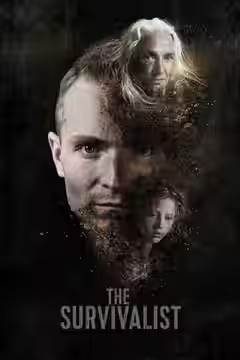
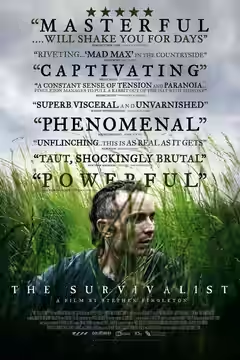
Stephen Fingleton’s debut strips the end of the world down to a cabin, a vegetable patch and three people who cannot afford to trust each other. Lean and properly tense, though its people stay thin and its ending is more cryptic than it needs to be.
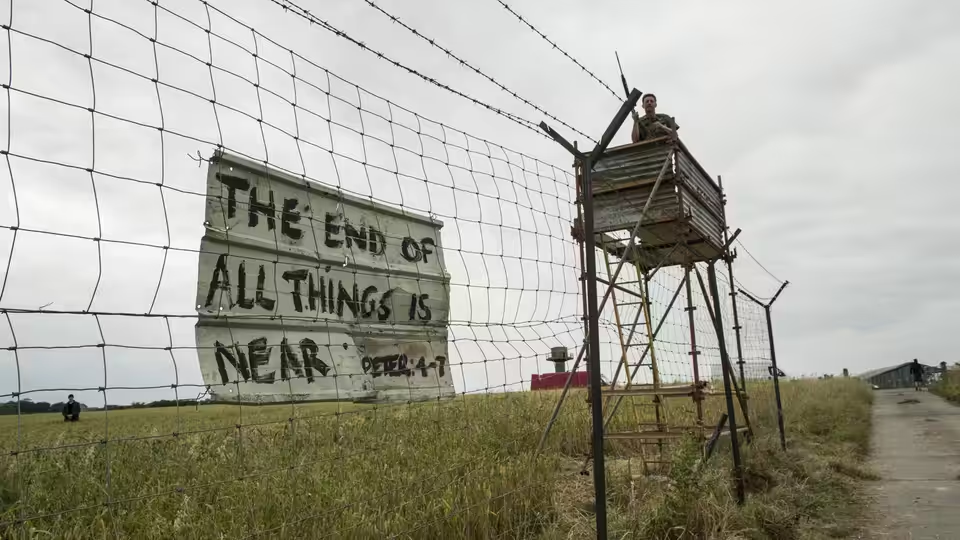
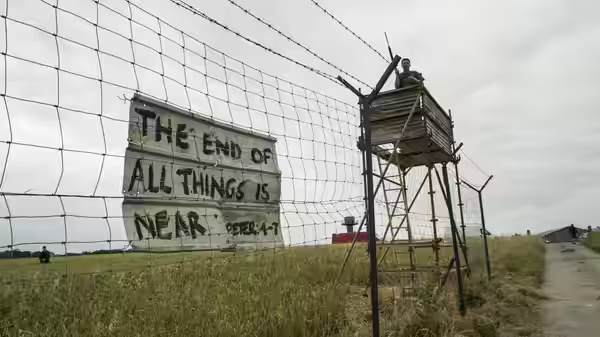
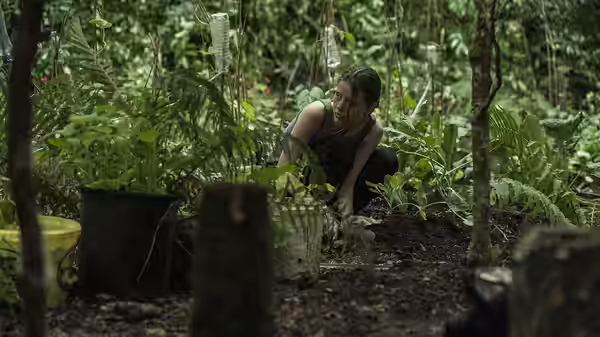
Stephen Fingleton’s first feature opens with a graph. One line is the oil the world pumps out, the other is the number of people living on it; both rise together, then both fall off a cliff, and the film begins down the far slope. There is a man, a cabin, a vegetable patch and a shotgun, and for the opening stretch of its 104 minutes nobody says a word. Fingleton, who also wrote it, has set out to make a post-apocalypse film with the apocalypse taken out, and the result is lean, tense and worth your evening if you can sit still for it.
Damien Elliott shoots the forest as it is, green and brown and damp, with light that looks as if it came through the canopy rather than off a lamp. He keeps the frame tight, so the cabin feels like a box with three people in it and the trees outside feel like a wall. Dick Lunn builds the cabin out of scavenged planks and plastic sheeting, with a floor so small the shotgun is always within reach of whoever is nearest. Susan Scott puts everyone in the same grey wool; nobody here owns a second outfit. Giorgio Ferrero and Rodolfo Mongitore keep the music to a low hum and leave it out for long stretches, so the loudest thing in most scenes is a twig.
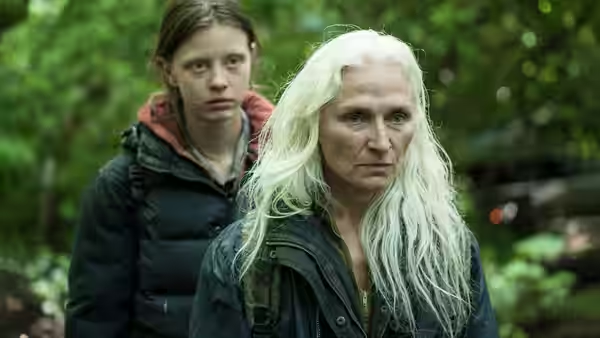
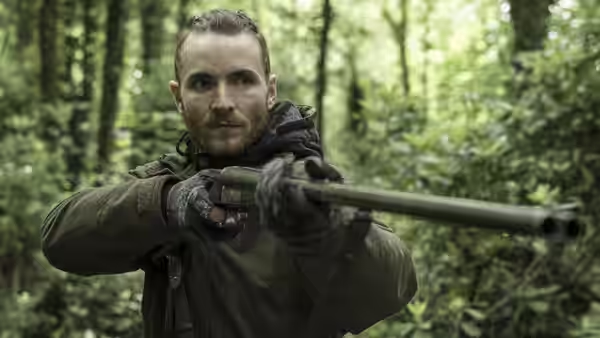
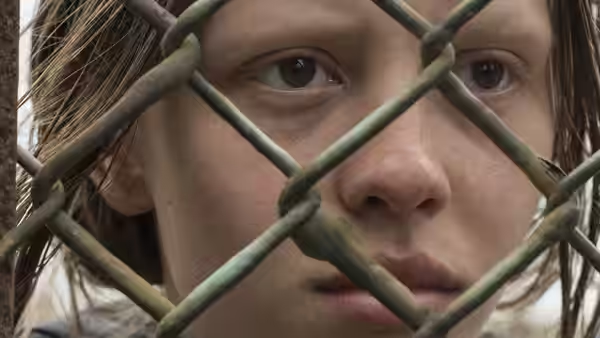
Martin McCann plays the man as pure routine: he eats standing up, sleeps with the gun and checks the tree line before he does anything else. He says a few hundred words in the whole film and makes most of them count. Olwen Fouéré’s Kathryn is the hard one, a mother who will trade her daughter for a bowl of food and does not blink while she does it, and Fouéré plays her so that we can never tell whether she is sorry. Mia Goth gives Milja a flat, watchful face that could be fear or calculation or both, and the film depends on our not knowing which.
Here is what it did to us. The first meal, with the women eating and the man sitting opposite with the shotgun across his knees, is a scene of almost nothing: spoons, chewing, a glance at the door. We were tense to the point of discomfort, and when it ended without incident we realised we had been holding ourselves off the back of the sofa. Fingleton has worked out that in this world a stranger is a calorie problem before they are a person, and he lets that arithmetic run under every scene. Later, a single moving shot crosses the cabin and changes who holds the power without a cut, and Mark Towns is right to leave it alone.
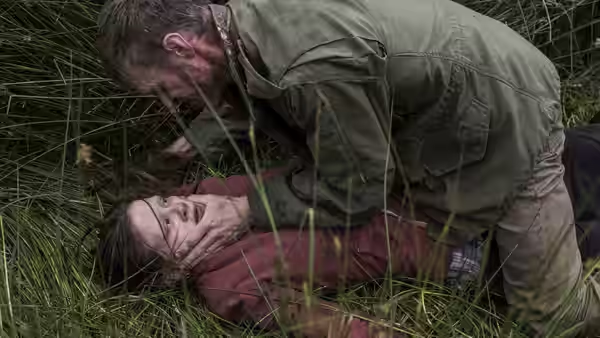
It is not all this good. The man keeps seeing a figure in the trees, and these visions feel like a device borrowed from a more ordinary film. The three characters remain what they are at the start, and a film this spare needs them to grow or to give something away, and they do neither. The second half brings people out of the woods and takes a turn we will not describe. It is well handled, but the final stretch is more cryptic than it needs to be, and we left wanting one more plain scene where the film had settled for a meaningful look.
Most post-apocalypse films show the end of the world. This one shows a vegetable patch and lets us work out the rest. The Road (2009) had a father, a son and a dead continent to walk across; Fingleton has three people and perhaps an acre, and he gets more fear out of the acre. The film belongs with the quiet, grown-up end of the genre.
Most critics have been kind to it and we are with them. It carries an 18 certificate and earns it, not through gore but through a few scenes of bodily matter-of-factness that will trouble some viewers more than violence would. Watch it with the lights off and the phone in another room, because a film with this little dialogue will not wait for you to look up.