Harris Dickinson’s first film as writer and director follows a London rough sleeper out of prison and into a kitchen job. Frank Dillane is remarkable in the lead and the film around him is honest and often funny. Its shape, though, is one we have seen before.
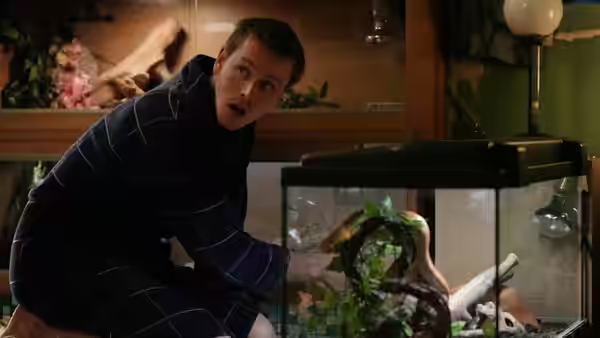
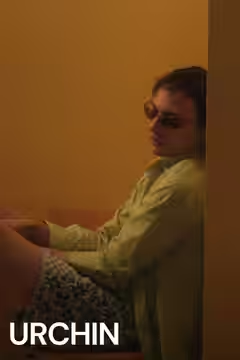
Harris Dickinson has spent a decade in front of other people’s cameras and has now written and directed a film of his own. Urchin follows Mike (Frank Dillane), who sleeps rough in London and is very good at talking. In the opening minutes a stranger buys him a meal; Mike eats it, thanks him, follows him and robs him. The stranger, Nathan, is played by Dickinson himself, which is a dry joke about who is in charge here and who is getting hurt. The film that follows is good, and worth your evening. It is held together almost entirely by Dillane, and its shape is one British cinema has made before.
Dillane is the reason to see it. He plays Mike as someone who has learned that a smile and a story will get him through the next ten minutes, and who has never had to plan further than that. Watch how fast he moves from pleading to threat and back, and how little his face changes while he does it. We liked him within a scene and knew we should not, and the film knows we know. It never asks us to forgive the man on the pavement with his watch gone. It asks us to see why someone might want to.
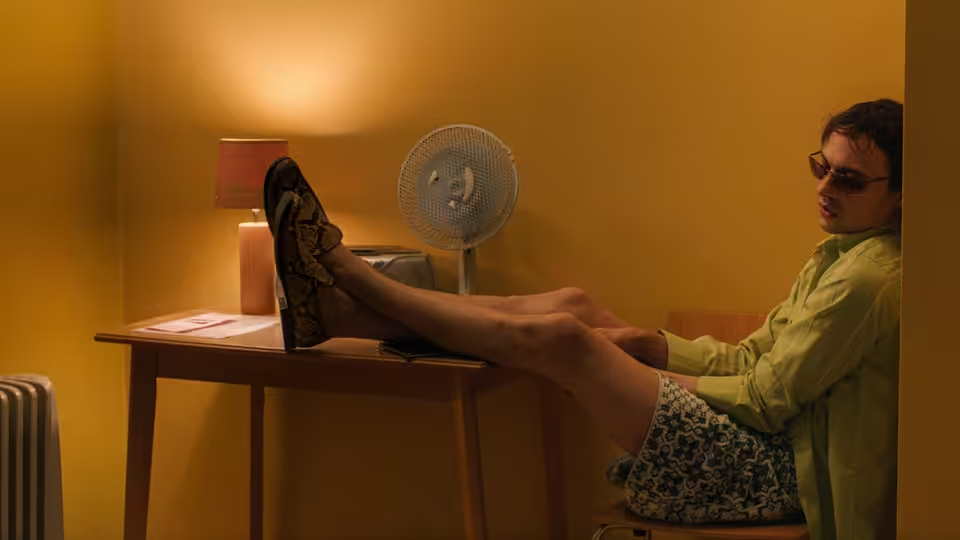
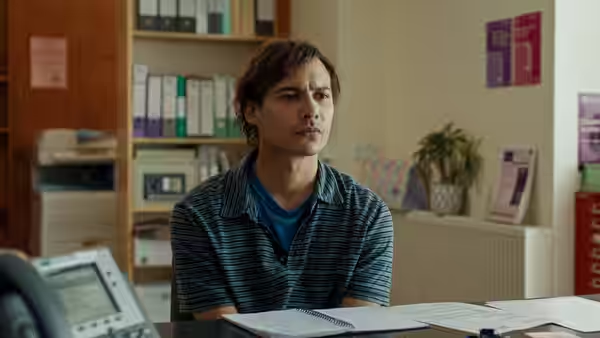
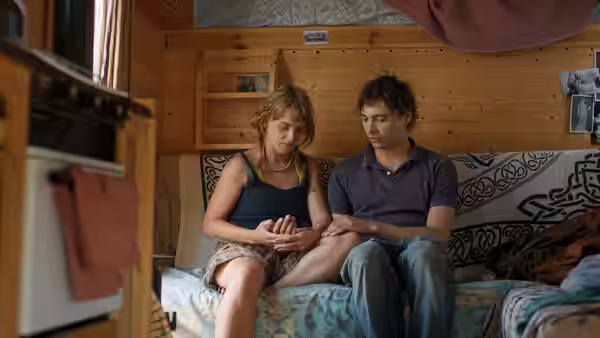
Josée Deshaies shoots London in flat daylight and keeps the camera at a distance, so that Mike is one figure in a street of figures until he chooses to become the loudest. Anna Rhodes gives him a hostel room with a bed, a window and nothing on the walls, and a hotel kitchen of steel and steam where every surface has to be wiped. Cobbie Yates dresses him first in the clothes he was arrested in and then in kitchen whites, and the whites do a lot of work: for a while he looks like a man with a job. Rafael Torres Calderón lets scenes run past the point where a nervier editor would cut, and Scott O’Conell and Archie Pearch keep the music low enough that the sound of the streets and the kitchen does most of the talking.
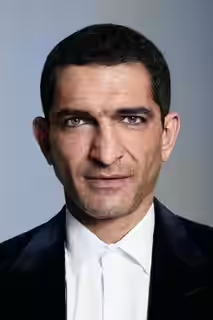
The kitchen scenes are where the film is most alive. Amr Waked’s Franco is neither a saint nor a bully, just a chef who needs the pots done and has heard every excuse. Megan Northam’s Andrea gives Mike someone to be charming at who is not paying for anything, and the film finds a lightness in their scenes that we did not expect from the subject. The moment that moved us most is small. Someone tells Mike he is doing well. Dillane holds the compliment for a beat too long, as if he has been handed something he does not know how to carry, and then makes a joke to put it down.
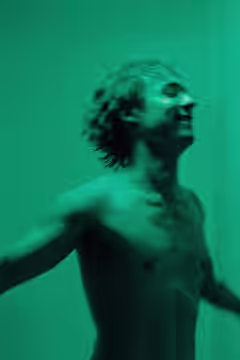
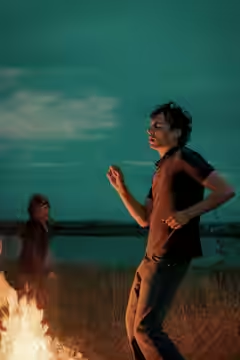
What works less well are the interludes where Dickinson leaves the street. Several times the film slips out of Mike’s day into something dreamlike, dark spaces and strange colour, and we could see what these were for without ever feeling they were needed. Dillane’s face is already telling us what is happening inside the man. The pictures repeat it, more prettily and less precisely. And once the job and Andrea are in place, most critics who have seen a film about addiction will know roughly which way the second half goes. We will not describe it. We will say that Dickinson is more interested in watching it happen than in explaining it, and that this is mostly a strength.
The film sits in the tradition of Loach and Leigh without borrowing their anger. There is no speech about the system, no probation officer written to be despised, no scene in a benefits office arranged for our outrage. Dickinson’s interest is in one man’s habits, the way he makes the same mistake in a new place, and the people who briefly stand near him. That is a narrower film than the ones it resembles and, at 99 minutes, an honest one about its own size.
It is a 15 certificate and it earns it in the first ten minutes. Go for Dillane, stay for the kitchen, and forgive the caves.