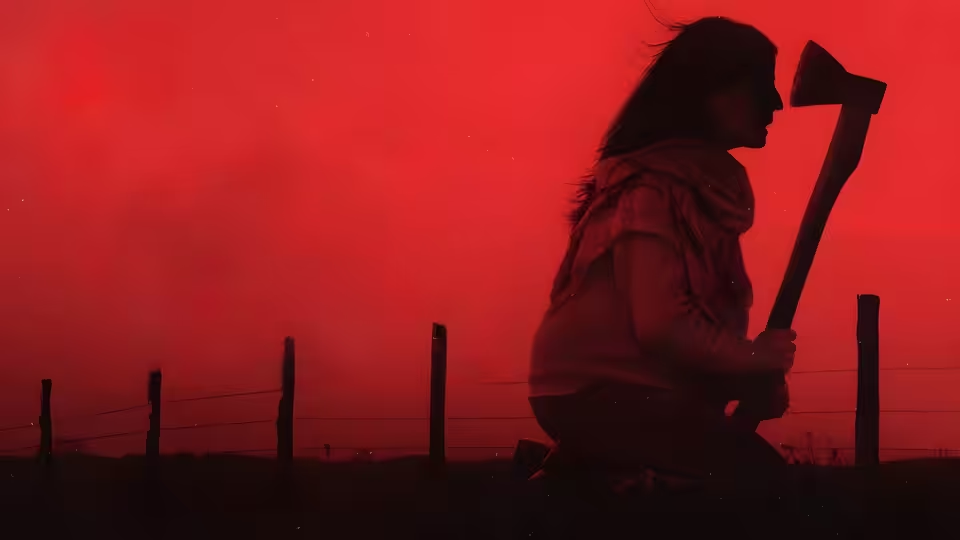
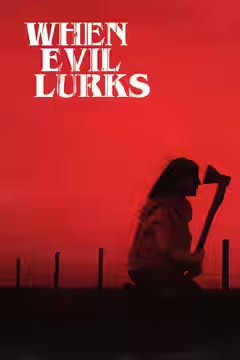
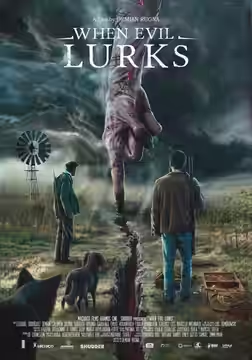
Demián Rugna’s possession film treats the demonic as a rural outbreak, handled badly by farmers and ignored by the authorities. For an hour it is as frightening as anything we have sat through; the second half loosens its grip, though never its nerve.
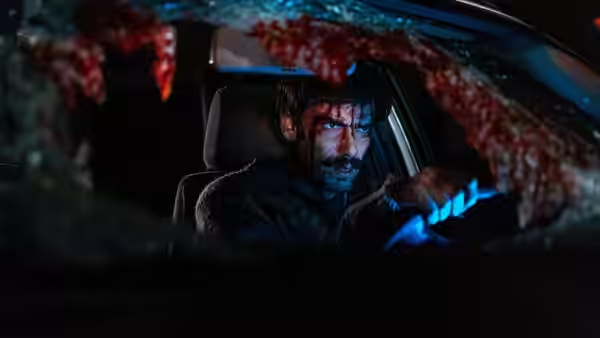
Demián Rugna’s second horror feature, after Terrified (2017), takes the possession film out of the suburban bedroom and puts it in a field. In his corner of rural Argentina a demon is not a visitor but a condition, something like foot-and-mouth: it gets into a body, festers there for months, and spreads to whoever handles it carelessly. The men who find it are farmers, and they treat it the way farmers treat a sick animal, which is the film’s best idea and its cruellest joke. It frightened us more than anything we have watched in a long while, and it does not quite hold together to the end.
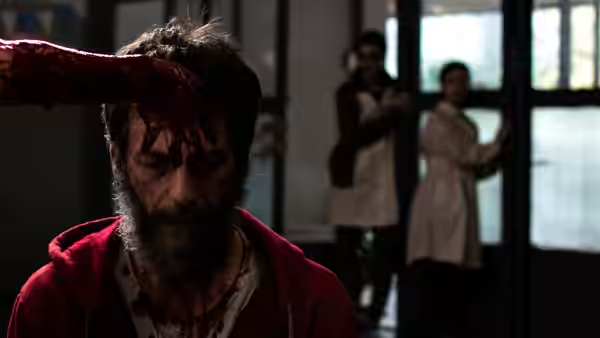
The first hour is close to faultless. Mariano Suárez shoots almost all of it in daylight, in wide frames of flat grey land under low cloud, so that there is nowhere for anything to hide and it hides anyway. Laura Aguerrebehere’s neighbours’ shack is the film’s one great set: a mattress black with seepage, a man on it so bloated the skin has split, flies, a mother in a cardigan pouring tea beside him as if he had a cold. Fuu Pablo’s score barely exists for long stretches, a low hum under the wind, and when it does arrive it arrives late, after the image has already done the work.
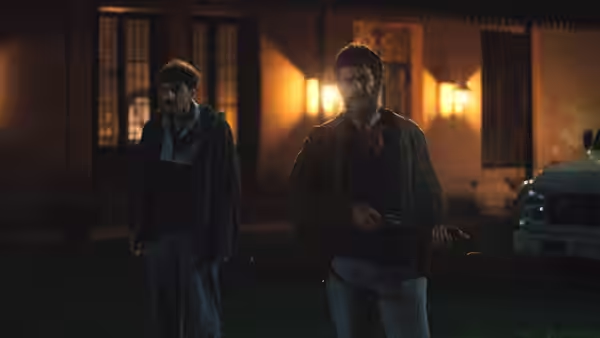
Rugna, who also wrote it, gives us the rules the way the characters get them, in fragments and arguments. Do not shoot it. Do not use electric light near it. Do not say its name. Do not take anything that belonged to it. Ezequiel Rodríguez plays Pedro as a man who has heard all of this since childhood and believes about half, and his gradual understanding that his father’s generation was right about everything is the film’s real story. Luis Ziembrowski’s Ruíz is the landowner who wants the problem off his property by nightfall, and Demián Salomón’s Jimi is the brother who keeps his mouth shut and his eyes open. Silvina Sabater, as Mirtha, arrives well into the film carrying the knowledge everyone needed at the start, and plays her as tired rather than wise.
Here is what we felt. There is a scene, early in the town, involving a dog, that we will not describe further, and it made us put a hand over our mouths and keep it there. Rugna does not cut away from it and he does not linger either; Lionel Cornistein holds the shot for exactly as long as it takes to understand what has happened, then moves on to the people who saw it. We were horrified, properly, in the way we had assumed a horror film could no longer manage after thirty years of practice. It is the moment the film tells you it means it.
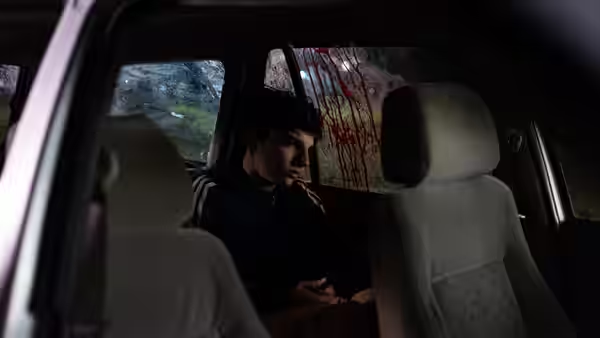
The second half is where it loosens. Once Pedro has gathered his sons and his ex-wife’s household into a car, the film becomes a series of arrivals at places where the rotten has got there first, and the rules that were so carefully laid out start to bend when the plot needs them to. A character who could not have known something knows it; a warning given twice is ignored a third time for no reason we could find. Emilio Vodanovich, as the autistic Jair, is given a role in the ending that the script has not prepared, and the climax is rushed through as if Rugna were worried we might stop believing if he slowed down. We did not stop believing. We did stop being able to say where everyone was.
Still, it is a long way ahead of the genre’s usual standard. Most possession films end with a priest and a prayer; this one has neither, and its tagline says as much. There are no churches in it, no holy water, no argument about faith. There is a bureaucracy that has given up, a few old women who remember how it used to be done, and a landscape that does not care. Terrified had the same director’s talent for the wrong thing in the frame; this is the film where he found something to say with it.
See it, with the lights on and a strong stomach, and preferably not alone. It runs 100 minutes and carries a 15 certificate, which strikes us as generous.