Jia Ling gives Yolo a sympathetic centre, but the broad comedy, thin romance and slow approach to training make it hard to recommend. Her performance deserves a film that knows when to move on.
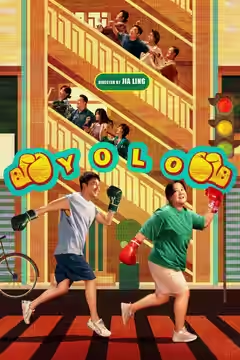
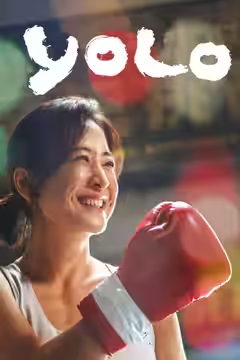
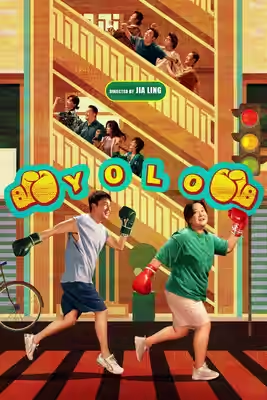
Jia Ling directs and stars in Yolo, and her performance is the reason to give this uneven film any time at all. At 129 minutes, it asks for more than the comedy and romance can sustain. The aim is easy to understand: make a woman’s attempt at change matter before asking us to care about the effort of training. Too much of the preparation, however, feels like waiting for the film to get started.
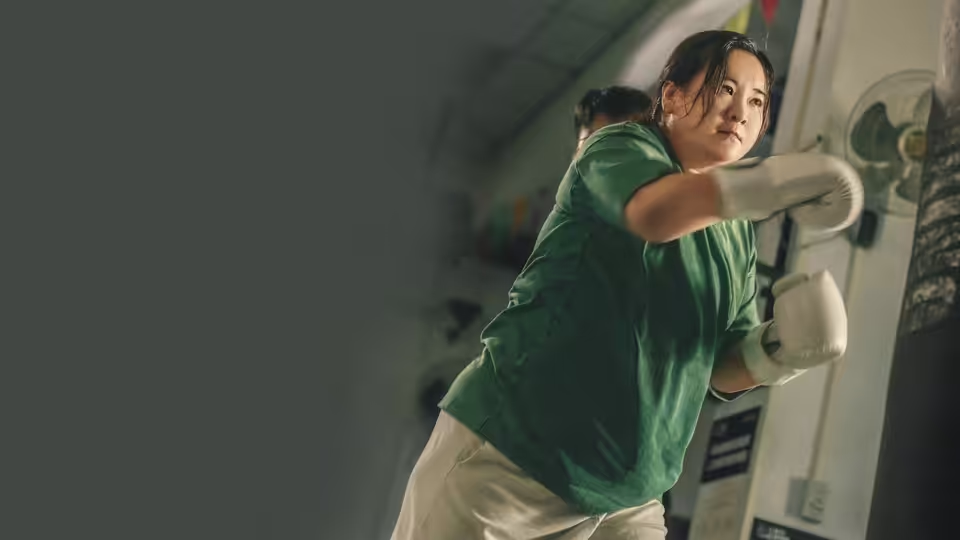
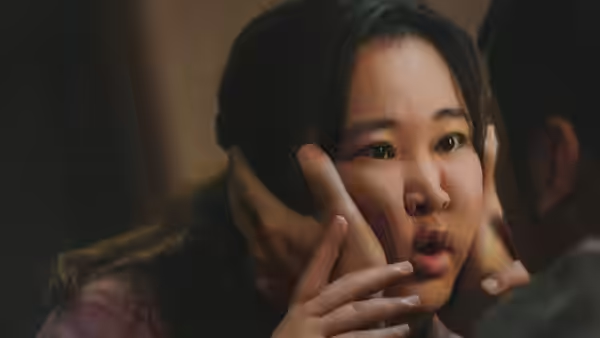
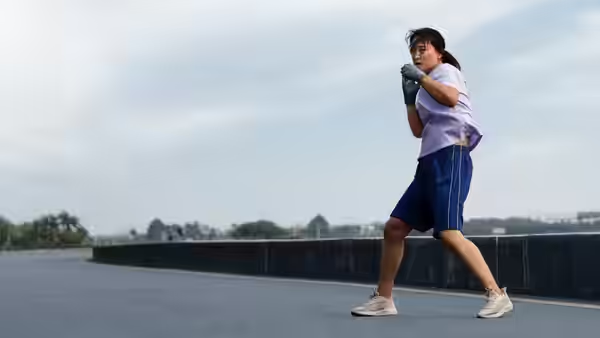
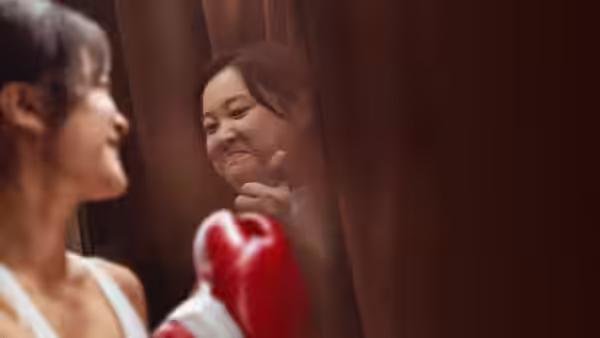
Le Ying (Jia Ling) is easier company than the film around her. There is a steadiness to the performance that keeps her interesting even when the writing becomes coarse. We were moved by Jia Ling’s restraint: she gives Le Ying dignity without asking us to admire her in every exchange. That makes the broad humour particularly frustrating, since it keeps pushing for a response the actor can earn with less fuss. She rarely seems to need the extra help.
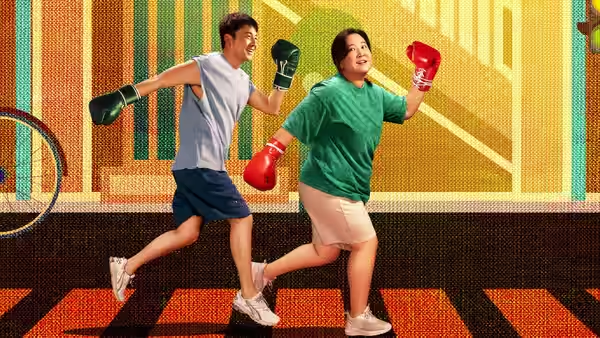
The comedy and romance are not incidental diversions; they take up enough space to set the terms on which the later training must work. Neither is convincing enough to justify that responsibility. The jokes too often feel imposed on a character who is more interesting when allowed to be ordinary, while the romantic material struggles to make its length feel necessary. A film can spend time with a person before setting her a task, but that time still has to be engaging.
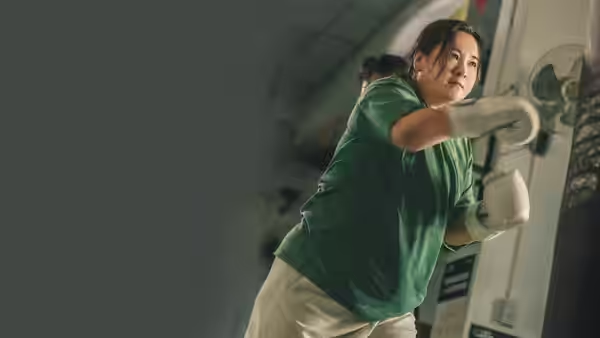
Zhou Xiaolin’s editing leaves the long approach to the training montage largely intact, and this is where the 129-minute running time hurts most. We became impatient to reach the training. It gives the film a clearer purpose, though it cannot repair the slackness of what precedes it. By then, the physical effort has been made to carry more interest than the relationships have earned, leaving a sizeable stretch of the film dependent on affection for its lead.
Neither Michael Liu’s cinematography nor Peng Fei’s music can solve the problem of how long it takes to give Le Ying a clear focus. The training does not make the earlier jokes funnier or the romance more persuasive. The film puts considerable faith in our response to visible bodily change, when the actor’s quieter work has already given us a better reason to care.
Stories of personal reinvention do not need an unfamiliar destination, but they do need convincing reasons to keep watching along the way. Yolo has an actor capable of providing them and too many passages that make her job harder. Its sincerity counts for something, as does Jia Ling’s ability to remain sympathetic through the heavier-handed material. Only take a chance on it if affection for its lead will carry you through the long wait for the training.