Learn · How a film gets made · The whole process
The director
The director is the one person on a film who has to know what it is. Not the one who does the most, or knows the most, or even the one in charge of the money; the one every other person turns to with a question, and whose answers, added up over two years, are the film. This is what the job consists of, where its authority comes from in three countries, and what happens when the person holding it cannot decide.
François Truffaut, playing a director in his own film about making one, gives the best definition there is. A director, says Ferrand in Day for Night, is someone who is asked questions all day long, about everything, and sometimes knows the answer. The film is a catalogue of the questions: which car, which wig, which gun, whether the kitten will drink the milk, whether the actress will come out of her dressing room. None of them is important. All of them have to be answered by the same person, in the next thirty seconds, in a way that is consistent with every other answer given so far. That is the job.
It follows that the job is not, mostly, the thing the public imagines. A director does not operate the camera, write the script, light the set, cut the film or design the costumes, and on a well-run production will be the least busy-looking person on the set. Everything on a film can be delegated except deciding what the film is, and the director is the person to whom that one thing cannot be delegated. The previous lesson said the producer is defined by what nobody else is responsible for. The director is defined by what nobody else is allowed to decide.
The director who cannot
The great film about directing is about a director who cannot direct, and the reason it is great is that it shows what happens to everyone else. Guido Anselmi, in 8½, has a producer, a cast, a crew, a screenwriter, a start date and an enormous set, a launch tower built on a beach for a science-fiction sequence he no longer believes in. He is also at a spa, taking the waters, with a mistress he has installed in a hotel down the road and a wife on her way. What he does not have is a film. He is asked questions all day long, exactly as Truffaut said, and his answer to all of them is a version of “I don’t know yet”.

Watch what the film does with the people around him. The producer wants a decision because the set is costing money. The actresses want to know who they are playing. The writer, a critic hired to make the script intellectually respectable, tells him the film has no idea in it, which is true. Guido gives each of them a charming evasion. The screen-test sequence is the centre: he sits in a screening room watching actresses read his own life back to him, each in a different wig, and cannot choose, because to choose would be to say what the film is about. The press conference under the tower is where it ends. He is marched to a table, asked the question directly and, in the film’s most famous image, crawls under the tablecloth.
Fellini made a film about a director who could not make his ninth film, and it was his ninth film, and it is a masterpiece. That paradox is the lesson. The film Guido makes at the end, the circus ring in which everyone in his life joins hands, has no launch tower in it. The decision, when it came, was to make the film about not being able to decide: the one decision only a director could take.
What the decisions are
The questions Ferrand lists are small. The ones that make a film are not, and most of them are taken before the shoot, in the months this strand’s seventh lesson covers. They come in a rough order. What the script is: the director inherits a screenplay and makes it theirs, in a rewrite with the writer or against them, and from here on a change to the script is a question for the director. Who is in it: casting is the casting director’s craft and the director’s choice, and a director who casts well has made half the decisions already. What it looks like: with the director of photography and the production designer, the director decides how the film will be lit, framed, coloured and moved, before a single set-up is chosen. How the actors play it: the only part of the job that cannot be prepared, and the part the public thinks is the whole of it. What is shot: the coverage, meaning which angles of a scene are filmed so the editor has choices, decided in advance as a shot list or on the day in the blocking. And finally how it is cut: with the editor, in a room, over months, which is where the film is actually made and where a director finds out which of the earlier decisions were right.
In every one of these the director works through someone who knows more about the craft than they do. The cinematographer knows the lens; the director knows what the shot is for. The editor knows the material; the director knows what the film is about. This is why the job is so hard to see: a director who has prepared is not doing less on set, they are doing the one thing left, which is being the person all those experts are making the same film for. The set itself is run by the first assistant director, so that the director does not have to; a director shouting through a megaphone is one whose first AD has lost the set, or Ed Wood.
The director who should not
Ed Wood is the job seen with one part missing, and it is worth being exact about which part. Edward D. Wood Jr., as Tim Burton gives him to us, has every quality a director is supposed to have. He has a vision, and talks about it constantly. He has total conviction; nothing shakes it. He loves his cast and crew and they love him. He raises the money, finds the set, solves the problems, and when his star dies before the film is finished he shoots the rest with a chiropractor holding a cape over his face. He answers every question Truffaut’s director is asked, instantly and with joy. The missing part is judgement. He watches a take in which the cardboard gravestone falls over and the actor fluffs the line and says, with complete sincerity, “Perfect!”
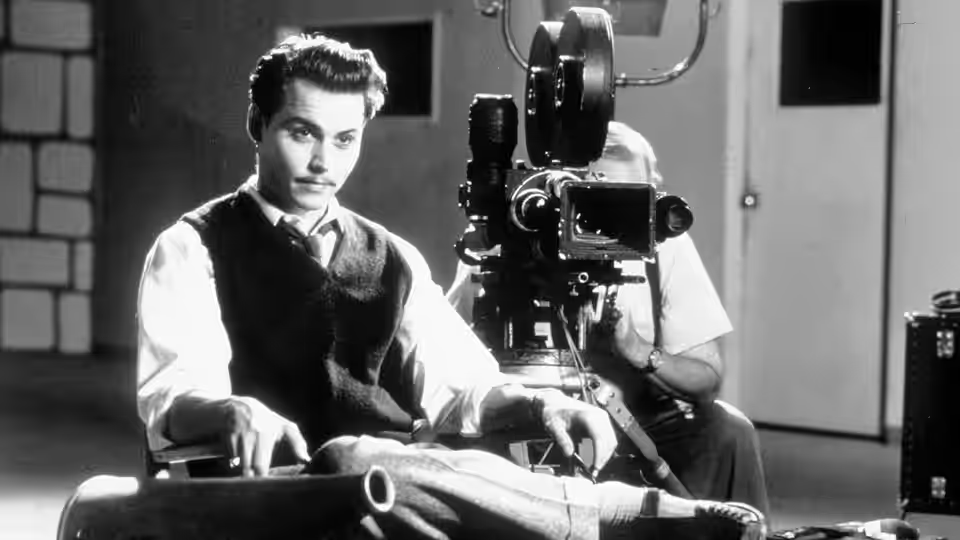
The house view is that the film is funnier and sadder than its reputation allows, because Burton is not mocking Wood’s failure. He is showing that directing is not vision, conviction, energy or love, all of which Wood had, but the ability to look at what you have made and know whether it is the thing you meant. The industry has a thousand directors with Wood’s qualities and a handful with that one, and the credits do not tell you which is which.
The director who serves
There is a second kind of director, and a second film from 1963 about the job. In Contempt, Jean-Luc Godard cast Fritz Lang, the real director of Metropolis and M, as a real director named Fritz Lang, making a film of the Odyssey in Rome for an American producer who wants it changed. Jeremy Prokosch, Jack Palance in the most frightening performance ever given of a man with a chequebook, wants more mermaids, a psychological Ulysses, something he can sell. Lang wants Homer. The producer hires a writer to rewrite it, and the film is about the writer’s marriage coming apart in the gap between the two men.
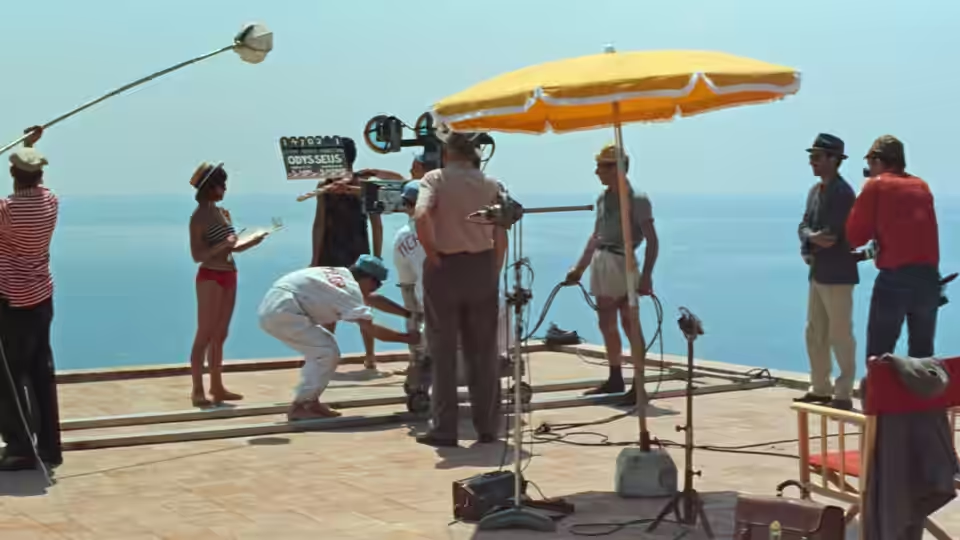
Lang’s answer to Prokosch is the most civilised statement of a director’s position in cinema. When the producer boasts that whenever he hears the word culture he reaches for his chequebook, Lang replies that some years ago, some horrible years ago, the Nazis reached for a pistol. He does not storm off. He does not get final cut. He makes the producer’s film in his own way, shot by shot, and the last image of Contempt is Lang shooting his last shot, a man looking at the sea, having outlasted the producer, the writer and the writer’s wife. Godard, who was fighting his own producers over this very film, gave the old man the dignity he wanted for himself. The lesson is that the director’s authority has never been absolute and the great ones have never needed it to be. It is exercised one set-up at a time, inside whatever room the money allows.
Whose film it is, by country
The question underneath this strand, whether the people who make films are employees or authors, is answered differently for directors in each of our three industries, and the answers are the reason the same job feels different in Los Angeles, London and Paris.
In the United States the director is an employee whose rights are won by a union. The Directors Guild of America’s agreement with the studios guarantees what it calls creative rights: the right to a director’s cut, a fixed period after the editor’s assembly in which the director makes their own version before anyone else touches it; the right to be consulted on the casting, the script and the music; the right to be present when the film is tested on an audience. What it does not guarantee is final cut, which belongs to the studio or financier unless a director has the standing to negotiate it, and most never do. The Guild also holds to the principle of one director to a picture, which is why American films almost never carry two directing names unless the two are an established team, and why the credit “A film by”, the possessory credit, is defended by the DGA and fought by the writers’ union to this day. Our view is that the credit is an overstatement everyone has agreed to tolerate, and that “directed by” was always the honest one.
In Britain the director is a contractor, and what they are entitled to is in the contract. Directors UK, the directors’ body, negotiates the terms producers offer through Pact, collects and distributes the payments directors are owed when their work is reused, and has spent years arguing for the consultation rights the Americans take for granted. A British director’s cut exists if the contract says so; many do not.
In France and across the European Union the director is an author in law. The same article of the French intellectual property code that makes the screenwriter a co-author of the film does the same for the director, and the law goes further: the finished version of the film is agreed between the director and the producer, and neither may release a cut the other has not approved. The moral right in the work, the right to object to its distortion, survives any contract and cannot be sold. The Federation of European Screen Directors, FERA, speaks for the national directors’ associations across the Union and has made this status, the director as author, the thing it defends in every negotiation over the European market. A French director cannot be removed from their film the way an American one can. A French producer, equally, cannot be ignored. Three answers again: the union, the contract, the law.
When nobody can say no
The last film in this lesson is about what the job becomes when the limits come off, and we have already met it as a film about money. Hearts of Darkness shows Francis Ford Coppola in the Philippines, financing Apocalypse Now himself, with no studio to answer to and no producer who could stop him. He has the authority every director is supposed to want. What the documentary records, in his wife’s footage and his own tapes, is a man discovering that the authority is the problem: that with nobody to decide against, he cannot decide. The script has no ending. The star has arrived overweight and unprepared and the director does not have the standing to send him home. Coppola’s own summary, given to the press at Cannes and used in the film, is that they were in the jungle, with too many people and too much money and too much equipment, and little by little they went insane.
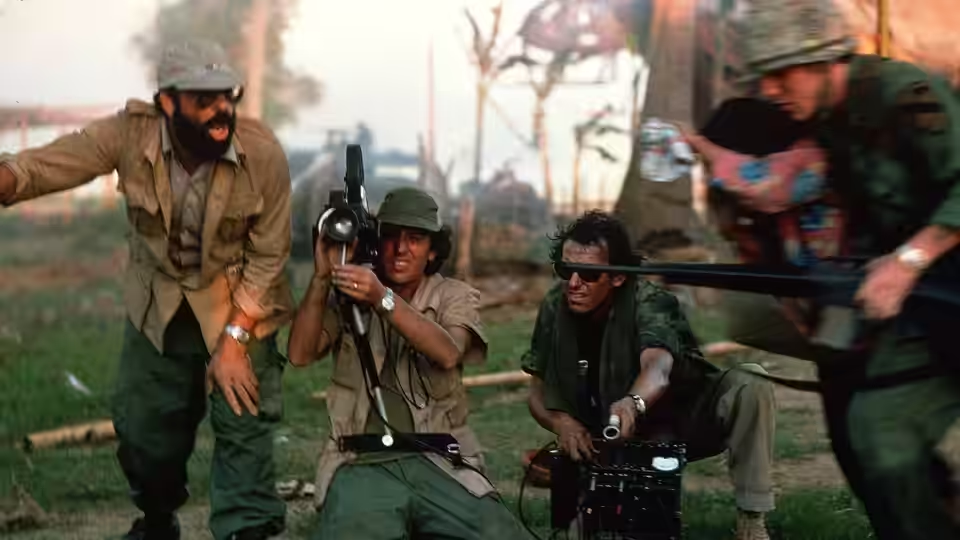
Set Hearts of Darkness beside 8½ and the two directors are in the same place: standing on a set built for a film they cannot yet see, being asked. The producer’s absence did not free Coppola. It removed the one person whose job was to insist on an answer, and the film got made for the reason 8½ got made, because the director found the decision in the thing he had been avoiding. Tom DiCillo’s Living in Oblivion, a low-budget comedy in which Steve Buscemi’s director spends a day failing to get one simple scene, boom in shot, milk turned, line forgotten, star wanting to discuss his motivation, makes the same point from the bottom of the industry. The director’s only power is to say “again” in a tone that keeps everyone believing the scene exists. It does not matter how much money there is. The job is the same size.
What to take from this
A director is the person who has to know what the film is, so that a hundred people with other skills can make the same one. The work is decisions, most of them taken before the shoot and the last of them in the cutting room, and the skill under all of them is judgement: looking at what you have and knowing whether it is what you meant. The authority to decide is granted by a union in America, a contract in Britain and the law in France, and has never been absolute anywhere. The great directors have not needed it to be. The next lesson is about the first big decision they take with someone else: who is in the film.
WatchThe films this lesson is drawn from, with our scores
 91
8½
1963 · Drama
The director who cannot decide, and what that does to everyone waiting on him.
 86
Contempt
1963 · Drama
Fritz Lang as himself, making the producer’s film his own way, one set-up at a time.
 84
Ed Wood
1994 · Comedy
Every quality of a director present except judgement.
 84
Hearts of Darkness: A Filmmaker's Apocalypse
1991 · Documentary
The job with the limits removed, and the discovery that the limits were the point.
TermsThe words this lesson uses, as the trade uses them
- Director
- The person who decides what the film is, and to whom every other department’s questions finally come. Hired by the producer; works through the heads of department.
- Prep
- Pre-production, from the director’s side: the months in which the script, cast, look and shot list are settled. Where most directing happens.
- Coverage
- The set of angles a scene is shot from, so the editor has choices. Decided by the director, in a shot list beforehand or in the blocking on the day. Not to be confused with a script reader’s coverage.
- Blocking
- Working out, on the set, where the actors move and where the camera goes. The first thing done on a scene and the moment most of its directing is decided.
- Shot list
- The director’s plan of every set-up for a day, drawn up in prep with the cinematographer and first AD.
- First assistant director
- The person who runs the set, the schedule and the day, so that the director can direct. Not a trainee director: a separate career.
- Director’s cut
- In the American agreement, a guaranteed period after the editor’s assembly in which the director makes their own version before the studio touches it. Not the same as final cut.
- Final cut
- The right to decide the released version. The financier’s in America unless negotiated away; the contract’s in Britain; shared in law between director and producer in France.
- Creative rights
- The DGA’s term for what its agreement guarantees a director: the director’s cut, consultation on cast, script and music, presence at test screenings.
- Possessory credit
- “A film by”. Defended by the directors’ union in America and opposed by the writers’. Not a statement of authorship in law anywhere.
- Auteur
- The idea, from French criticism of the 1950s, that the director is the author of a film. Law in France; a union principle in America; an argument everywhere.
- Moral right
- In French and European law, an author’s right to be named and to object to distortion of the work. Survives any contract; cannot be sold.
SourcesWhere the facts in this lesson come from, and when we last checked them
- Directors Guild of AmericaThe Basic Agreement’s creative rights: the director’s cut, consultation, presence at previews; the one-director principle; the Guild’s position on the possessory credit. Checked 1 November 2026.
- Directors UKThe directors’ body: terms negotiated with Pact, collection and distribution of directors’ rights payments, the campaign for consultation rights. Checked 1 November 2026.
- Federation of European Screen Directors (FERA)The European directors’ associations’ federation: the director’s status as author across the Union. Checked 1 November 2026.
- Légifrance, Code de la propriété intellectuelleArticle L113-7: the director among the presumed co-authors of an audiovisual work; L121-5: the finished version agreed between director and producer; L121-1: the moral right. Checked 1 November 2026.
Lessons are written in Fi1m’s voice, checked against the sources above and our own reviews before publication, and corrected in the open. If something here is wrong, tell us. How we use AI