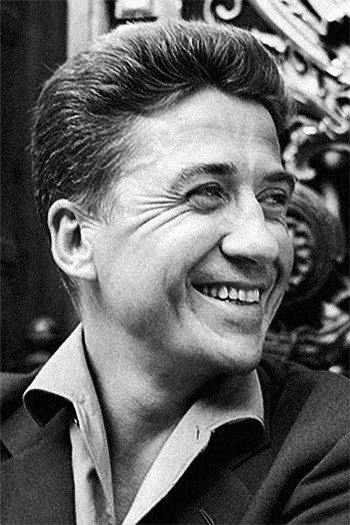
Alain Resnais cut film before he directed it, and every picture he made is built in the edit: the present laid against the past until the join itself becomes the point. In Night and Fog (1956) the method is close to perfect. It stayed his method for sixty years.
Fi1m perspective
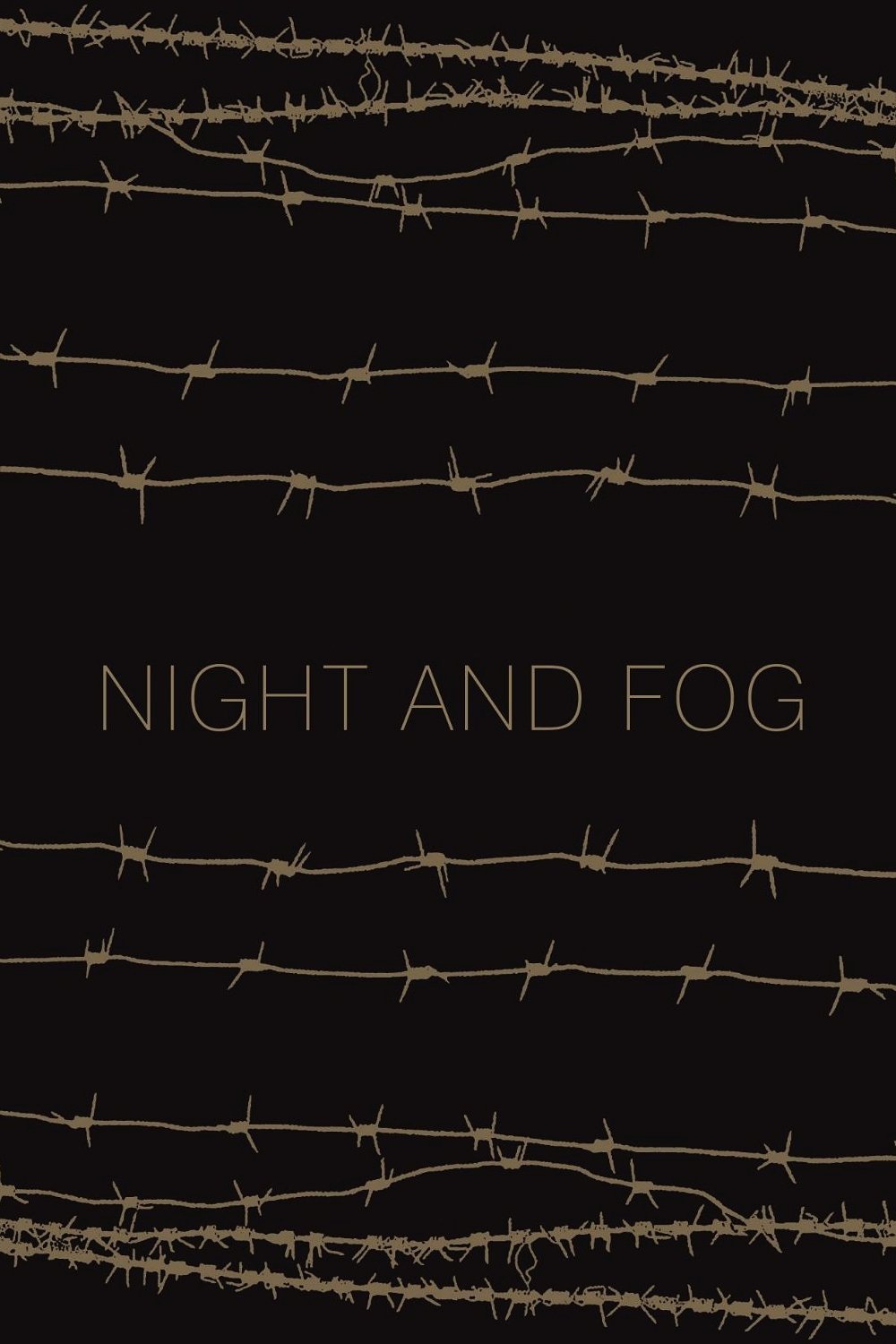
The camera walks. In Night and Fog (1956) it moves at a strolling pace along a fence and into an empty brick building, in colour, with grass over the tracks, and then Resnais cuts to the same place in black and white when it was full. He trained as an editor at IDHEC in the mid-1940s, and it shows: the film explains nothing that a cut can show. Sacha Vierny and Ghislain Cloquet shot the present; Jean Cayrol wrote the commentary; Michel Bouquet reads it without once raising his voice. It runs thirty-two minutes and we would tell a stranger to see it.
We were horrified, and we had seen those pictures before. What did it was Bouquet's level tone over a room of women's hair, which gave us nowhere to put the feeling except back in our own laps. Resnais said later that he came to see that all you could do was suggest the horror, that if you tried to show something very real on the screen the horror disappeared, and that he had to use every means possible to set the viewer's imagination in motion. That sentence is the whole of his cinema.
He had spent the late 1940s on short documentaries about artists and political subjects, and after Night and Fog he moved to features with Hiroshima mon amour (1959), written by Marguerite Duras. Then came Last Year at Marienbad (1961) with Alain Robbe-Grillet and Muriel, or the Time of Return (1963), Cayrol again, this time on the Algerian War. The habit is visible: he hired novelists and playwrights rather than screenwriters, and the stories came back fragmented, out of order, told by people who could not agree on what had happened. My American Uncle (1980) laid fictional lives against scientific theory and old film clips. In his last decades he turned to theatre adaptations and to music, and Sabine Azéma appeared in six of his films.
The complaint against him has always been the same one: that the work is for the few, and that it cares little for realism or for the ordinary viewer. Marienbad set off an argument about whether anything in it had happened at all, and the argument has not finished. We think the charge lands harder on the fictions than on the documentary. In Night and Fog the evidence is real and the cutting is the argument, and nobody watching it needs a seminar. When the material is invented, the same restraint can read as chill, and a viewer who wants to be told a story is entitled to feel left outside.
Start with the thirty-two minutes. Everything he made afterwards is easier to read once you have seen how he holds a shot of a fence and then refuses to look away from what stood behind it.
Biography
Alain Resnais was a French film director and screenwriter whose career spanned more than six decades. After training as a film editor in the mid-1940s, he directed short films including Night and Fog (1956), a documentary about the Nazi concentration camps.
Resnais began making feature films in the late 1950s. His early reputation was established with Hiroshima mon amour (1959), Last Year at Marienbad (1961) and Muriel, or the Time of Return (1963), which used unconventional narrative techniques to explore memory and the past. These works were associated with the French New Wave, though Resnais had closer links to the Left Bank group. He frequently collaborated with writers including Jean Cayrol, Marguerite Duras and Alain Robbe-Grillet.
In later films, Resnais explored interactions between cinema and theatre, music and other forms, including adaptations of plays by Alan Ayckbourn and others. He died on 1 March 2014.