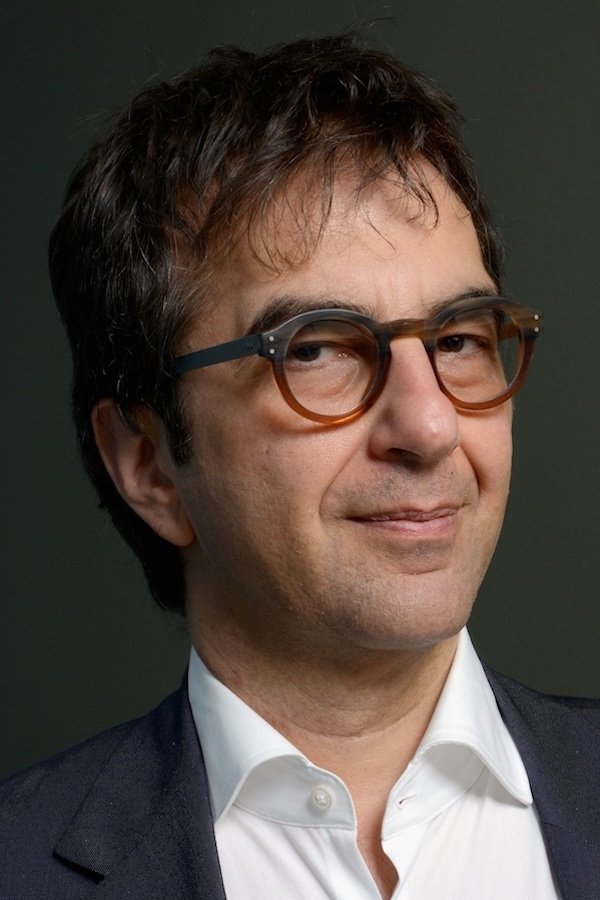
Atom Egoyan tells stories of grief out of order, making us reconsider people we thought we understood. We value his patience with difficult behaviour, though the careful construction can sometimes distract from the people.
Fi1m perspective
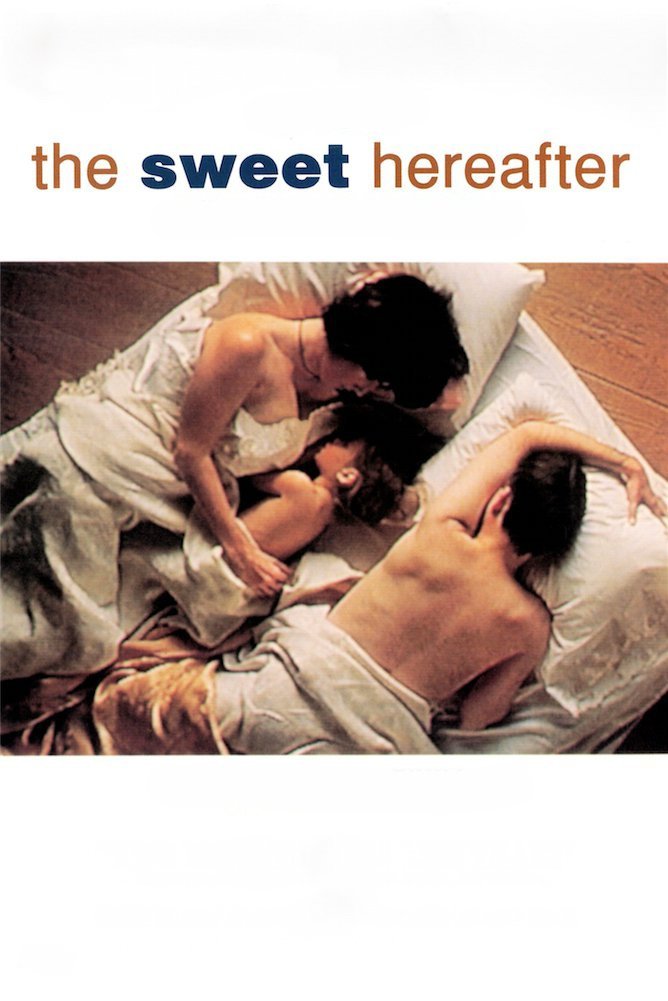
In The Sweet Hereafter (1997), a lawyer offers a bereaved town the prospect of a lawsuit. Egoyan understands why that might sound like help, even when the lawyer's involvement is troubling. He gives people time to make us uneasy without writing them off. We were moved by Ian Holm's Mitchell Stephens because his own grief remains visible beneath his professional assurance.
Egoyan's early features in the 1980s led to wider international recognition with Exotica (1994). The Sweet Hereafter, his first adaptation, takes its story from Russell Banks's novel and gives his interest in loss a whole community to consider. That suits a director drawn to the ways people become isolated, and to the institutions through which they try to reach one another. The lawsuit matters because these people need to believe something can be done.
Susan Shipton's editing moves between periods so that one encounter changes our understanding of another. The chronology demands concentration, but there is more to follow than the legal proceedings: experiences which should be behind these people keep affecting them. We are usually brought closer by the extra work. There are moments, though, when the arrangement of scenes becomes too noticeable, and we find ourselves thinking about the editing rather than the grief.
His partnership with cinematographer Paul Sarossy spans at least a dozen features. Later work includes the thrillers Chloe (2009), The Captive (2014) and Remember (2015). The criticism of The Captive as less assured is a reminder that his methods do not always persuade. When he withholds information, we need to feel that understanding the characters will repay the wait.
Holm and Sarah Polley make the silences in The Sweet Hereafter matter enough for us to forgive its occasional fussiness. It is our recommendation for where to begin with Egoyan. Give it an evening when you can bear the subject and follow the shifts in time.
Biography
Atom Egoyan is a Canadian film director, screenwriter and producer. Born on 19 July 1960 in Cairo to Armenian parents, he moved to Canada as a child and studied international relations at the University of Toronto before turning to film and theatre.
Egoyan emerged in the 1980s and achieved wider recognition with Exotica (1994). He wrote, directed and produced The Sweet Hereafter (1997), an adaptation of the Russell Banks novel that premiered at Cannes, where it won the Grand Prix, and received Academy Award nominations for Best Director and Best Adapted Screenplay.
His other notable films include The Adjuster (1991), Ararat (2002) and Remember (2015). Egoyan has won eight Genie and Canadian Screen Awards. He is married to actress Arsinée Khanjian, who has appeared in many of his films, and was appointed a Companion of the Order of Canada in 2015.