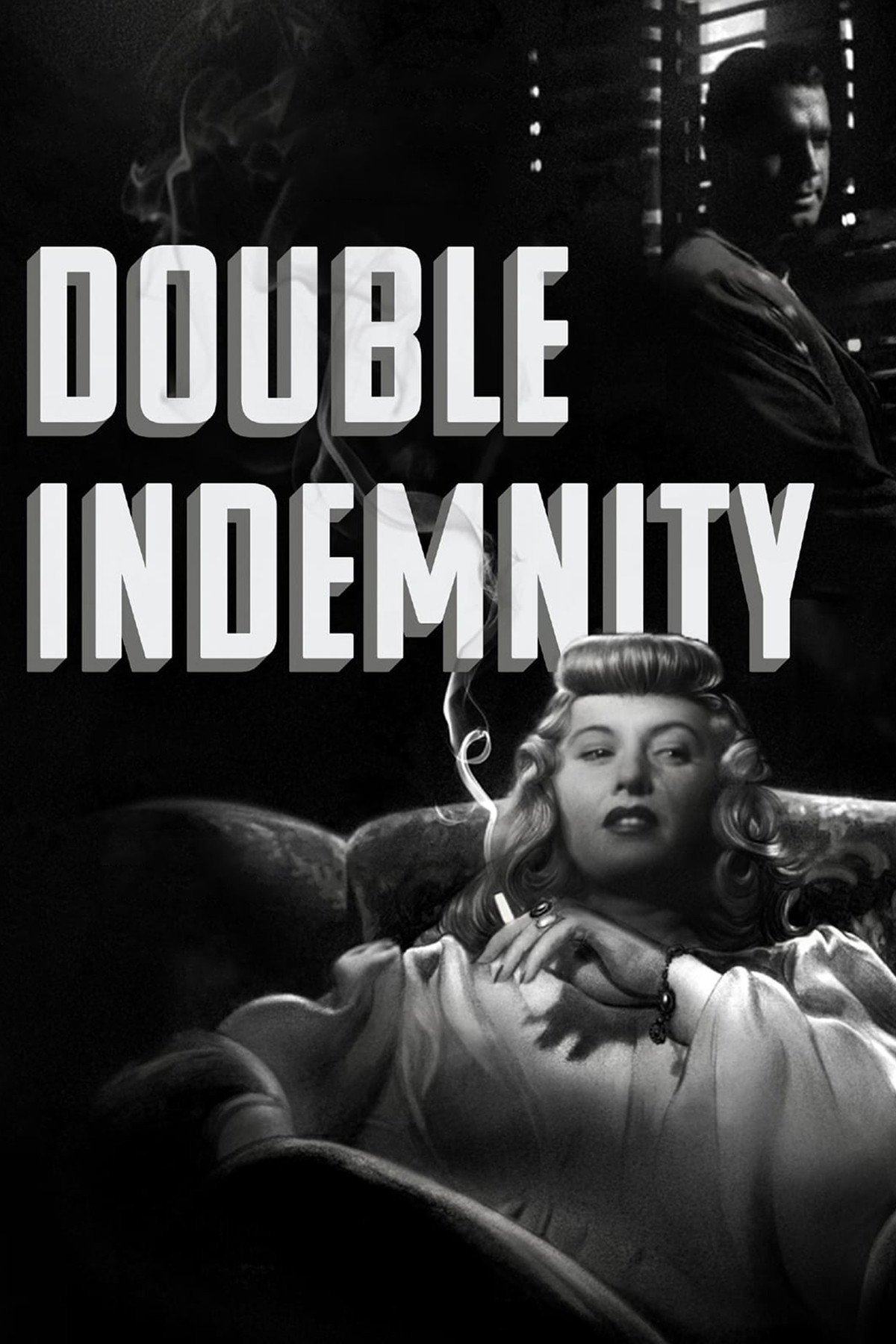
Barbara Stanwyck makes a calculated answer sound unforced. We value her precision and her willingness to let a forceful woman remain vulnerable; in Double Indemnity, she can unsettle us without making us wish the conversation would end.
Fi1m perspective
In Double Indemnity (1944), Barbara Stanwyck’s Phyllis Dietrichson always seems to have her next answer ready. Fred MacMurray’s Walter Neff enjoys matching her, and she lets the flirtation remain pleasurable even as we begin to distrust it. We laughed at their verbal sparring, then felt uneasy about enjoying their company, because each exchange made the prospect of trouble more convincing. Stanwyck never pauses to make sure we have noticed how calculating Phyllis is.
Her breakthrough came with Frank Capra’s Ladies of Leisure (1930), followed by such determined women as Lily Powers in Baby Face (1933). The early melodramas could be over-intense; she did not always need to push quite so hard. Stella Dallas (1937) makes a useful starting point for her emotional directness, while Preston Sturges’s The Lady Eve (1941) gives her a scheming woman to play for comedy. She can let us enjoy that woman’s ingenuity without treating her as a joke.
Calling her naturalistic can obscure the skill involved: the dialogue in Double Indemnity is conspicuously written, and she makes its precision part of Phyllis’s appeal. Wilder keeps flirtation close to calculation rather than asking her to alternate between them. MacMurray’s readiness to be impressed gives her something useful to play against. We can hear the cleverness of the writing without feeling that Stanwyck has stepped outside the conversation to deliver it.
There is a limit to what she can make plausible. Neff becomes willing to contemplate murder too quickly, and the screenplay hurries him further than vanity and attraction quite explain. That is a weakness in a film we would still recommend to almost anyone. Stanwyck keeps Phyllis unsettling without making the scenes so cold that we stop understanding why he wants to stay.
Her film work extended across melodrama, comedy, noir and westerns before the move to television in the 1960s, including The Big Valley. Throughout those changes, the small shifts of voice, expression and posture remained central to her acting; toughness need not prevent a feeling from showing. Start with Double Indemnity, and give its polished dialogue a few minutes to settle: Stanwyck is worth the adjustment.
Biography
Barbara Stanwyck, born Ruby Catherine Stevens, was an American actress who appeared in stage, film and television productions. She began her career as a dancer and chorus girl in New York before making her Broadway debut in the late 1920s. She moved to Hollywood in 1928 and went on to appear in more than 80 films over the following decades.
Stanwyck is known for her roles in The Lady Eve (1941), Ball of Fire (1941), Double Indemnity (1944), The Strange Love of Martha Ivers (1946) and Sorry, Wrong Number (1948). She received four Academy Award nominations for Best Actress and won three Primetime Emmy Awards for her television work, along with a Golden Globe Award. She was awarded an honorary Academy Award in 1982.