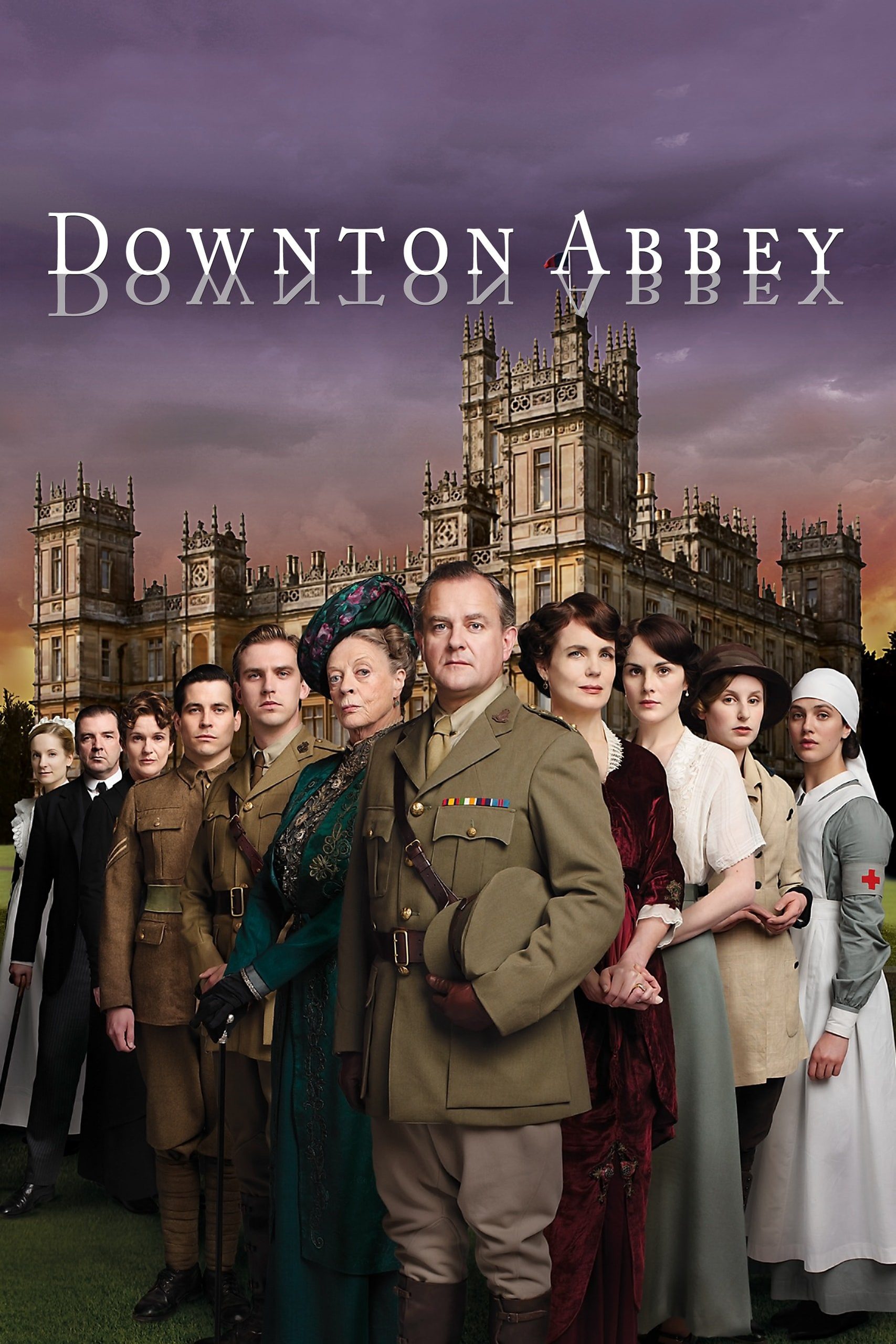
Brian Percival directs so you do not notice him: period drama shot plainly, locations allowed to do the acting, the servants given as much of the frame as the family. It is craft without swagger, and on Downton Abbey it was what the material needed.
Fi1m perspective
Watch an hour of Downton Abbey directed by Brian Percival and try to remember a single shot. You will remember the house, the lines and the faces, and not the camera, because Percival has arranged for you not to. His style is classical and unobtrusive: the frame sits where it can see, the cutting follows the talk, and the building does the work a showier director would claim for himself. Our review said the house does half the acting. He meant it to.
He came to drama sideways, after a decade of music videos, fashion clips and commercials across Europe in the 1990s, and the training shows in the good sense of it: he knows how to make a place look like itself quickly and get on. The short About a Girl (2001) got him into television, then Clocking Off, North & South (2004) and ShakespeaRe-Told. North & South, a four-part literary adaptation, set the pattern, and Downton Abbey (2010), on which he led the first season, made him the director producers ring when the costumes are expensive and the house is real. His first feature, The Book Thief (2013), was another adaptation, wartime Germany shot on location. Since 2020 he has directed and executive produced several seasons of All Creatures Great and Small.
What he does best is give one building two lives. In Downton the family's rooms and the servants' rooms are shot as different worlds, the light and the pace changing as you go down the stairs, and the staff get as much of the frame as their masters. We did not expect the below-stairs scenes to be the ones that got at us, and they were: the same house made into a place people worked and lived rather than a place they were displayed. Percival has said that what he looks for first is an emotional connection, and that he wants it with the people carrying the trays. Our review complained that the series goes soft on its masters. The writing does; the direction gives the servants their due.
The limit is the same as the virtue. Classical and restrained shade into conventional, and the reviews for The Book Thief said so: handsome, faithful, cautious. Percival would not argue. "If I'd have tried to make a statement with the photography or to over-dramatise the story, I think that might have been detrimental to the film because people would have been looking at me and not just accepting the story creeping up on them." That is a sound principle for a Sunday-evening serial and a more doubtful one for a feature, where a little more nerve behind the camera might have been the point.
He is now several seasons into All Creatures Great and Small, which is to say he has found another real place and another set of people who work with their hands, and he is filming them plainly. Nobody will call it daring. Nobody watching it on a Sunday will mind.
Biography
Brian Percival (born 1962) is a British film and television director. Born in Liverpool, he attended New Heys Comprehensive School and later studied at art college and film school in Manchester. He began his career directing music videos and commercials in Europe before moving into drama.
His short film About a Girl (2001) won the BAFTA Award for Best Short Film. Percival directed episodes of the series Downton Abbey (2010–2012), winning a BAFTA TV Award for Best Director and a Primetime Emmy Award. Other notable credits include the miniseries North & South (2004), the feature film The Book Thief (2013) and series All Creatures Great and Small (2020–).