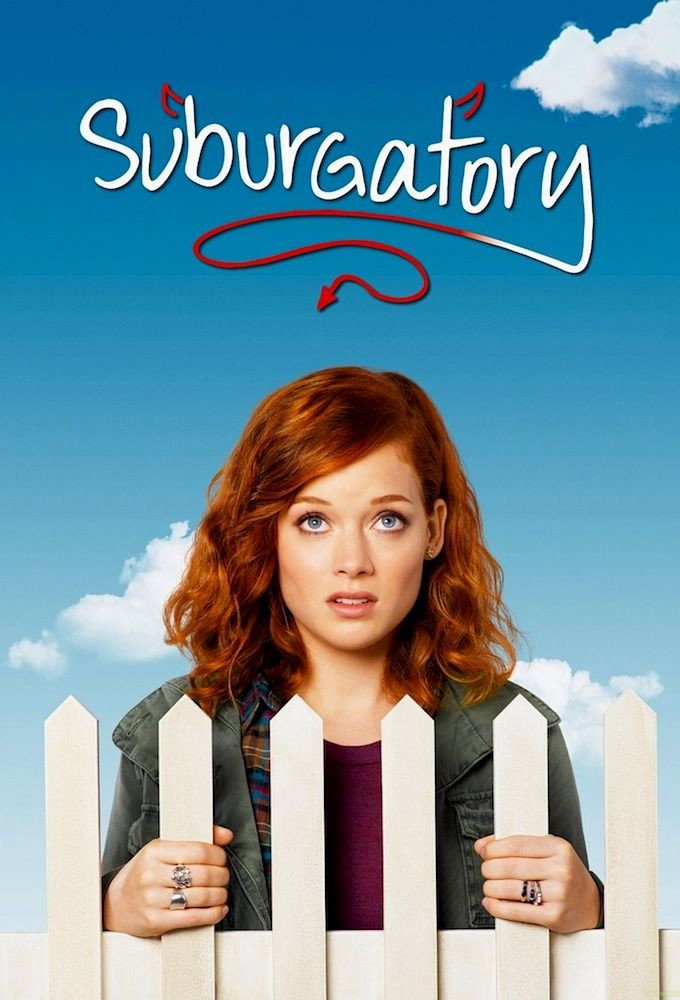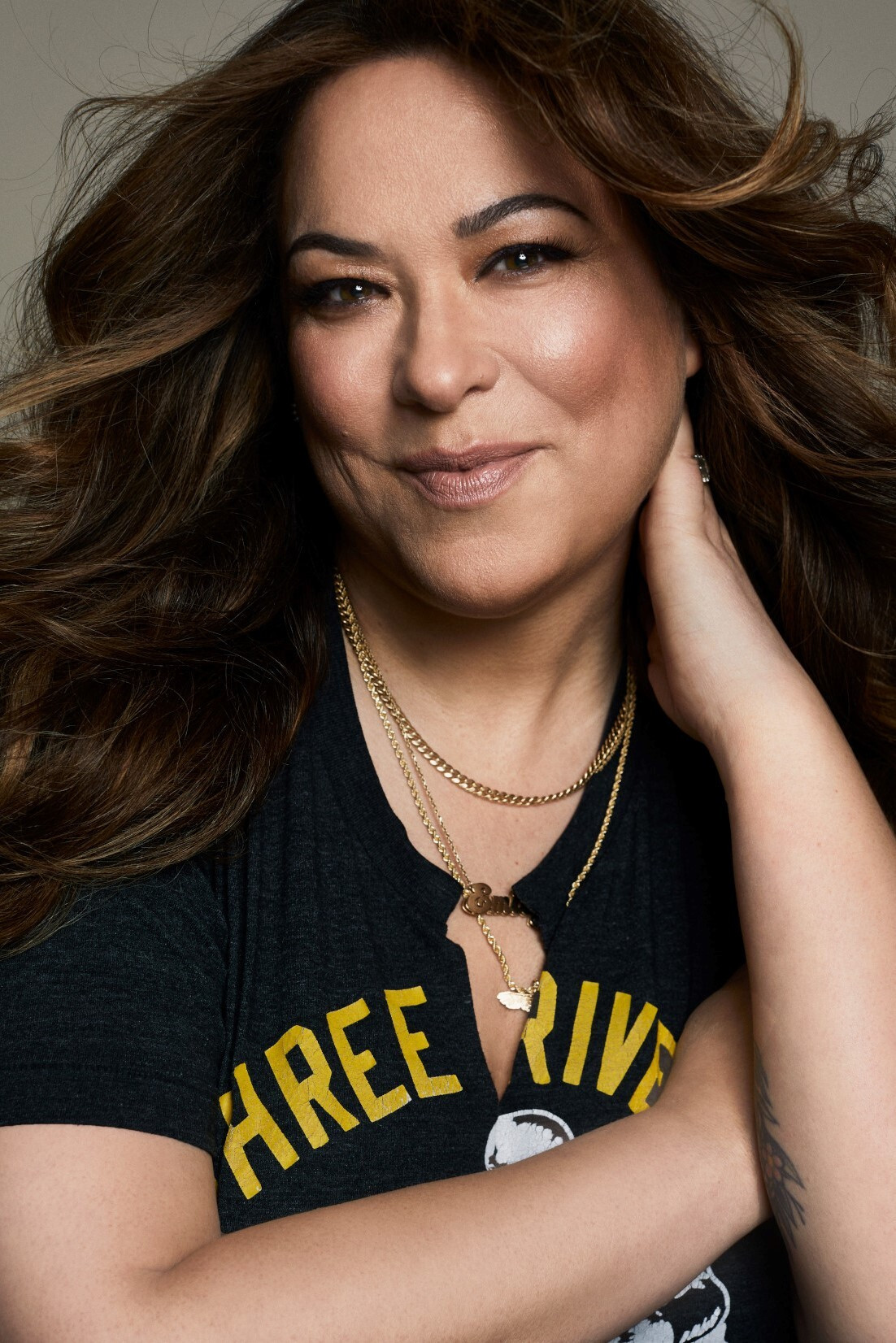
Emily Kapnek writes comedies about young women dropped into places whose rules nobody has explained to them, and she is better at the people than at the places. Suburgatory (2011) is the proof: quick, warm, and half-hearted whenever it remembers it is meant to be a satire.
Fi1m perspective
A sixteen-year-old narrates her own exile. Her father has found a box of condoms in her bedroom, decided Manhattan is to blame, and moved them both to a suburb where the lawns are cut to the millimetre and the mothers wear pink. That is the opening of Suburgatory (2011), and it tells you most of what Emily Kapnek does: a young woman with a sharp voice, a social world with rules she has not been told, and a joke with a parent standing inside it. We laughed at the condoms and then, slightly to our surprise, liked the man holding them, because Kapnek writes his panic as love and not as the set-up for the next line.
She came up through animation and computer games in the mid-1990s. Her first series, As Told by Ginger (2000), grew out of a screenwriting contest she won in 1999; she created it, wrote it and voiced characters on it, and it ran for sixty episodes. She then moved into live-action writers' rooms, on Hung (2009) and on Parks and Recreation, where she wrote 'Ron and Tammy: Part Two'. Suburgatory was the breakthrough and ran three seasons, from 2011 to 2014. Selfie (2014), a modern Pygmalion, lasted one season and found a small, devoted audience afterwards; Splitting Up Together ran from 2018 to 2019. She has said her mother moved the family out of New York to the suburbs for the schools. Tessa's exile has a source.
What works is the people. The first season of Suburgatory is about as good as this kind of thing gets on American network television, and the best of it is George and Tessa, a father and daughter who have moved somewhere ridiculous together and keep having to admit they are on the same side. Jane Levy carries the narration; Carly Chaikin's blank-faced Dalia is the one target the show never tires of. The colours help, turquoise pools and school corridors lit like a shopping centre, and Amy Heckerling directing some of the early episodes puts Clueless (1995) squarely in the family tree. Kapnek also writes or co-writes her own theme songs, often with the composer Jared Faber, which is unusual for a showrunner and tells you how much of the thing is hers.
What does not work is the satire. Suburbia, social media, status: she chooses large targets and then reaches for the nearest tanning-bed joke. Some critics found Suburgatory tonally uneven, and they were not wrong, though we would put it differently. The show is warm when it remembers the family and shrill when it remembers its premise, and it never found a second idea to replace the first. There are two more seasons after the good one, and the last of them stops rather than ends.
Watch the first twenty-two episodes of Suburgatory and you will have the best of her. The open question is what she does when the premise is not a place. Selfie set a young woman loose inside a phone rather than a cul-de-sac, and it was not given long enough to tell us whether that works.
Biography
Emily Kapnek is an American television writer, producer and voice actress. Born on 27 March 1972 in Manhattan, New York City, she created the Nickelodeon animated series As Told by Ginger (2000) after winning a screenwriting contest, and has written for animated programmes including Hercules (1998) and The Wild Thornberrys (1998).
Kapnek created and wrote for the ABC sitcom Suburgatory (2011–2014), on which she also served as executive producer. She was a consulting producer on Parks and Recreation (2009) and wrote the episode "Ron and Tammy Part Two". She later created the series Selfie (2014) and developed Splitting Up Together (2018). She has written theme songs for several shows and is married to writer Dan Lagana.