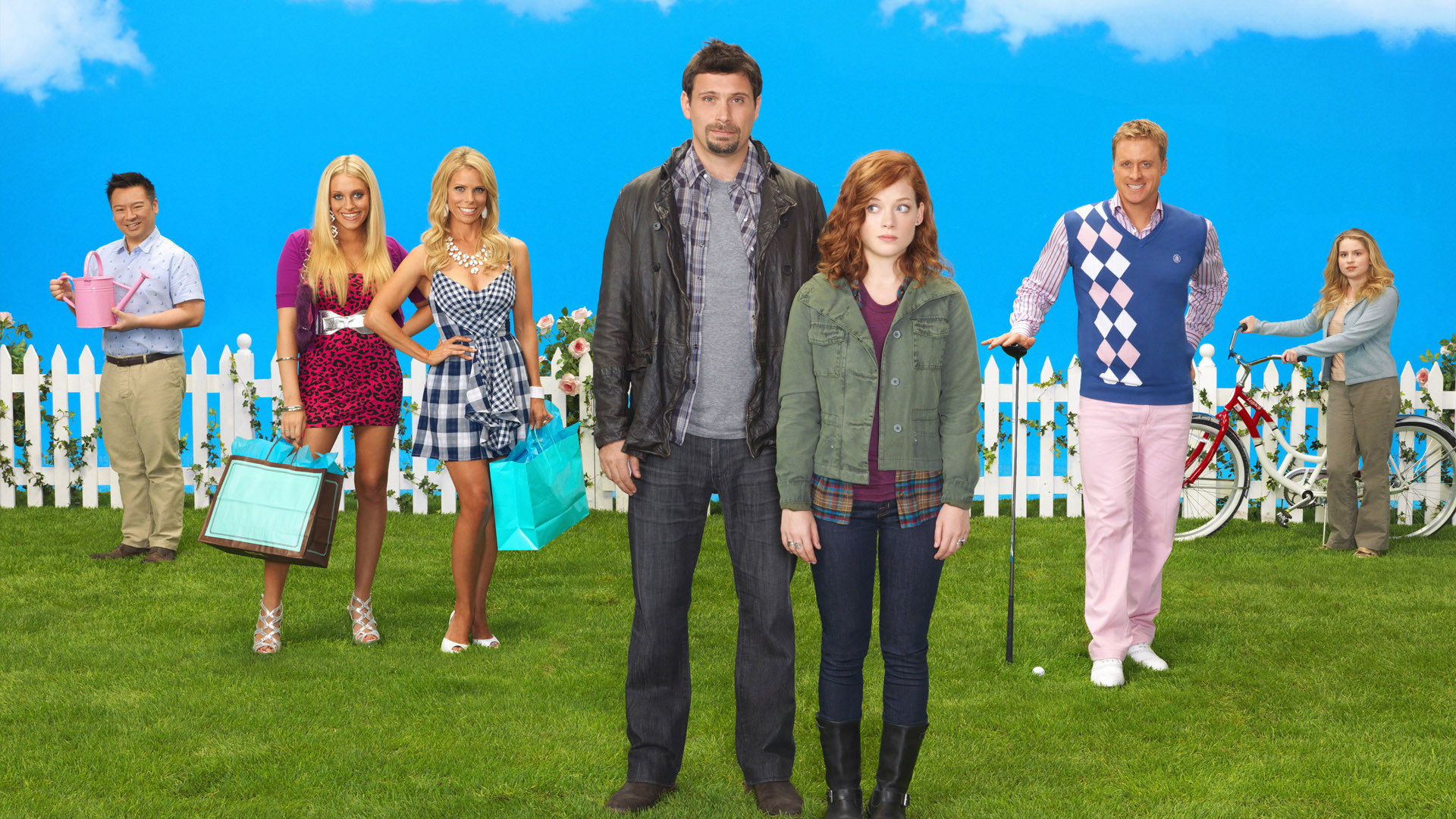
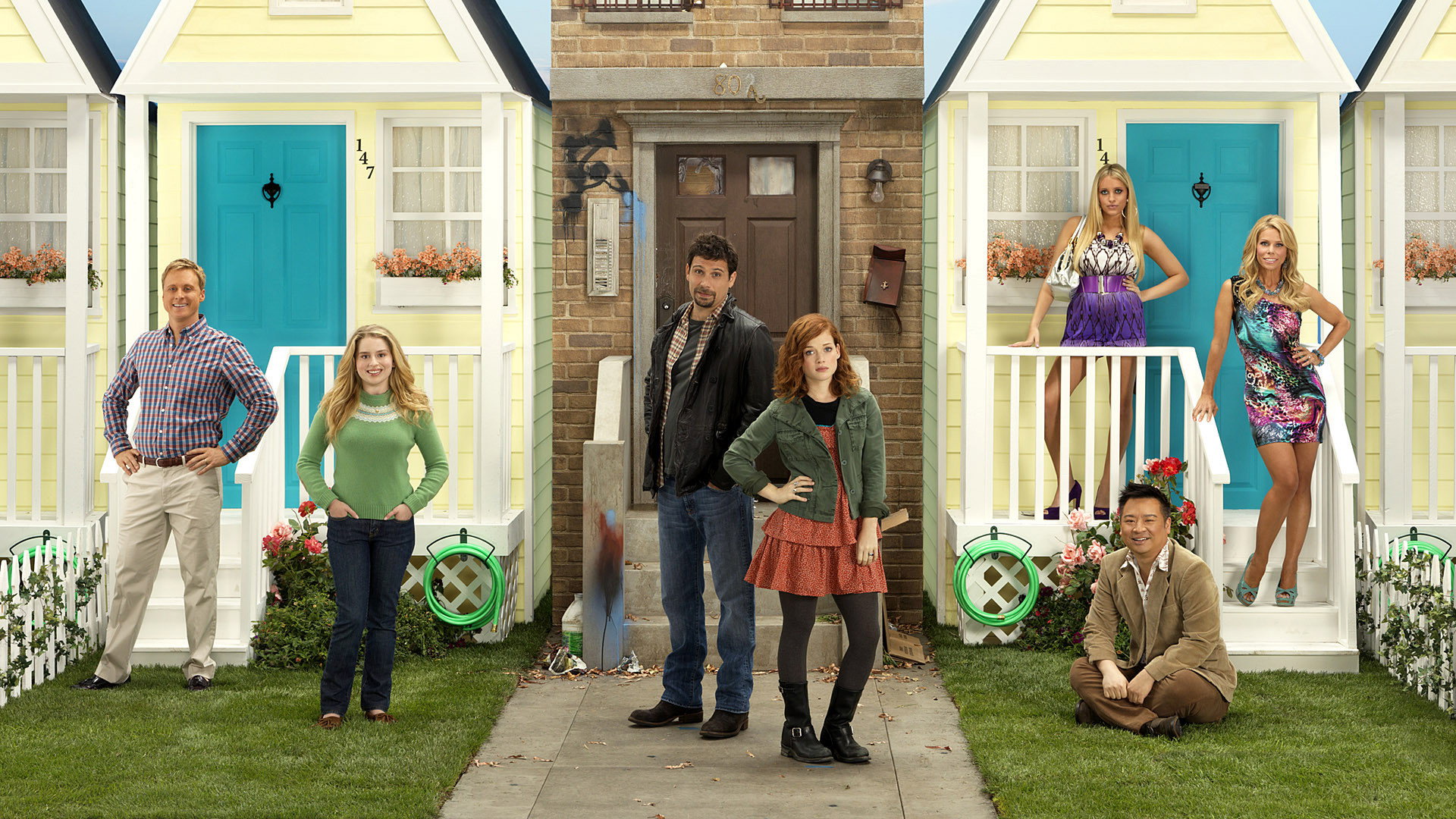
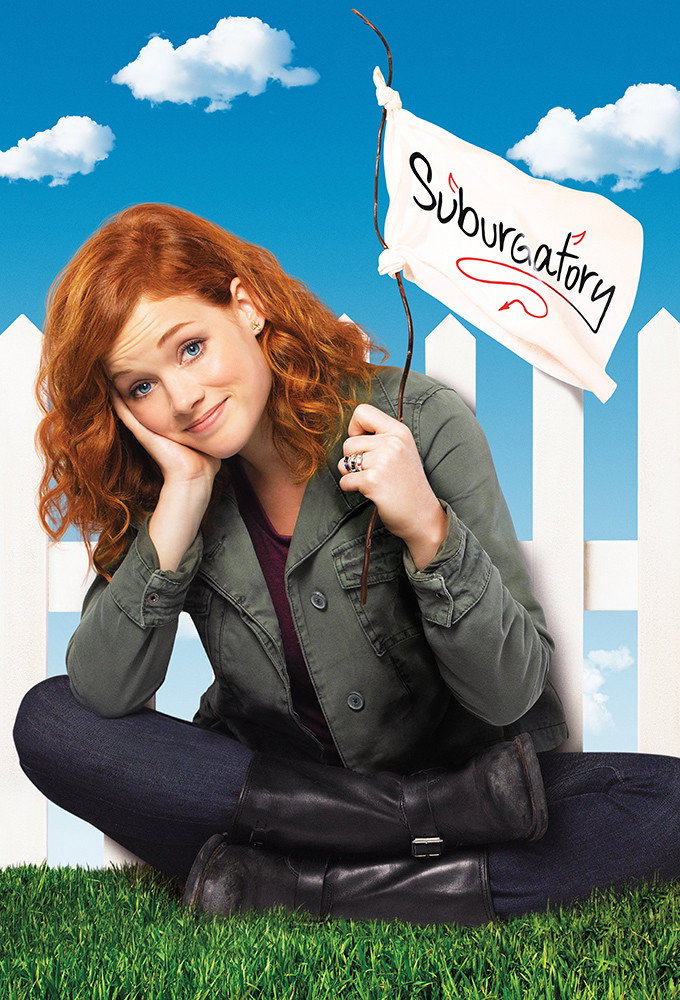
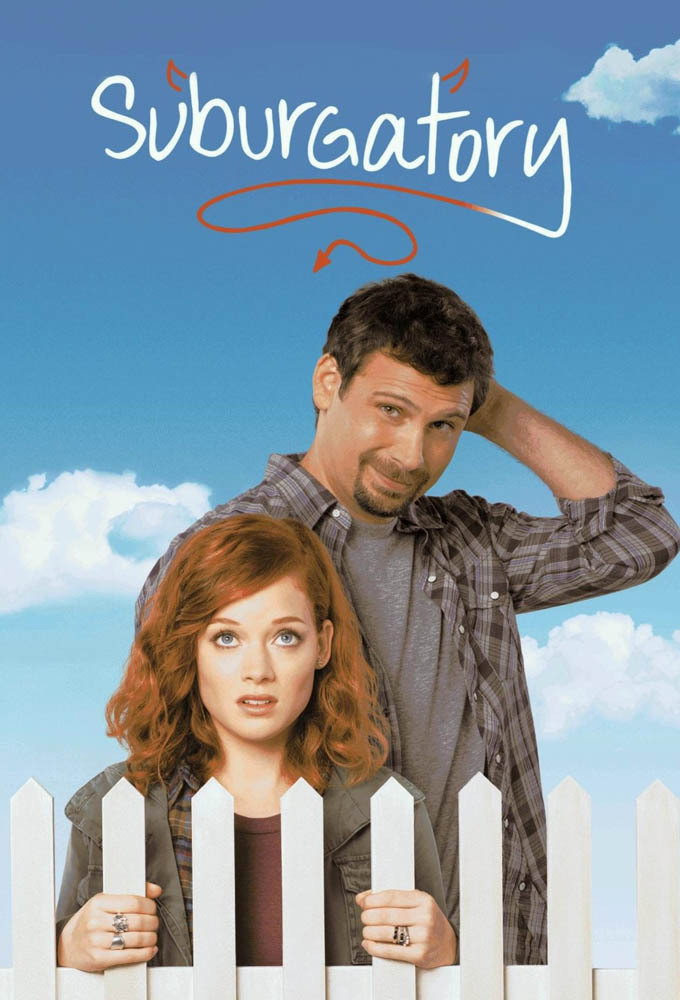
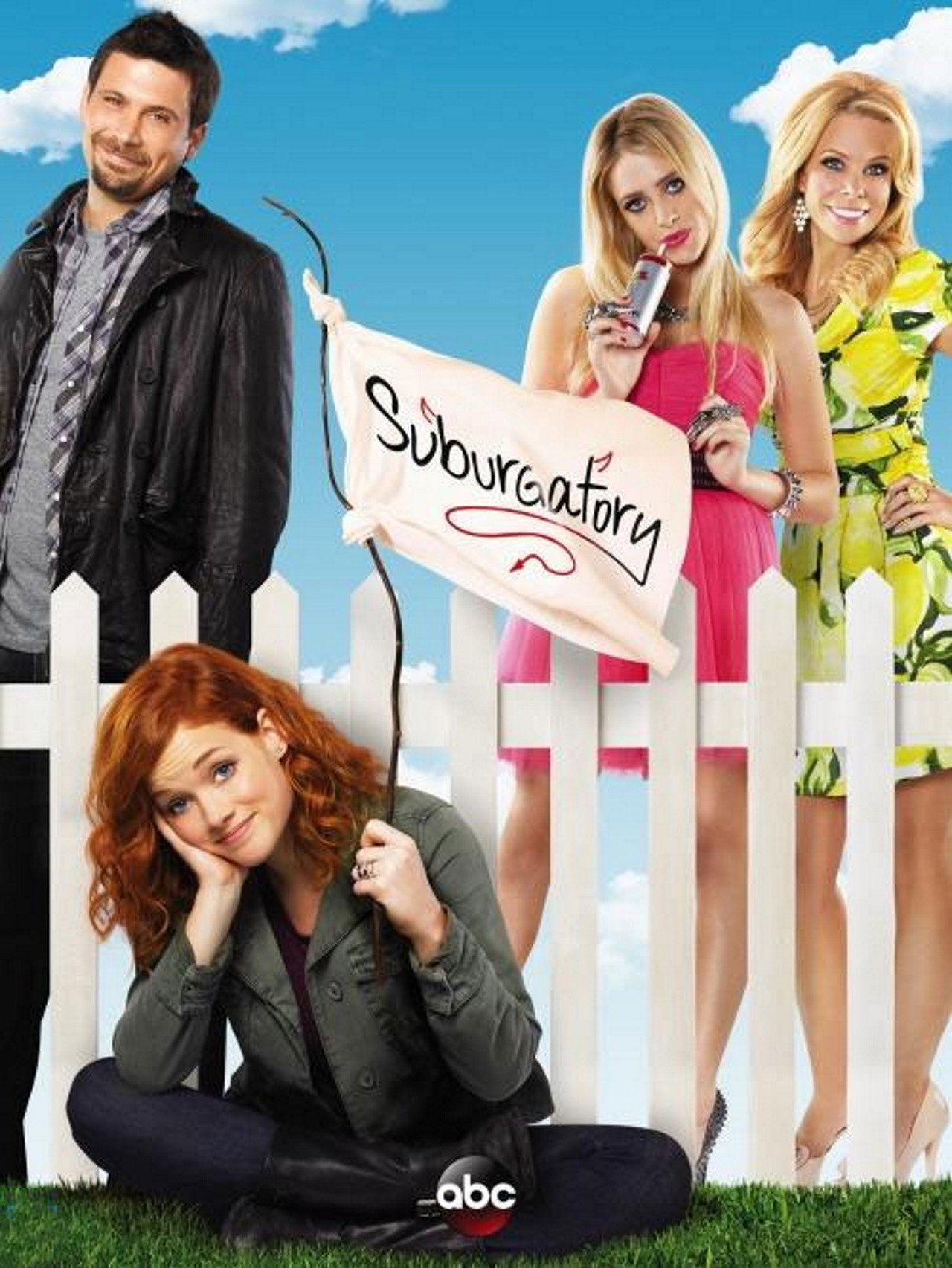
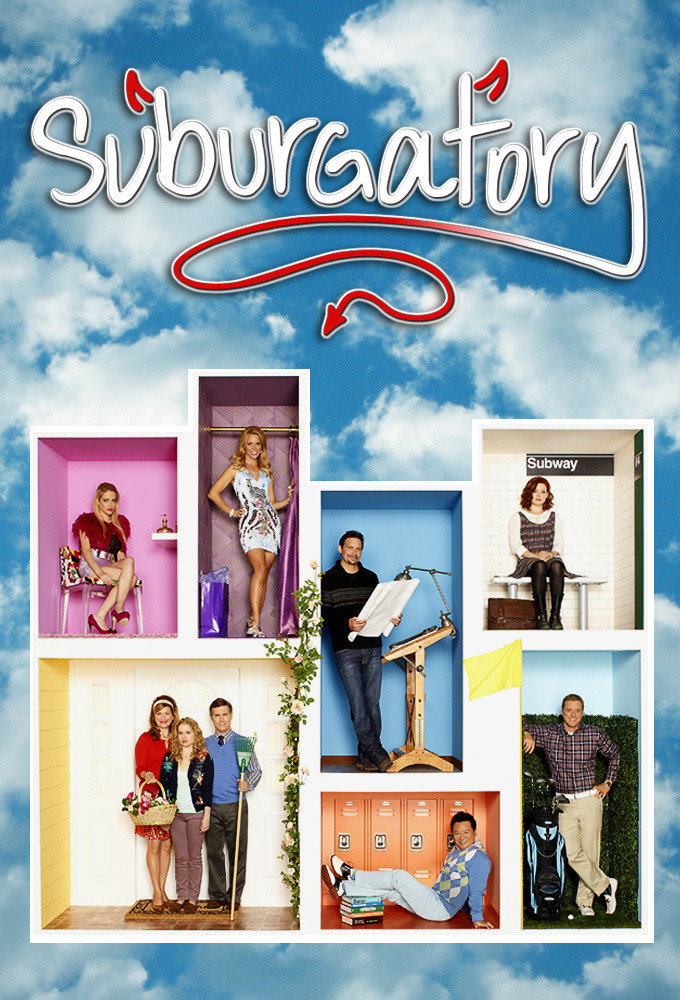
Emily Kapnek’s sitcom about a Manhattan teenager marooned in the suburbs is quick, kind and funnier than its premise deserves, carried by Jane Levy and a blank-faced Carly Chaikin. The first season is the one to watch; the show never finds a second idea.
Emily Kapnek’s sitcom starts with a box of condoms. George Altman (Jeremy Sisto), an architect raising his daughter alone in Manhattan, finds it in her bedroom, decides the city has got to her, and moves them both to Chatswin, a suburb where the lawns are cut to the millimetre and the mothers wear pink. Tessa (Jane Levy), who is sixteen and had not been planning to use the condoms, narrates her sentence. Suburgatory is, for one season, about as good as this kind of thing gets on American network television: quick, kind and strange. It then has two more seasons in which it slowly loses interest in its own premise, and the last one stops rather than ends.
Levy is the reason to start. Her Tessa is clever without being smug, which is a harder trick than it sounds, and the narration is written as the running commentary of someone who has read a great deal and been to the suburbs never. Sisto plays George as a man who has made one decisive parental gesture in his life and is now quietly terrified he got it wrong. Their kitchen scenes, two people who like each other and have nobody else, are the spine of the show, and they moved us more than a half-hour comedy with a laugh a minute has any right to. One quiet scene at the end of the pilot, just the two of them once the neighbours have gone home, had us, to our surprise, a little choked.
The comedy, though, belongs to the neighbours. Cheryl Hines plays Dallas Royce, the queen of the cul-de-sac, as a woman so relentlessly hospitable that it takes half a season to notice how lonely she is, and Hines can make a single greeting carry three separate meanings. Her daughter Dalia (Carly Chaikin) is the show’s best idea: a rich girl of total blankness who speaks in a flat murmur and regards Tessa the way a cat regards a new sofa. We laughed at Dalia harder and more often than at anything else on the show, and we felt faintly bad about it, because Chaikin never once asks for the laugh. She stares, and waits, and the line arrives.
The look does a lot of the work. Chatswin is shot in colours you could eat: the pools are turquoise, the women are tanned to the shade of the woodwork, and even the school corridors are lit like a shopping centre. Amy Heckerling directs some of the first season, and Clueless (1995) is the obvious ancestor, a satire that loves its targets and dresses them beautifully. Claire Scanlon, Gail Mancuso and Ken Whittingham, among many others, keep the episodes moving at the speed of the narration, and the writing under Kapnek, Annie Weisman and Bob Kushell is dense with throwaway lines that reward a second viewing.
Then the trouble. The show’s one joke about the suburbs, that everyone is rich, tanned and hollow, is a joke Heckerling was already tired of in the nineties, and the series has nothing new to add to it beyond Dalia. The supporting adults, Ana Gasteyer and Chris Parnell as the Shays across the road, Alan Tudyk as George’s dentist friend Noah, Rex Lee as the guidance counsellor Mr. Wolfe, start as sharp sketches and are broadened, episode by episode, until each is a single tic played at volume. Allie Grant’s Lisa, Tessa’s only friend, deserved a show of her own and gets a recurring gag instead. By the second season the plots have gone odd in ways that are sometimes inspired and sometimes merely odd, and the father-daughter story that held it all together goes missing for weeks at a time.
The third season runs to thirteen episodes and finishes mid-thought, because the show was cut off. That is not its fault, but it is the viewer’s problem, and it is worth knowing before you begin.
Kapnek is better at people than at targets. When Suburgatory remembers that it is about a father and a daughter who have moved somewhere ridiculous together, it is warm and funny; when it remembers that it is meant to be a satire, it reaches for the nearest tanning-bed joke. Watch the first twenty-two episodes, at thirty minutes each, and you will have most of what is good. Stay on for Dalia if you must. You will not be the first.