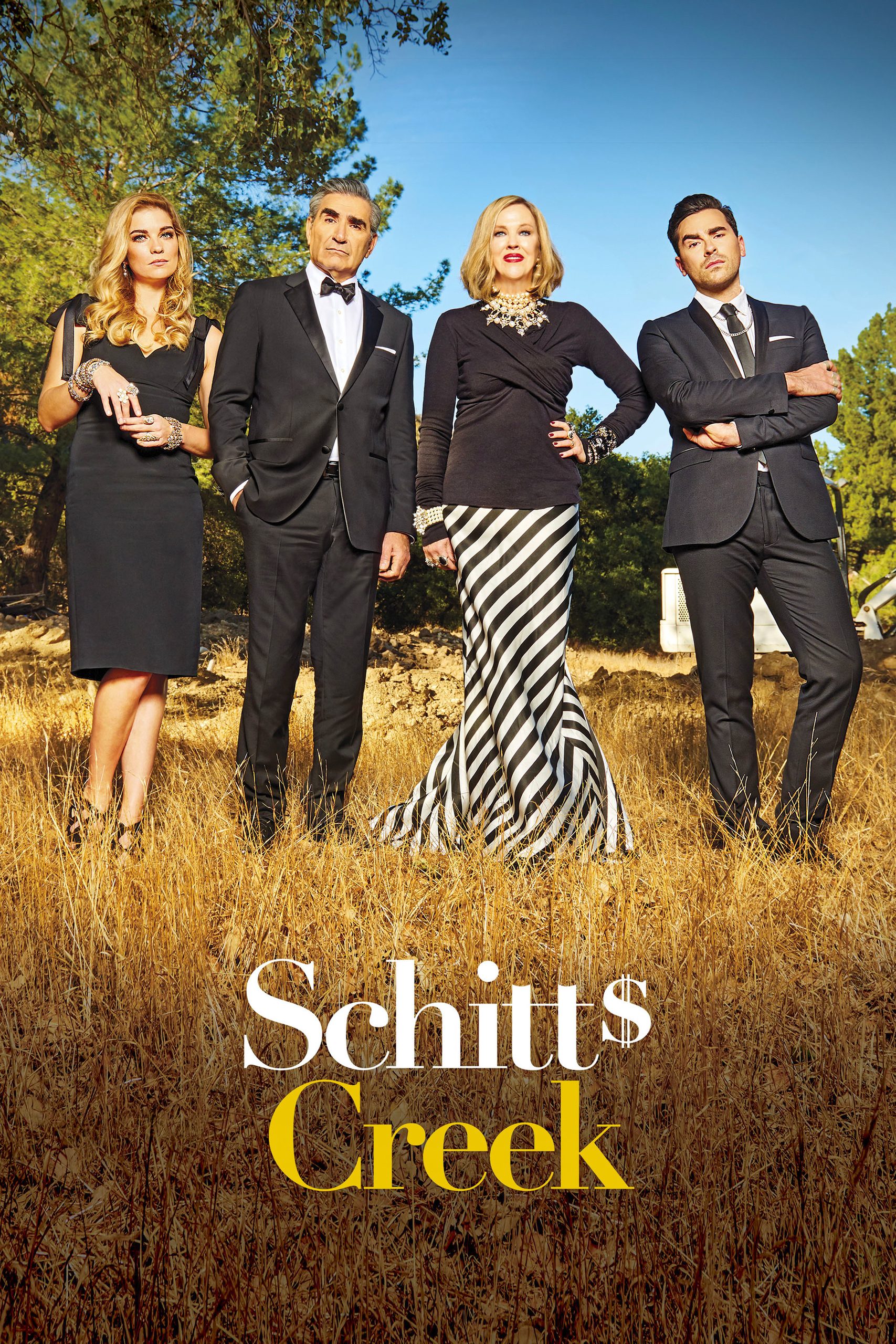
Eugene and Dan Levy’s comedy about a ruined family stuck in a town they once bought as a joke starts thin and grows into something warm without going soft. Give it a season; Catherine O’Hara’s Moira is the reason to stay for six.
Eugene Levy and his son Dan Levy have built a comedy on a pitch that could have been written in 1985. A rich family loses everything, and the one asset nobody wants to seize is a small town the father once bought his son as a joke birthday present. So the Roses move into two adjoining rooms at the local motel and try to stay appalled. For thirteen episodes the show is more or less that pitch: snobs on one side, locals on the other, a bedspread nobody wants to touch in between. Then, over five more seasons, it becomes a comedy about people learning to be decent to each other, and it stays funny while it does. We recommend it warmly. The caveat is that the first season asks for a patience it has not yet earned.
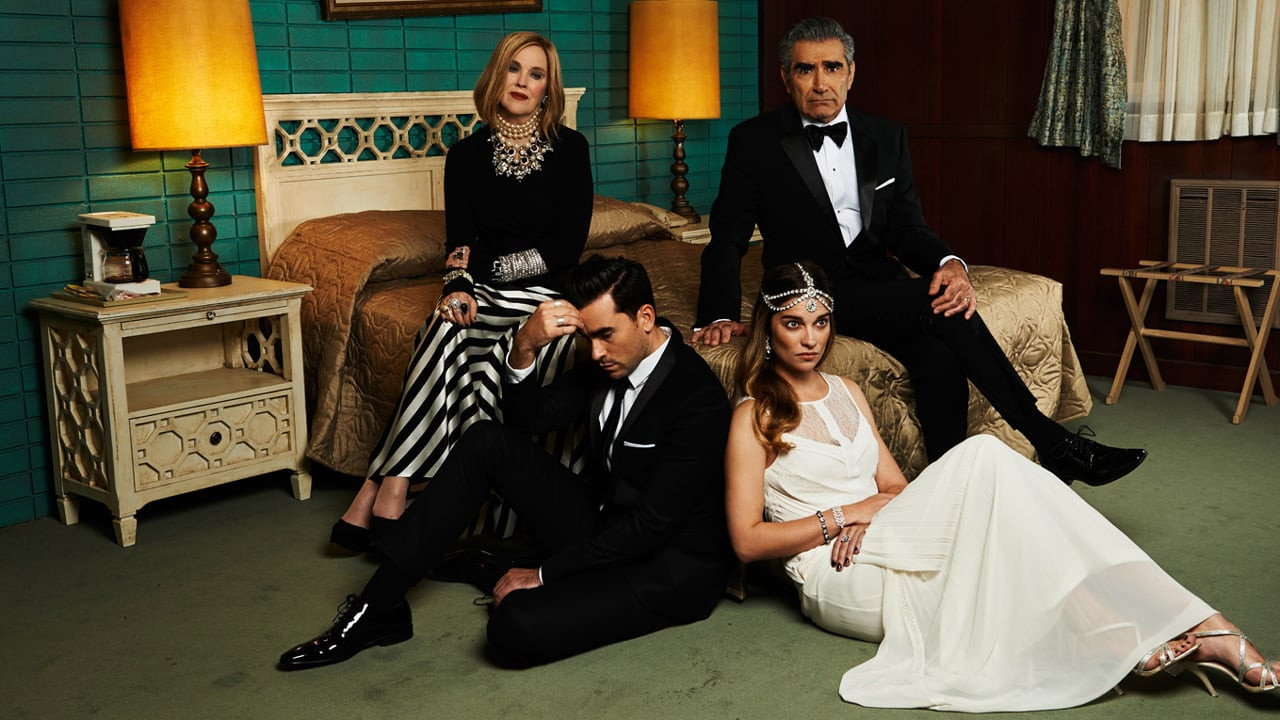
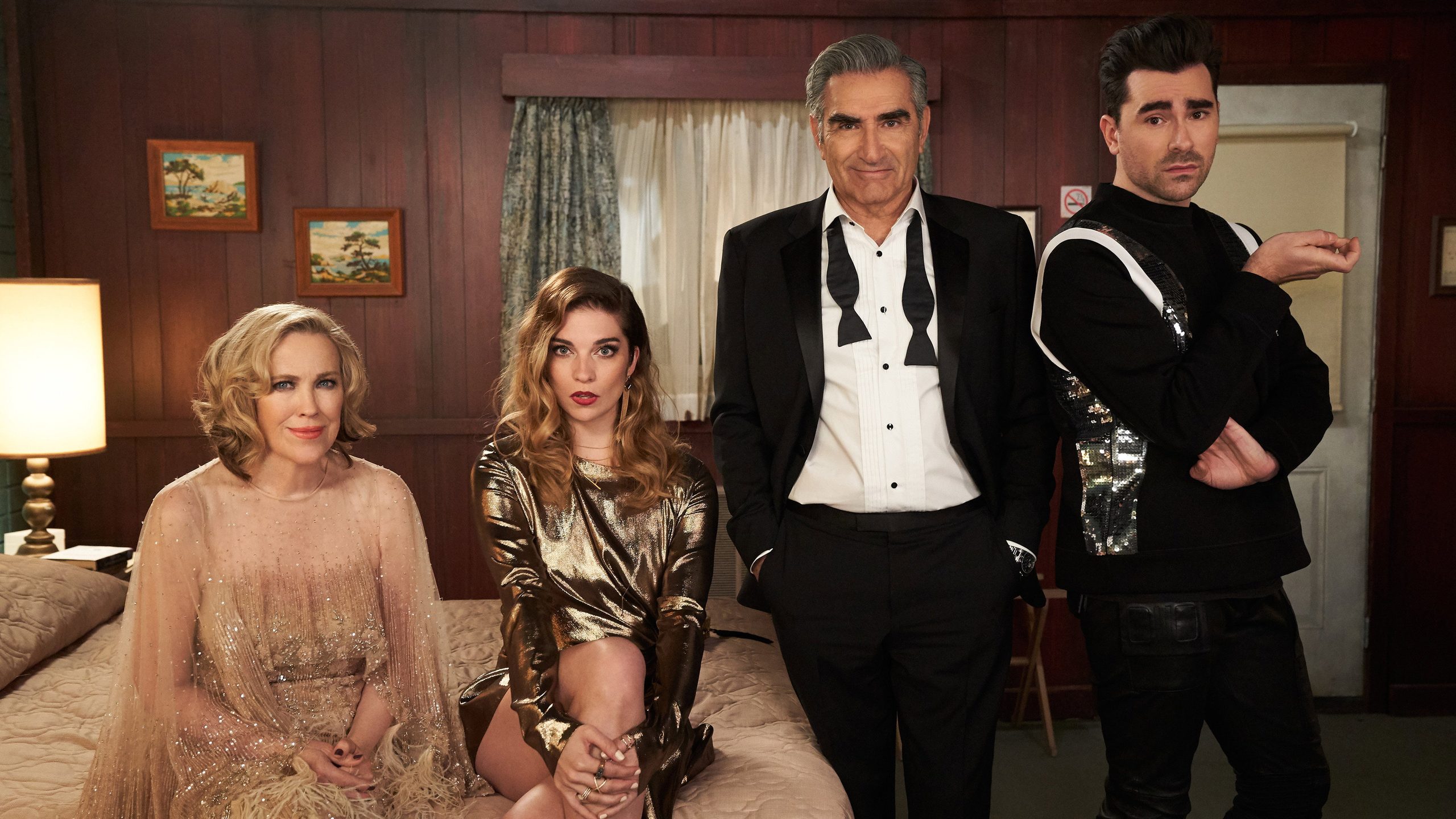
Catherine O’Hara is the reason to stay through it. Moira Rose, former soap actress, arrives with a wall of wigs and a vocabulary that sounds assembled from a dictionary opened at random, and O’Hara plays her at full volume, every vowel bent into a shape nobody else would attempt. Underneath is panic. Moira has lost the audience she performed for and is performing anyway, to a motel car park, and O’Hara lets us see the moment in each scene where she notices. Eugene Levy plays Johnny as the straight man, tie done up, eyebrows doing the work, the only adult in the family.
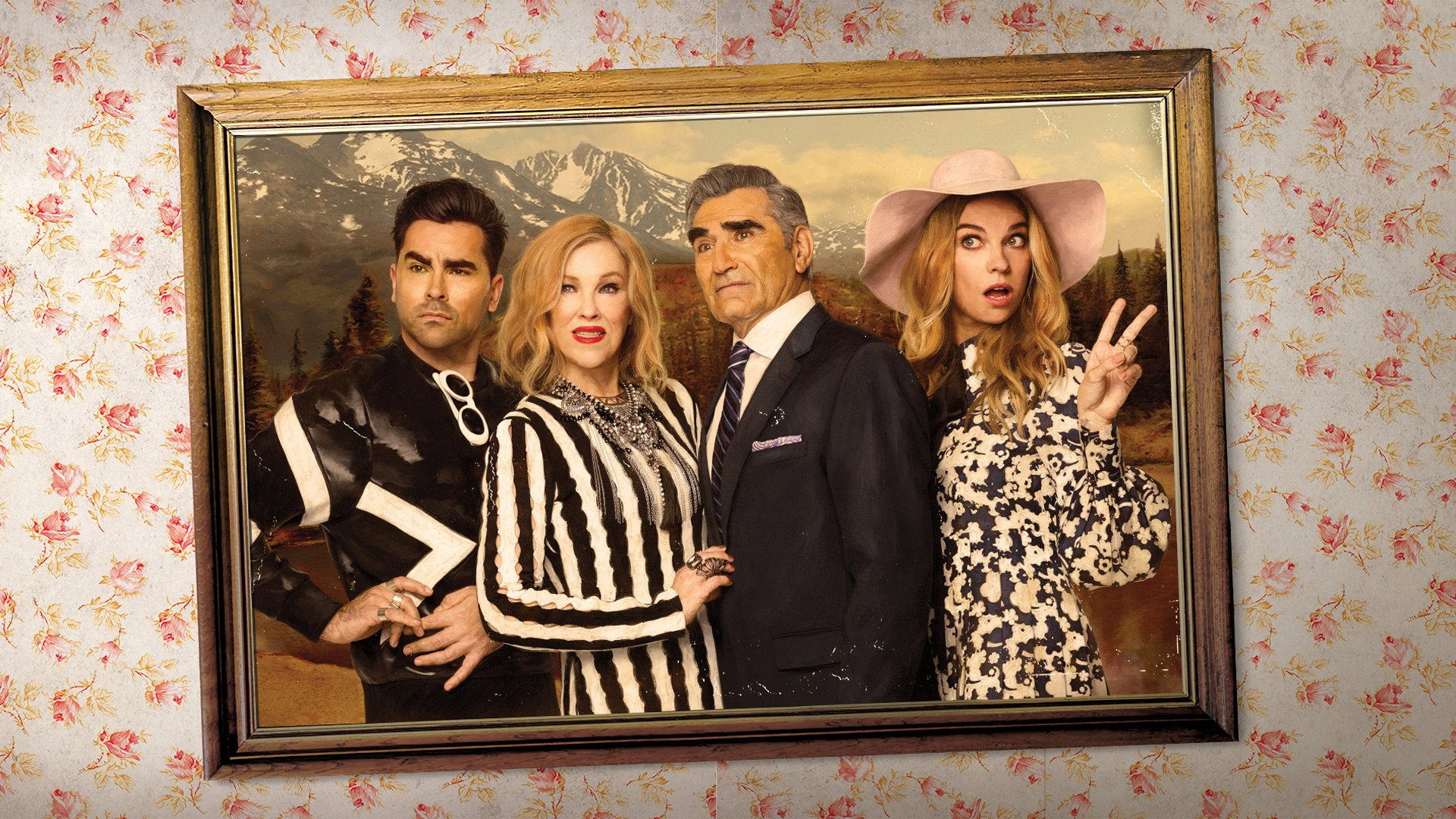
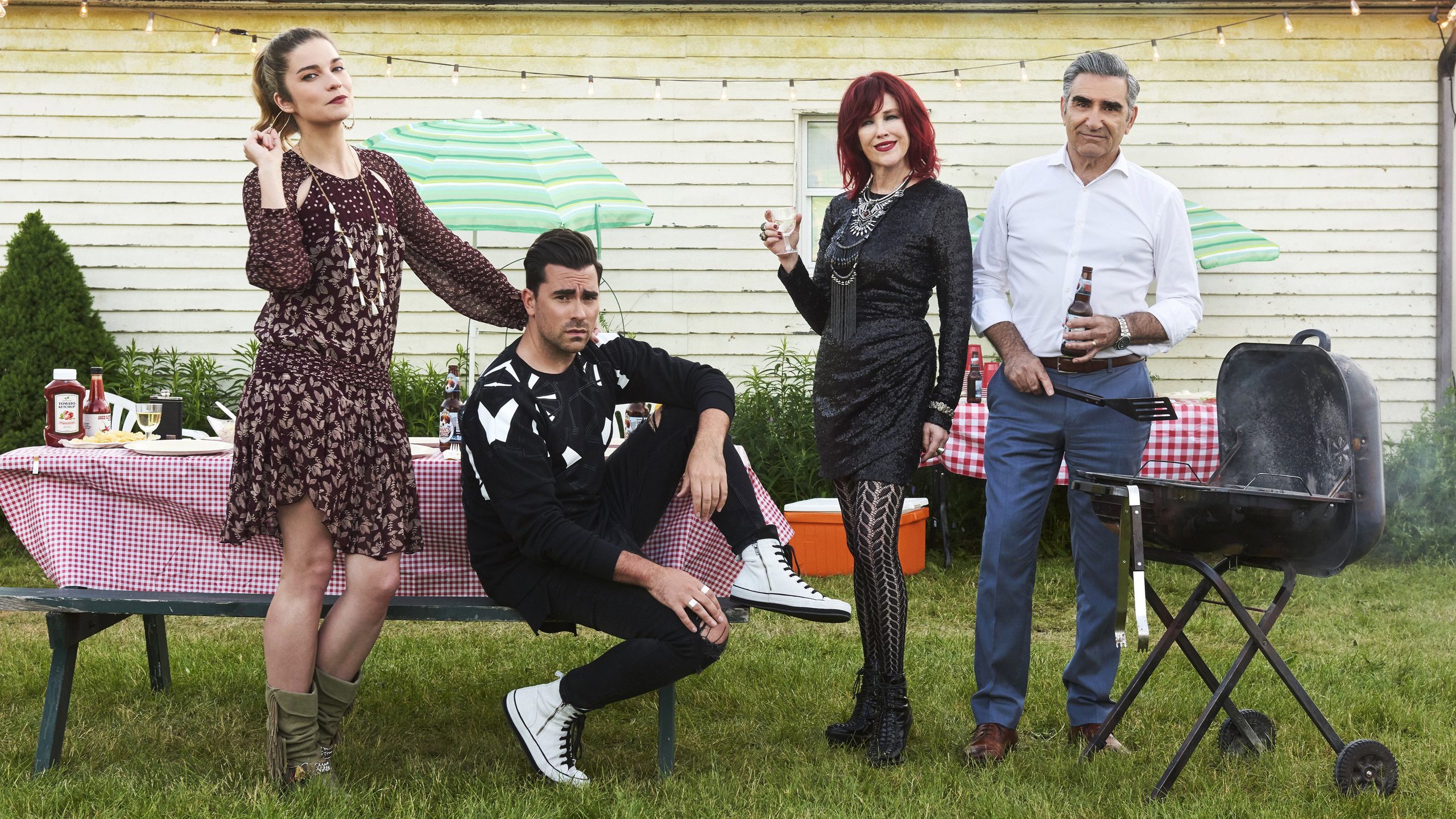
The children take longer to settle and end up carrying half the show. Dan Levy’s David flinches at everything, hands raised as if the town were wet paint, in black and white knitwear that costs more than a month at the motel. Annie Murphy’s Alexis speaks with a lifted wrist and a rising inflection that turns every statement into a question, and hers is the performance that grows most over the run. Emily Hampshire’s Stevie, behind the motel desk, gives the Roses their first friend in town and the show its best deadpan.
The craft is deliberately modest. Brendan Smith’s motel is wood panelling, low ceilings and a connecting door that never quite shuts. David A. Makin and Gerald Packer light it flat and bright, like a sitcom without the laugh track, so the camera never tells you when to laugh. Debra Hanson’s costumes do the visual work the sets decline to: Moira in nothing but black and white, structured almost to armour; Alexis in floaty summer dresses that make no sense for the climate. The editors, James Bredin, Trevor Ambrose and Paul Winestock, hold on faces after the line, which is where the jokes land. Maribeth Solomon’s music is sparing, and long stretches have none, which suits it.
What does not work is mostly in the first year. The title is a schoolboy pun. Too many early episodes stretch one misunderstanding across twenty-two minutes, and the joke that the Roses cannot cope is repeated until it wears through. Chris Elliott’s Roland, the mayor, is played far too broad at first, all open-mouthed chewing and unwanted hugs. One early review dismissed the whole thing as a slim sitcom built around the name, and on the first six episodes we would have half agreed.
Then it turns. There is a dinner in the second season at which the Roses are given every chance to laugh at the town in front of people from their old life, and what they do instead caught us off guard. We had not expected to be moved by a comedy about a wig collection, and we were, and we spent the rest of the run waiting for the show to cheapen that moment. It never did. Noah Reid arrives in the third season as Patrick Brewer, a business partner for David, and what the two of them build we will leave you to watch. The writers, David West Read among them, learned to let people be kind without preaching about it.
O’Hara and Eugene Levy spent years in Christopher Guest’s films, gently mocking people who did not know they were funny. This does something braver: it starts by mocking and then stops, and the comedy survives the loss. Give it a season, two episodes a sitting; they run twenty-two minutes and carry a 15 certificate. If you are not fond of it by that second-season dinner, it is not for you, and no harm done.