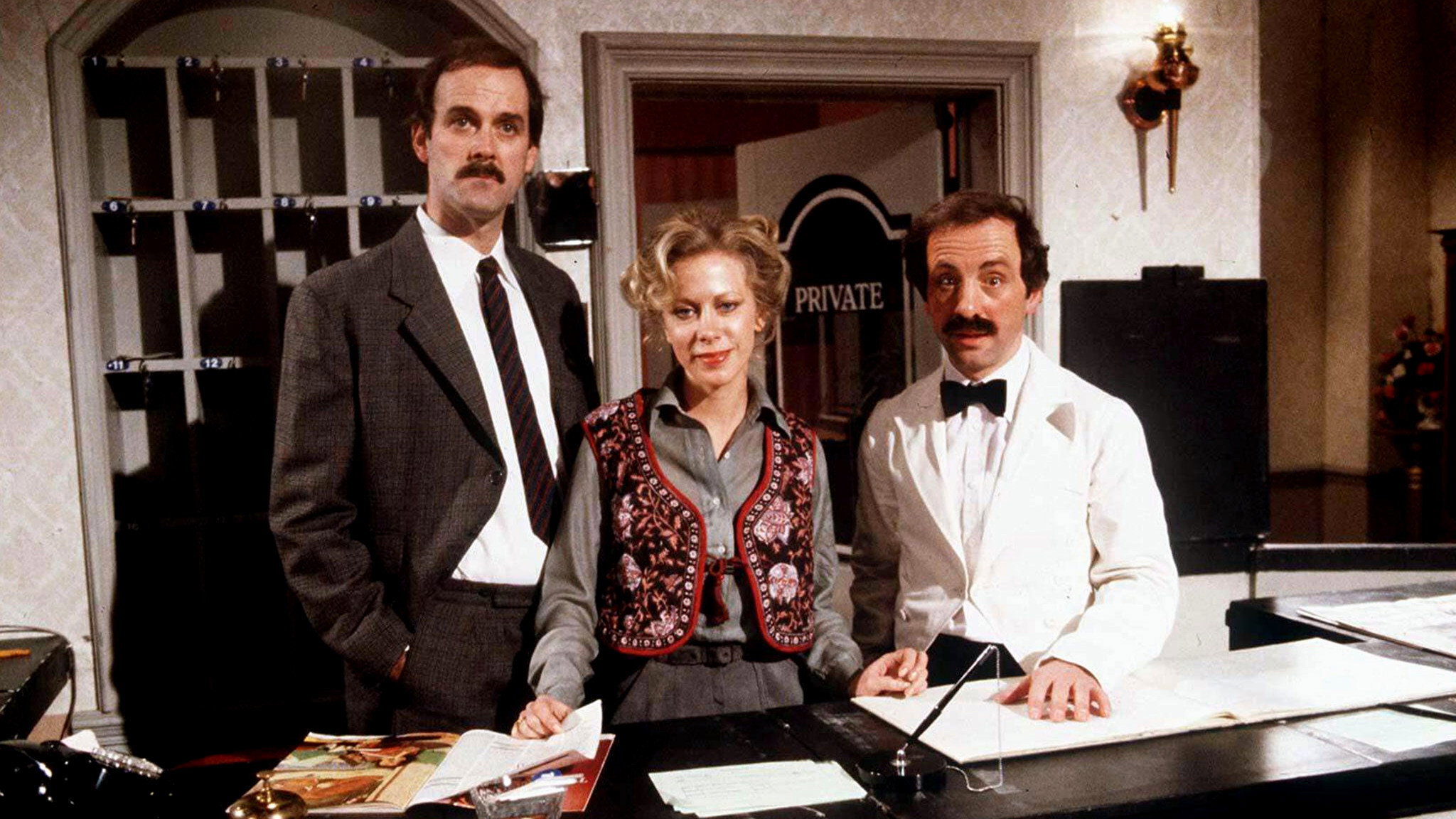
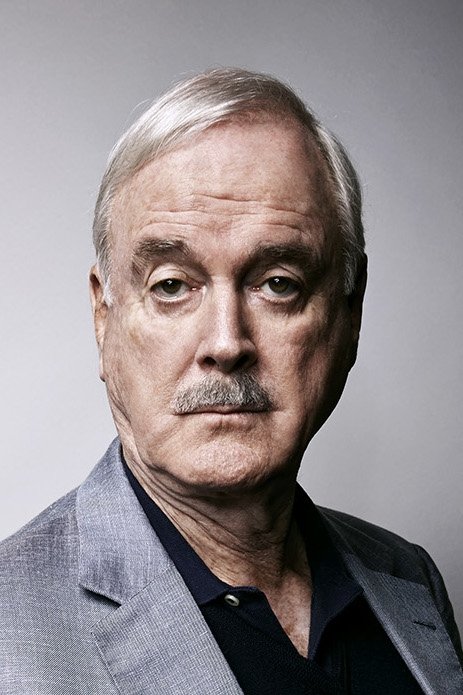
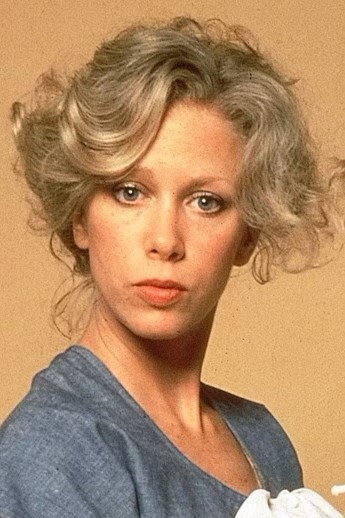
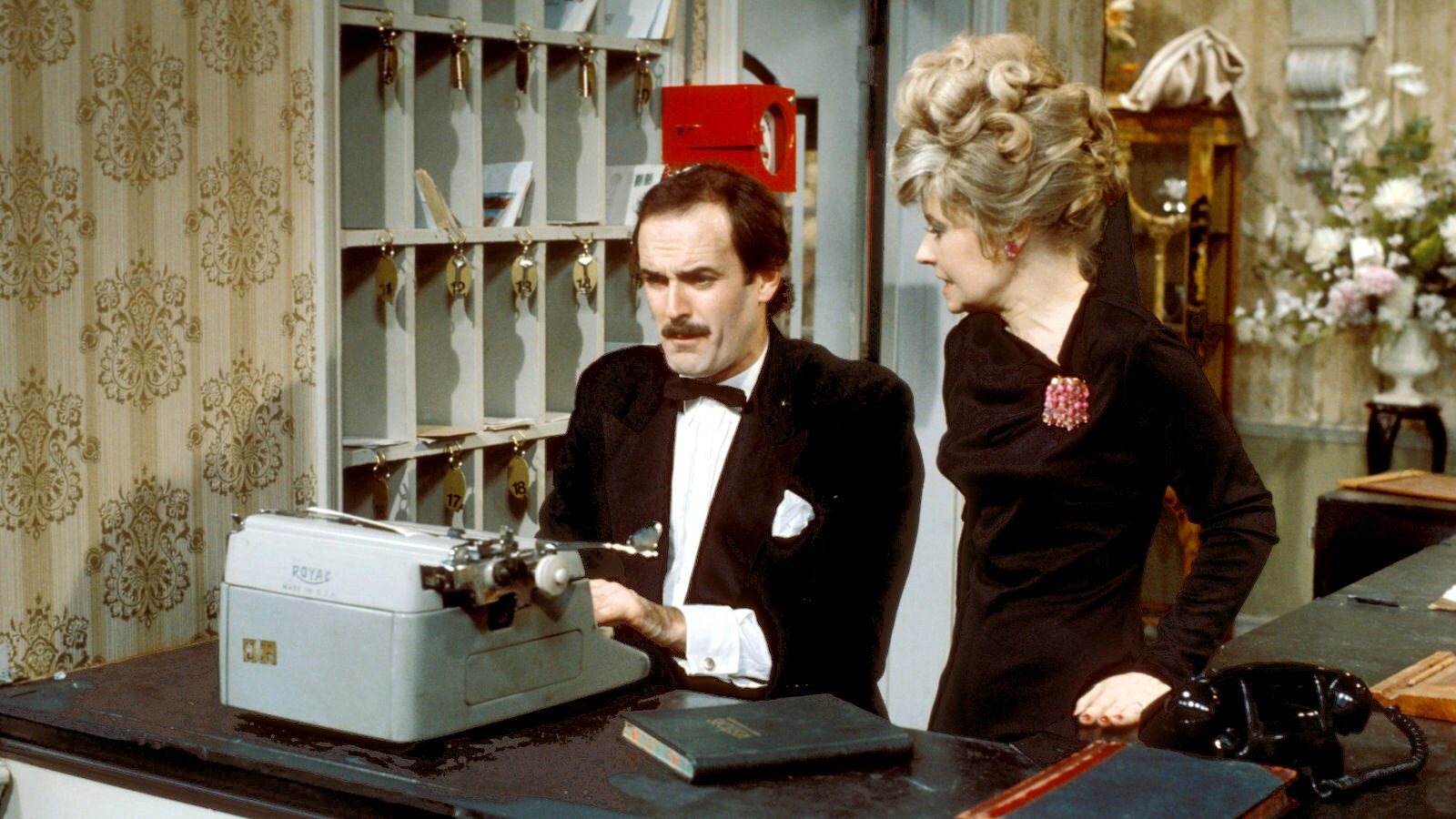
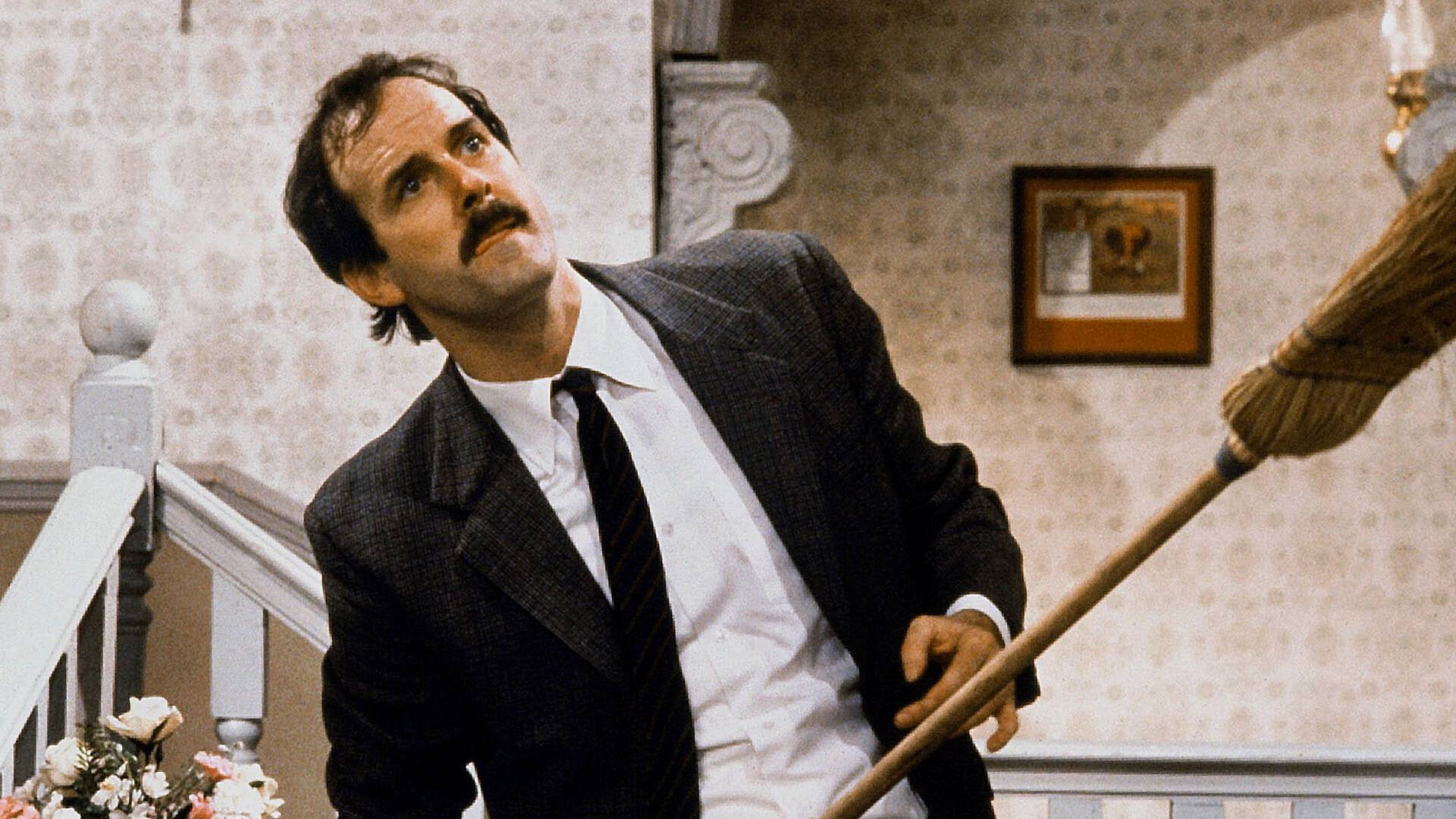
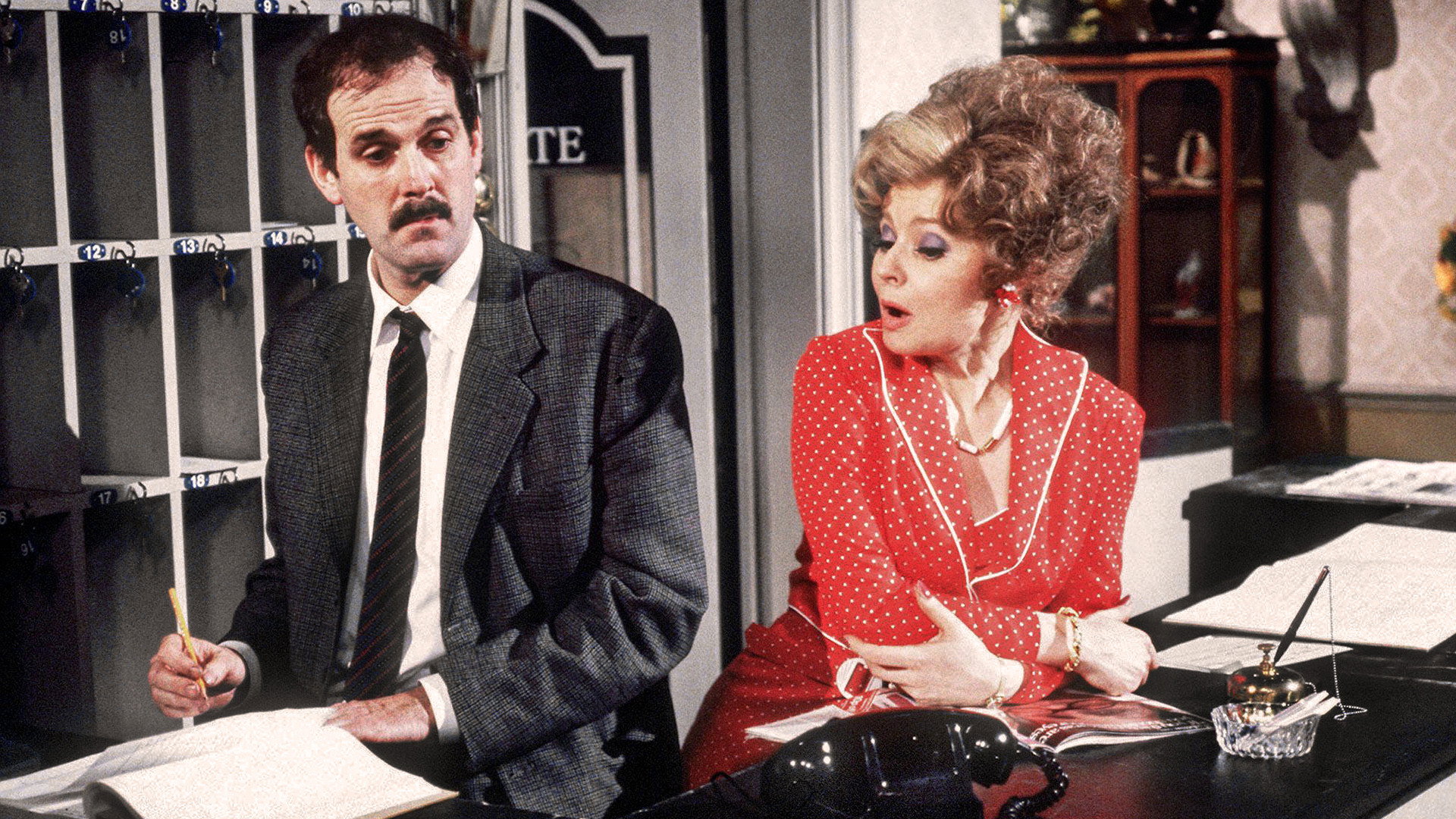
Fawlty Towers remains an exceptionally funny comedy, written with care by John Cleese and Connie Booth. The supporting cast matches Cleese’s precision, though the treatment of Andrew Sachs’s Manuel sometimes makes us wish a joke had stopped earlier.
Fawlty Towers is a comedy about the difficulty of serving people when their mere presence annoys you. John Cleese and Connie Booth give Basil Fawlty a hotel to run and too little patience for anybody in it, then let him make each difficulty worse. We recommend it without needing to make allowances for its age: the writing is exact, the acting alert, and the laughs come from watching people struggle to keep up appearances. Its crueller jokes need rather more defending.
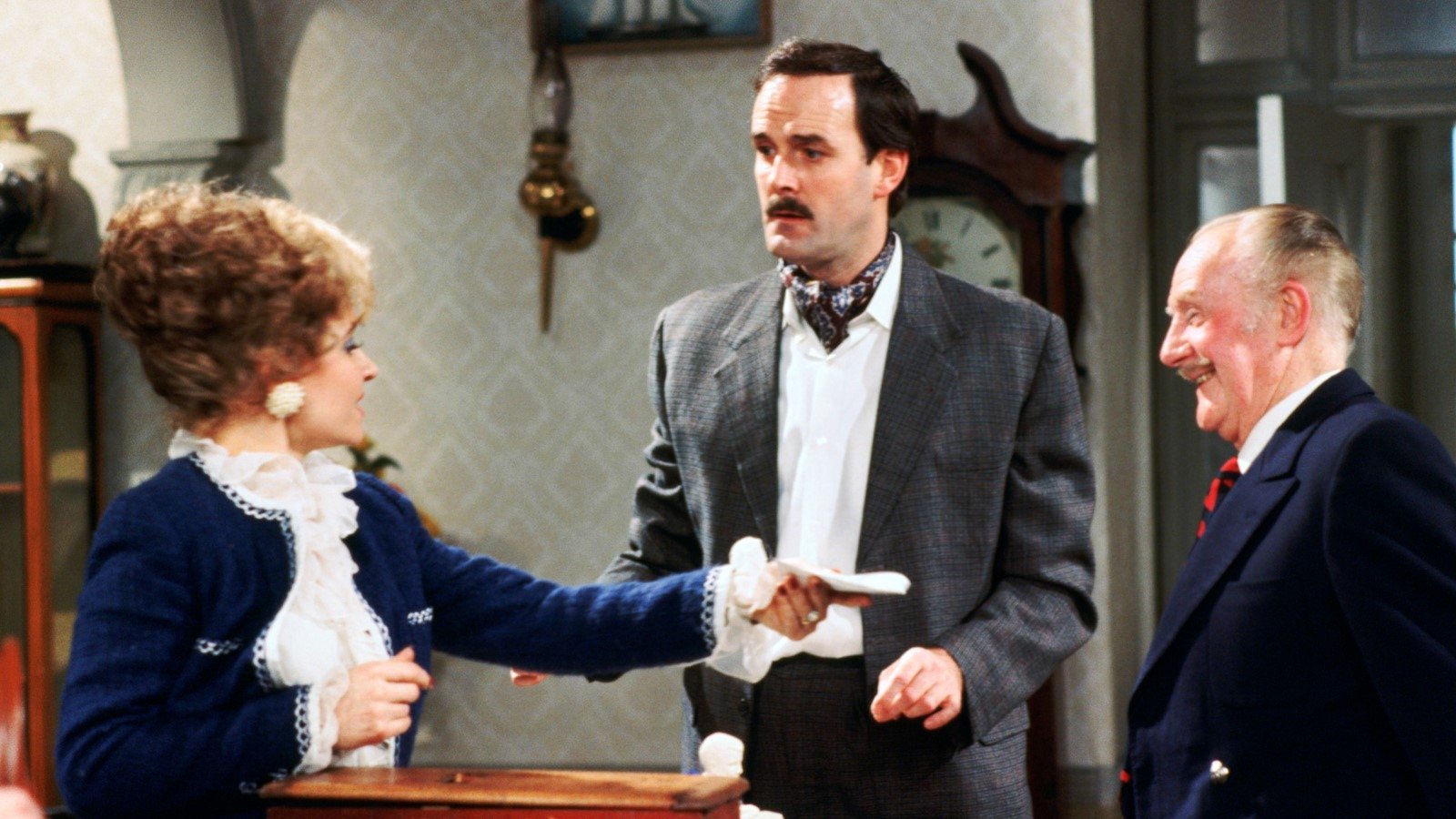
Cleese regulates how much anger Basil can show at any given moment. Watch how hard he works at holding himself upright, and how ridiculous that effort becomes when he loses his temper. We laughed at the stiffness before the outburst had even arrived. His attempt to retain a little dignity makes the waiting funny, and gives the eventual loss of control a force that shouting alone would not have.
Prunella Scales gives Sybil a steadiness that makes Cleese’s agitation funnier, without behaving as though she is waiting to deliver a rebuke. Her assurance can make Basil look beaten before he has finished speaking. Connie Booth’s Polly is alert to the practical problem beneath all the commotion, and Booth makes that attentiveness worth watching. Andrew Sachs is just as careful with Manuel’s physical timing. His eagerness gives us something more engaging than a succession of mistakes.
Directors John Howard Davies and Bob Spiers understand how much depends on keeping the other performers in play while Cleese commands attention. Their staging lets us follow a situation clearly enough to dread what Basil will do to it. Editors Susan Imrie, Bob Rymer and Bill Harris preserve the small waits that make a reaction funny. Nobody appears to be rushing towards a favourite punchline, and the supporting cast have time to let embarrassment or annoyance show.
Dennis Wilson’s music has a brisk politeness that suits the establishment Basil would like to think he runs. It is a useful introduction to a programme in which ordinary professional courtesy proves so difficult. By the standards of situation comedy, the writing asks for unusually little affection for its central character. Cleese and Booth trust that following Basil’s predicament will keep us watching even when we have stopped wishing him well.
The scripts are less sure when Manuel becomes an easy target. Sachs plays him with such care that the willingness to keep returning to Basil’s contempt can feel cheap, especially when we have already understood the joke. A few of these exchanges go on long enough for us to become irritated with the writers, who have left Sachs doing more work than the gag deserves.
There are twelve episodes across two series, each running about half an hour. Cleese can vary a hesitation, a movement or the force of a reply without our spending so long with Basil that we become tired of him. We would recommend the programme even to someone who thinks they have had enough of angry men on television. Leave time for a second episode.