Jūzō Itami’s comedy about learning to make a bowl of ramen is the happiest film about food we know, and one of the most serious. It is loose, occasionally slack, and at 115 minutes a shade long; we had forgiven it before the broth was ready.
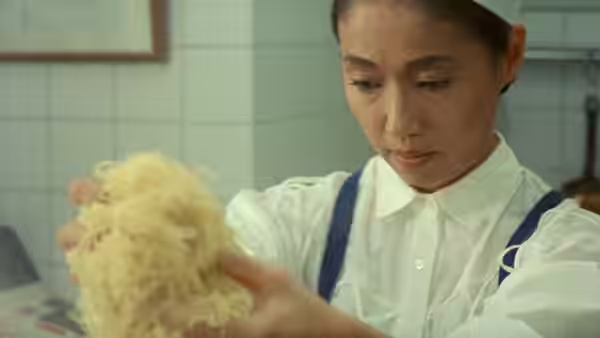
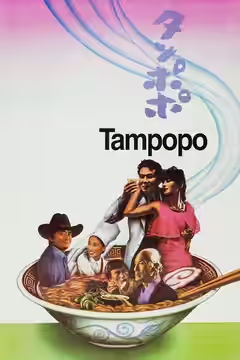
The tagline calls it the first Japanese noodle western, and for once the tagline is accurate. Jūzō Itami, who wrote it, produced it and directed it, borrows the shape of a Western: a stranger arrives in town, in a lorry rather than on a horse, and finds a widow in trouble. The trouble is that she cannot cook. Goro (Tsutomu Yamazaki) agrees to train her, and around that thin spine Itami hangs a dozen short films about the Japanese and their food. It is funny, it is untidy in ways that occasionally cost it, and we recommend it to anyone who has ever eaten.
The digressions are most of the film. Akira Suzuki’s editing follows a passer-by out of the ramen shop and into somebody else’s story: a business lunch at a French restaurant where the most junior man at the table knows more about the menu than his bosses, while the waiter (Isao Hashizume) keeps his face still; a class of young women being taught to eat spaghetti in silence while a man at the next table slurps; an old woman (Izumi Hara) creeping through a supermarket at night, pressing her thumb into every camembert and peach she can reach. Each runs a few minutes and is cut off once it has made its joke. Some are one-liners. Some are short stories. The best of them have nothing to do with the plot.
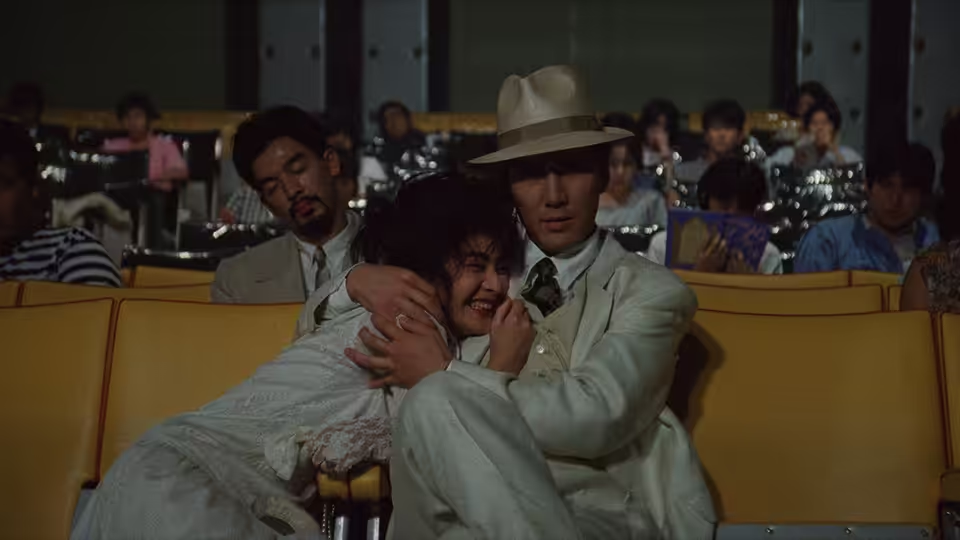
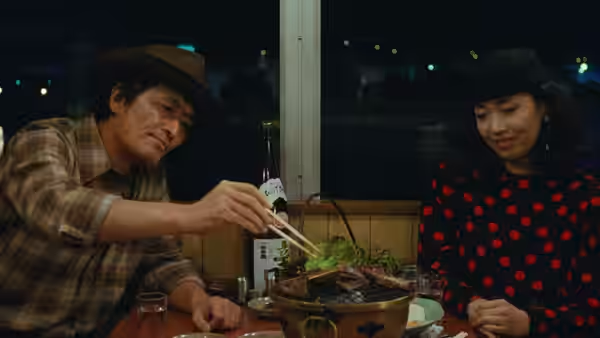
Running alongside is Koji Yakusho’s man in the white suit, the gangster who opens the film by telling us to be quiet in the cinema and who returns with his lover for a series of scenes in which food is foreplay. Masaki Tamura shoots these in hotel rooms lit like perfume adverts, the prawns and the cream and the egg yolk in close-up. The scene where the two of them pass a raw yolk between their mouths without breaking it made us laugh and then squirm, and we could not say afterwards which came first. The 18 certificate is for these scenes, and they earn it; nothing in them is unkind.
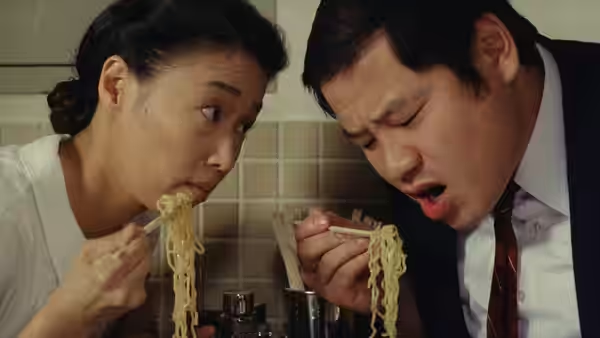
Tamura shoots food the way other cinematographers shoot faces. Broth steams in front of the lens; a slice of pork is turned with the care of a jeweller; the noodles are lifted and lowered and the camera waits. Emiko Kogô puts the lorry drivers in Stetsons and denim and the gangster in white down to his shoes, so that the genres announce themselves before anyone speaks. Kunihiko Murai’s score swells like a romance whenever the subject is a bowl. The joke is that everyone on screen takes the eating completely seriously, and the film means it too.
Yamazaki plays Goro as a man who has eaten in every roadside shop in the country and has opinions about all of them, delivered slowly and with a cigarette. Miyamoto’s Tampopo is anxious, eager and quicker than the men around her notice. Ken Watanabe, young and gangly, is the pupil in an early scene where an old man teaches him how to approach a bowl of ramen, including an apology to the pork, and it is the funniest cookery lesson we have seen. Rikiya Yasuoka’s Pisken starts as the villain and is allowed to become something more useful.
The flaws are the flaws of an anthology. One or two of the sketches are slighter than the rest and stay a beat too long, and 115 minutes feels like a hundred with a few extra courses. Tampopo herself spends much of the film being lectured by men who have appointed themselves her teachers, and Itami sees the comedy in that without quite seeing the cost. And there is a digression late on, involving a family and a meal, which we will not describe, that lands so hard it briefly unbalances the comedy around it. We were in tears, and two minutes later we were expected to laugh again. Some viewers will find that abrupt. We found it true to how eating and grieving actually happen, at the same table, on the same evening.
It did not reach British cinemas until 4 July 1994, nine years after it was made, and it has dated less than most comedies of its decade because its subject does not date. Watch it after dinner rather than before. Before, you will not last the first twenty minutes without getting up.