Bob Spiers understood that a comedy director must keep more than the loudest performer in view. We rate his clear staging and patient timing highly; his television work makes the stronger case for him.
Fi1m perspective
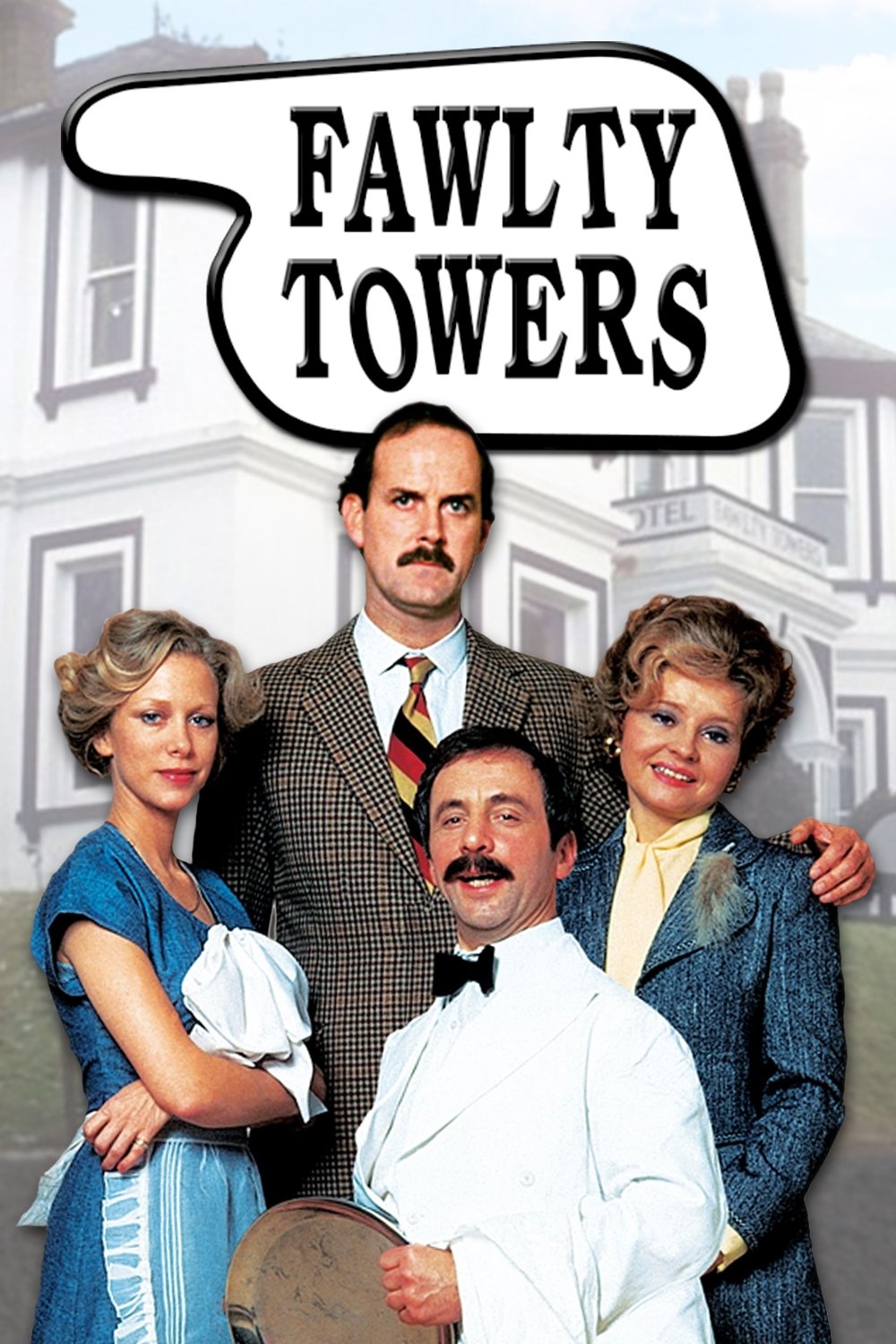
In Fawlty Towers (1975), the performers around Basil have time to look embarrassed or annoyed. Bob Spiers, who directed the second series in 1979, keeps those reactions available while John Cleese holds our attention. We laughed at those small waits, because the other performers make Basil look worse without trying to compete with Cleese. The situations stay clear enough for us to dread his next intervention. This is comedy direction worth noticing, even when the leading performance seems to be doing all the work.
Cleese and Connie Booth write with precision, and the direction gives the supporting cast time to match it. Across the programme, director John Howard Davies and editors Susan Imrie, Bob Rymer and Bill Harris share the credit for that clarity and timing. The editors preserve pauses rather than rushing towards the punchline. Our reservation is the treatment of Andrew Sachs’s Manuel, where the joke sometimes continues after we have had enough.
His work with David Croft on Dad's Army, including directing episodes of its final series in 1977, supplied a grounding in traditional sitcom. The early films of The Comic Strip Presents... (1982) took that experience into alternative comedy. On Press Gang (1989), made with Steven Moffat, he used tracking shots to establish a style that later directors were asked to follow. He could plan complicated camera sequences, but the purpose remained practical: give tightly written action the pace and continuity it needed.
His care for performers continued in Absolutely Fabulous (1992), directing every episode from 1992 to 2001. His feature work included Spice World and That Darn Cat (both 1997), followed by Chilly Dogs (2001). The critical response to the features was mixed or muted, though the direction itself often drew praise. We would begin with the television rather than assume the move into films was a promotion. Try his second series of Fawlty Towers, and keep an eye on the people around Cleese.
Biography
Bob Spiers (27 September 1945 – 8 December 2008) was a Scottish television director and producer. Born in Glasgow, he began his career at the BBC in the early 1970s as an assistant floor manager and production assistant on series including Dad's Army (1968). He later directed episodes of several David Croft sitcoms, including the final series of Dad's Army.
Spiers directed the second series of Fawlty Towers (1975) in 1979, for which he won a BAFTA Television Award. He went freelance in the early 1980s and directed many episodes of Absolutely Fabulous (1992) from its first series onwards, winning a second BAFTA. Other credits include Are You Being Served? (1972), French and Saunders (1987), Press Gang, Bottom (1991) and A Bit of Fry & Laurie (1989). He also directed the films Spice World (1997) and That Darn Cat (1997).