Christopher Guest’s dog-show comedy is funny and generous towards people who make generosity difficult. Fred Willard supplies the biggest laughs, though a few routines settle into repetition before the film is finished.
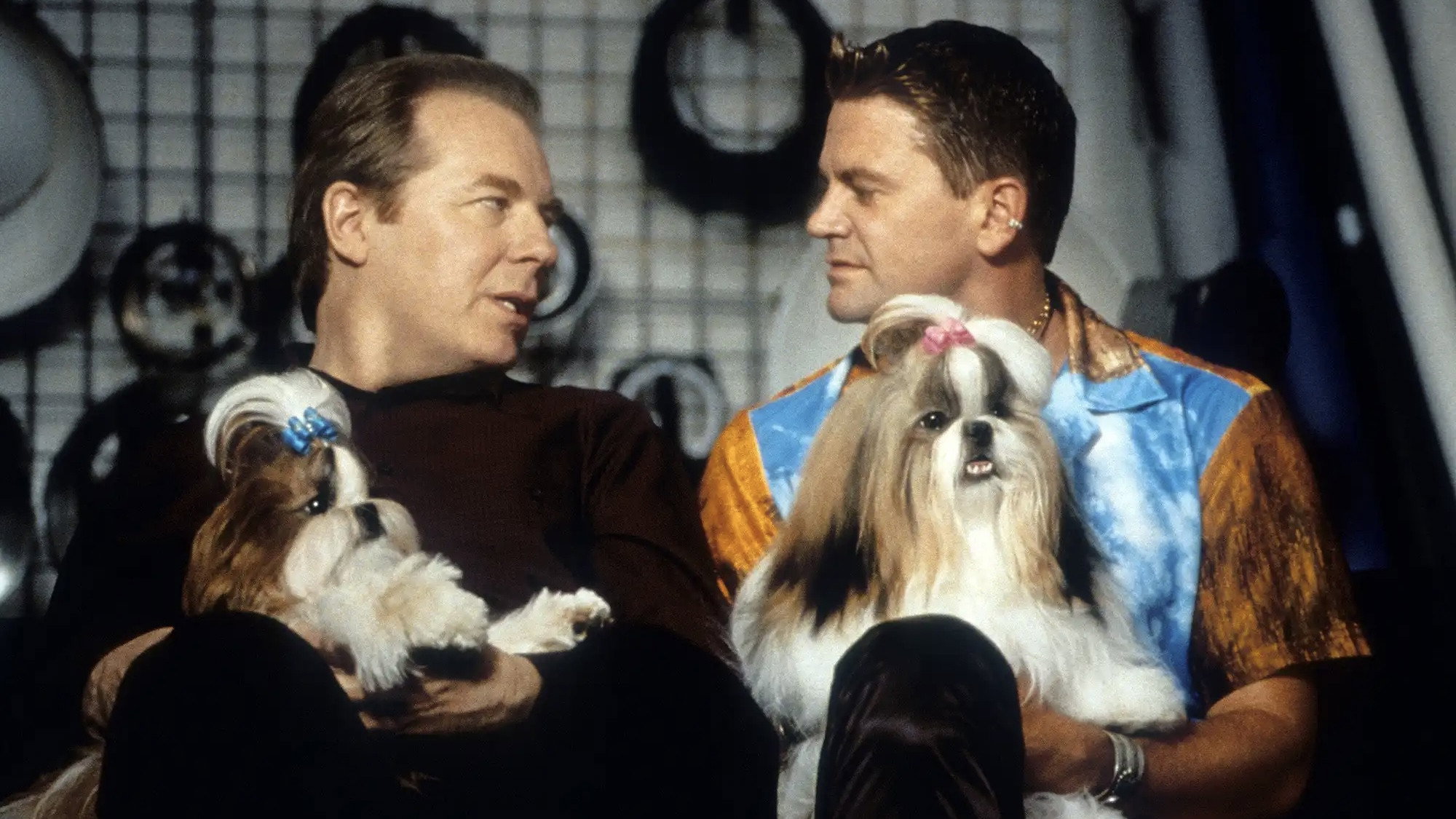
Best in Show is an excellent ensemble comedy with a modest ambition: to spend time with dog-show competitors and find out what makes them so difficult. Christopher Guest understands that their hopes have to matter if we are going to keep watching them. The competition is allowed to seem important, even when the behaviour around it is absurd. Guest and co-writer Eugene Levy give the owners enough space to explain themselves at length, and usually a little more space than is wise.
The mock-documentary format helps because these people are eager to be understood, without necessarily being good at explaining themselves. Roberto Schaefer’s photography suits that plain approach: nothing in the interviews feels more important than the person attempting to explain themselves. Robert Leighton’s editing is most effective when it gives us time to register how little a speaker has helped their case. The improvised exchanges have the awkward changes of direction of an actual conversation, and the actors listen without visibly preparing for their next turn.
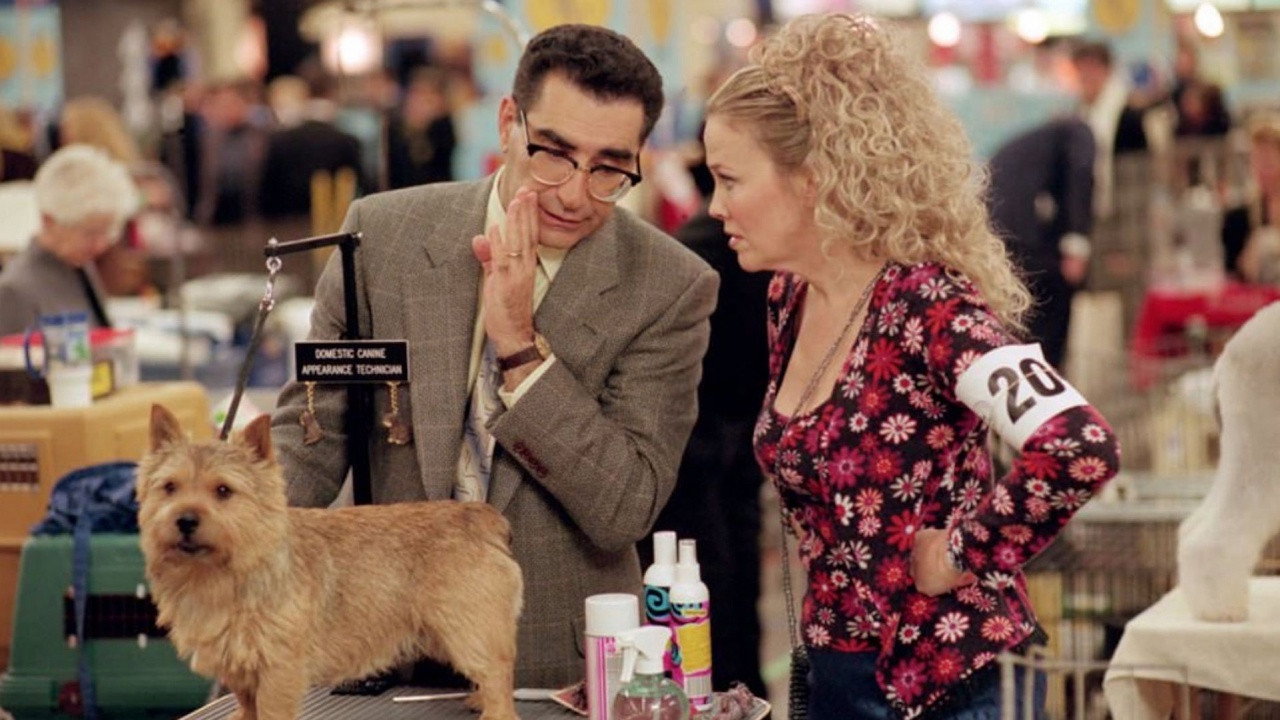
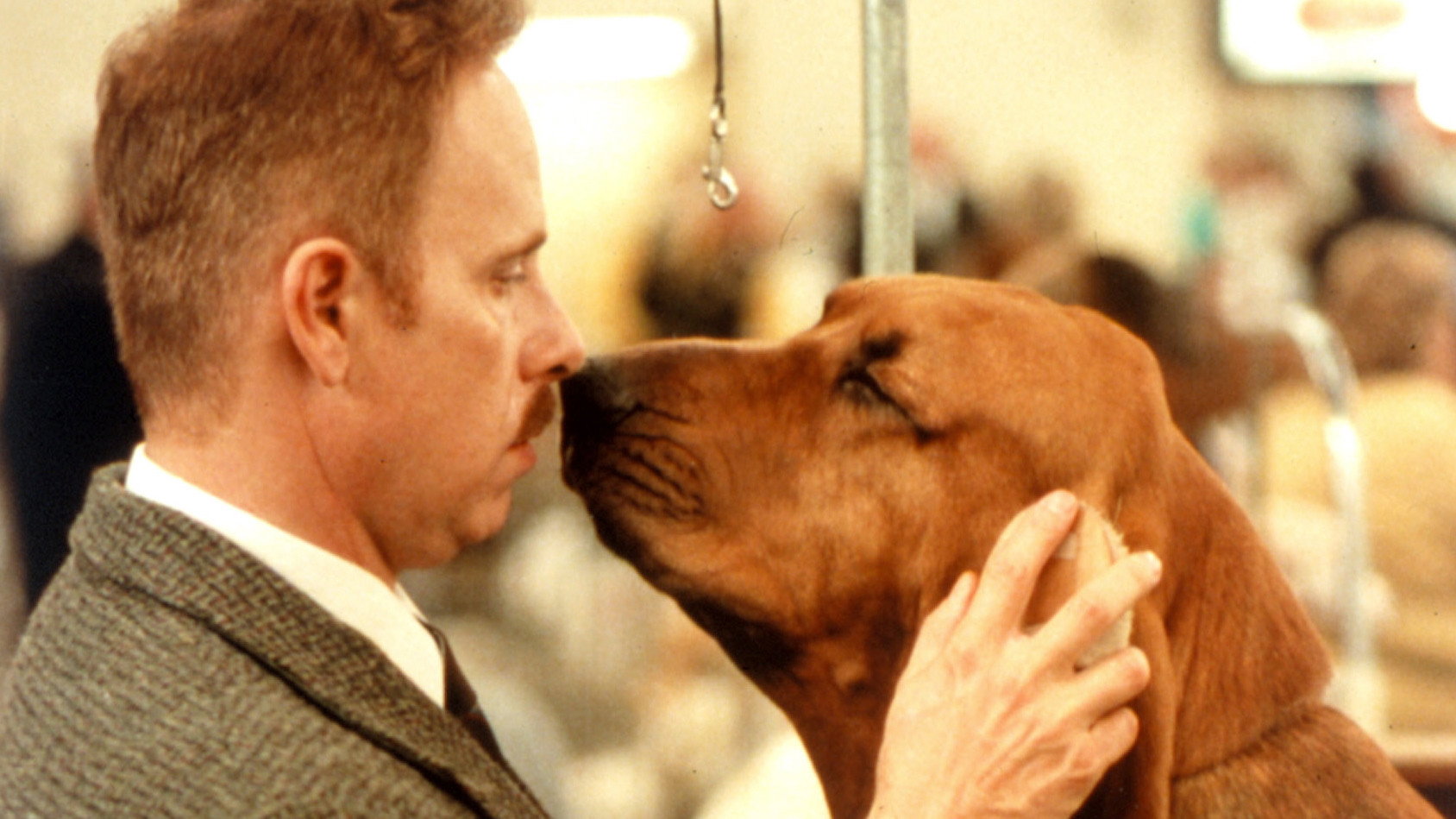
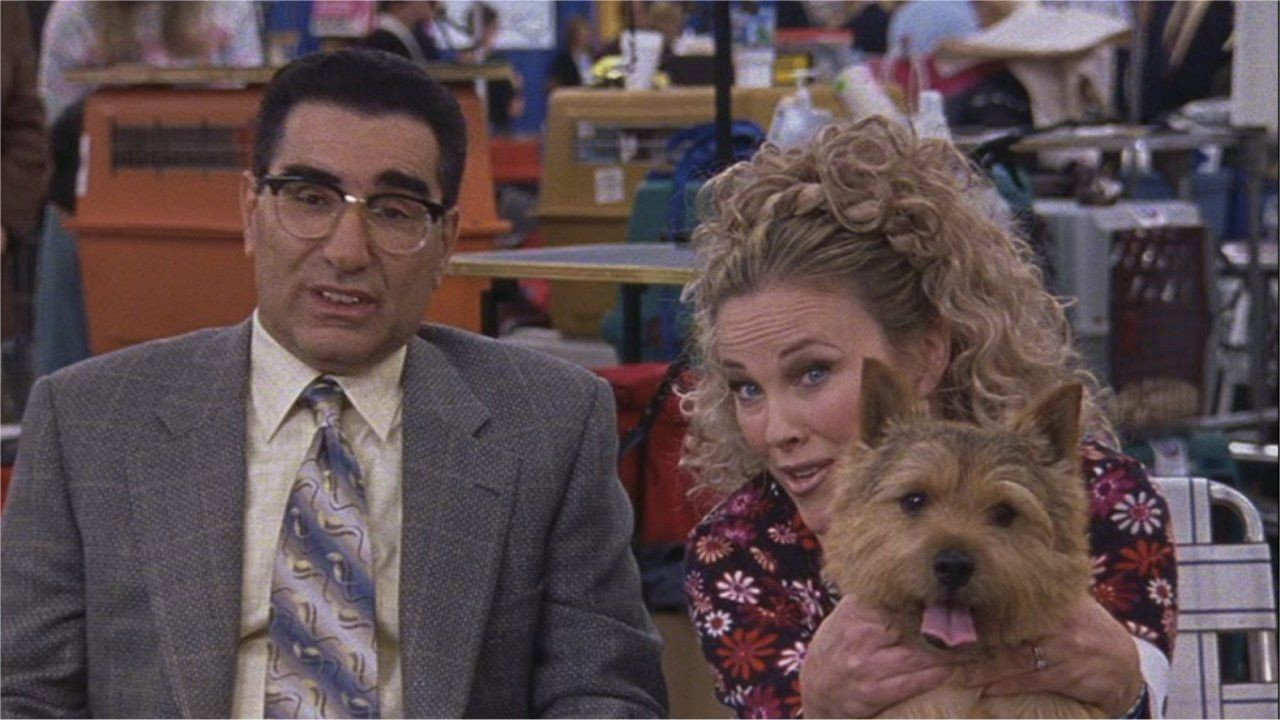
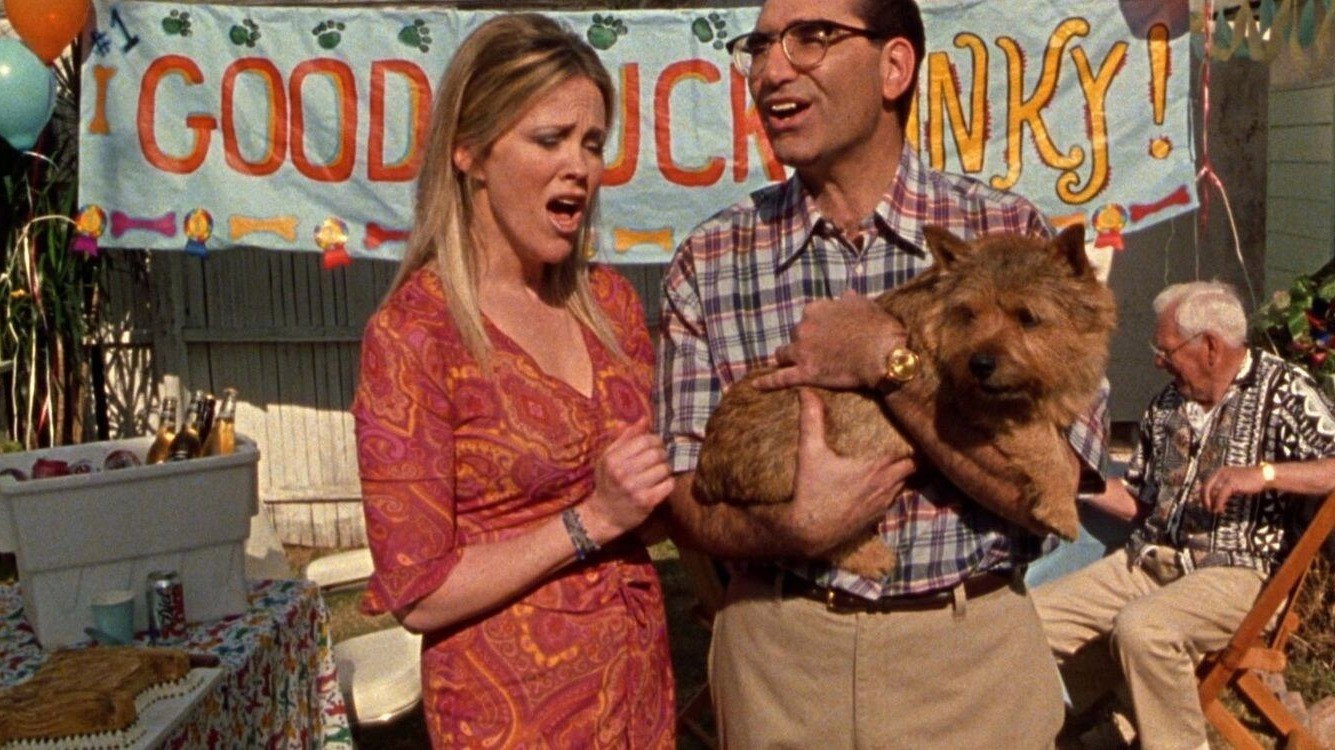
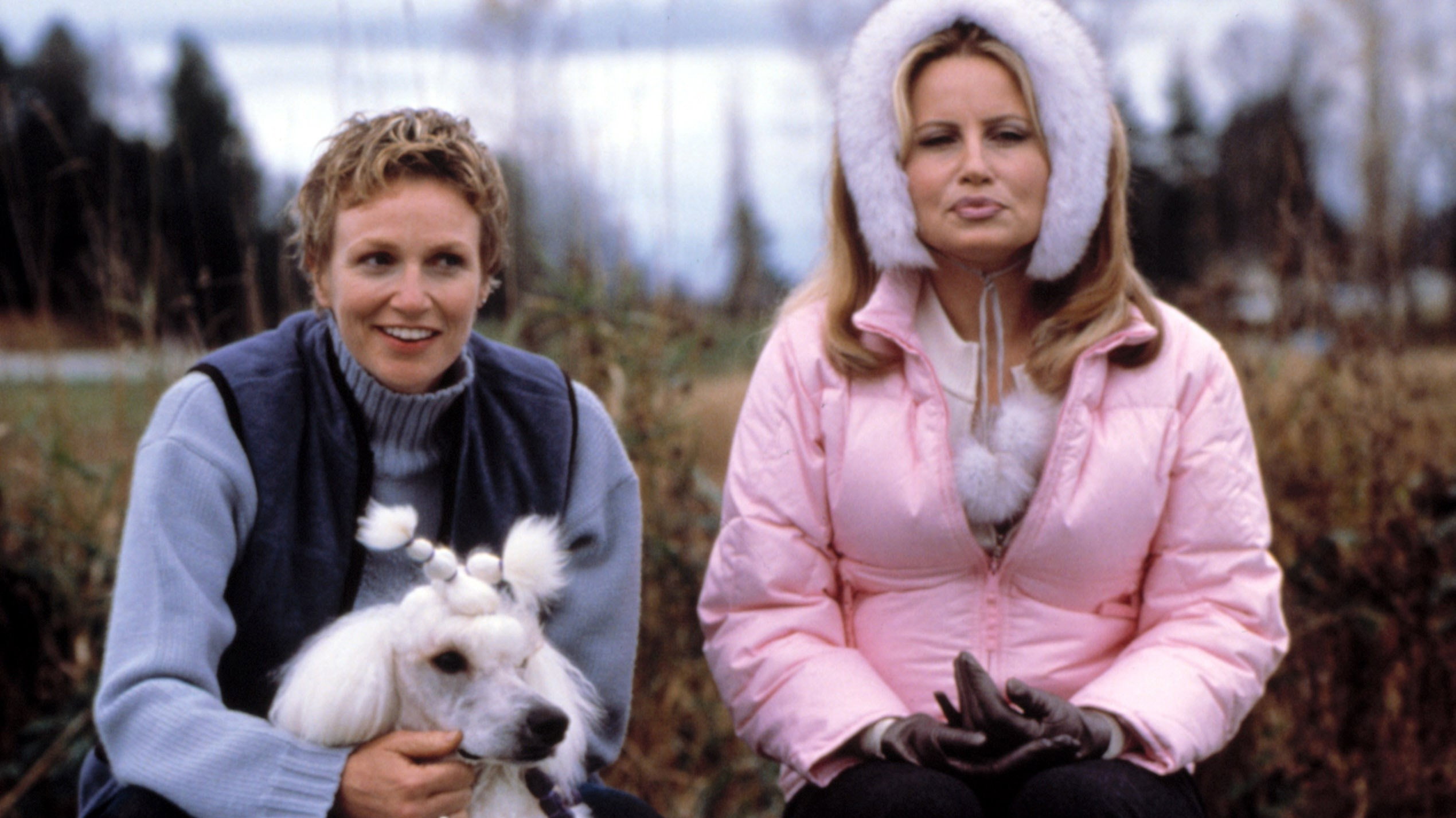
Catherine O’Hara and Levy do particularly well with the discomfort beneath the chatter. As Cookie and Gerry Fleck, they make embarrassment feel habitual rather than something invented for the current joke. Parker Posey brings a more abrasive energy to Meg Swan, and Guest’s Harlan Pepper is funny without seeming to realise that he might be. These are broad comic performances, but the actors rarely give the impression that they are waiting for us to congratulate them on being clever.
Fred Willard’s Buck Laughlin is less restrained, to the film’s considerable benefit. We laughed hardest at his commentary, because he delivers foolish observations with the assurance of a man doing a useful public service. Willard never seems embarrassed for him, and that is what makes the performance work: the announcer cannot hear how he sounds. It is the sort of broad turn that could easily overwhelm an ensemble, but here it gives the quieter conversations a welcome change of pace.
Joseph T. Garrity’s sets give the social caricatures somewhere plausible to belong, which matters when the performances grow broad. Monique Prudhomme’s costumes are funny in the same unforced way: we can believe these people chose these clothes. CJ Vanston’s music is welcome for not competing with the voices. We need to hear how seriously these people take themselves, and the funniest passages need little encouragement beyond that.
The limitation is repetition, and it is noticeable even at 91 minutes. Once we understand a character’s particular anxiety, some later exchanges give us another helping without finding much new in it. Guest’s approach to mock-documentary comedy depends on our enjoying the company long after we recognise the type, and not every character can sustain that attention. Leighton’s shifts between competitors cannot always disguise how often the film returns to the same comic pattern, though the individual performances remain enjoyable.
It is still easy to recommend to anyone who enjoys people talking themselves into trouble. We would happily spend another evening with this ensemble, including the characters we would avoid at an actual dog show. Watch it with someone who enjoys an awkward conversation, and allow time afterwards to disagree about which owner would be hardest to sit beside.