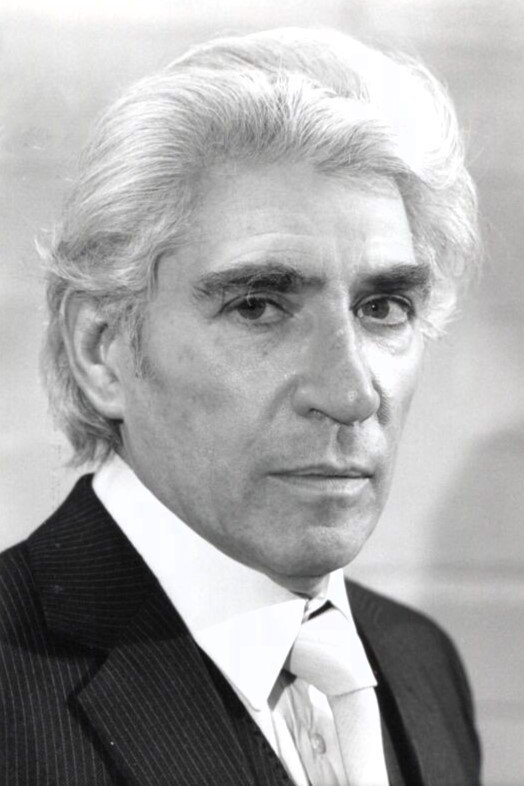
Frank Finlay’s steely gaze and resonant voice made him a natural choice for threatening men. We value his quieter work just as much: in The Pianist, he helps make a family worth knowing despite dialogue that keeps explaining them.
Fi1m perspective
In The Pianist (2002), Frank Finlay and Maureen Lipman make Szpilman’s parents seem like people trying to keep a family conversation going as their circumstances change. There is affection in their exchanges, even when the words sound prepared for our benefit. Finlay gives these early scenes a recognisable domestic scale, something Ronald Harwood’s screenplay needs when it is busy explaining the family’s circumstances. We wanted to know the parents better, because the warmth of the playing made the time spent on explanations feel like a missed opportunity.
That warmth complicates the usual account of an actor so often cast as obsessive or villainous men. His subtle Iago opposite Laurence Olivier in Othello (1965) preceded the leading television roles that brought him to a wider audience. He took the title role in Dennis Potter’s Casanova (1971), then played the possessive father Peter Manson in Bouquet of Barbed Wire (1976). Richard Lester’s The Three Musketeers (1973), with Finlay as Porthos, belongs alongside those darker dramas when considering what he could do.
His most useful skill was the ability to imply feeling while apparently doing little. The gaze could intimidate, and the voice had a resonance well suited to sinister characters, but close-up also rewarded his restraint. We need not be shown a large reaction to sense that something has registered. The danger of casting an actor repeatedly as threatening men is that we start expecting menace before he has had a chance to do anything.
In Roman Polanski’s The Pianist, he is valuable precisely because the parents do not feel as though they exist only to explain the story. He and Lipman suggest a family accustomed to being together, even while Harwood gives them too much information to deliver. That does not cure the awkward writing, but it supplies something this powerful, patient drama needs before the talk recedes. Start there, then try Casanova for Finlay with the leading part.
Biography
Frank Finlay was an English actor whose career spanned stage, film and television from the late 1950s until the late 2000s. Born in Farnworth, Lancashire, he trained at the Royal Academy of Dramatic Art after beginning in repertory theatre.
He received an Academy Award nomination for his performance as Iago opposite Laurence Olivier in the 1965 film of Othello. Finlay played Porthos in Richard Lester’s The Three Musketeers (1973) and its sequels, and appeared as the father in Roman Polanski’s The Pianist (2002). On television he was The Witchsmeller Pursuivant in the 1983 series Blackadder and won BAFTA Awards for The Death of Adolf Hitler and The Adventures of Don Quixote. He was appointed CBE in 1984.