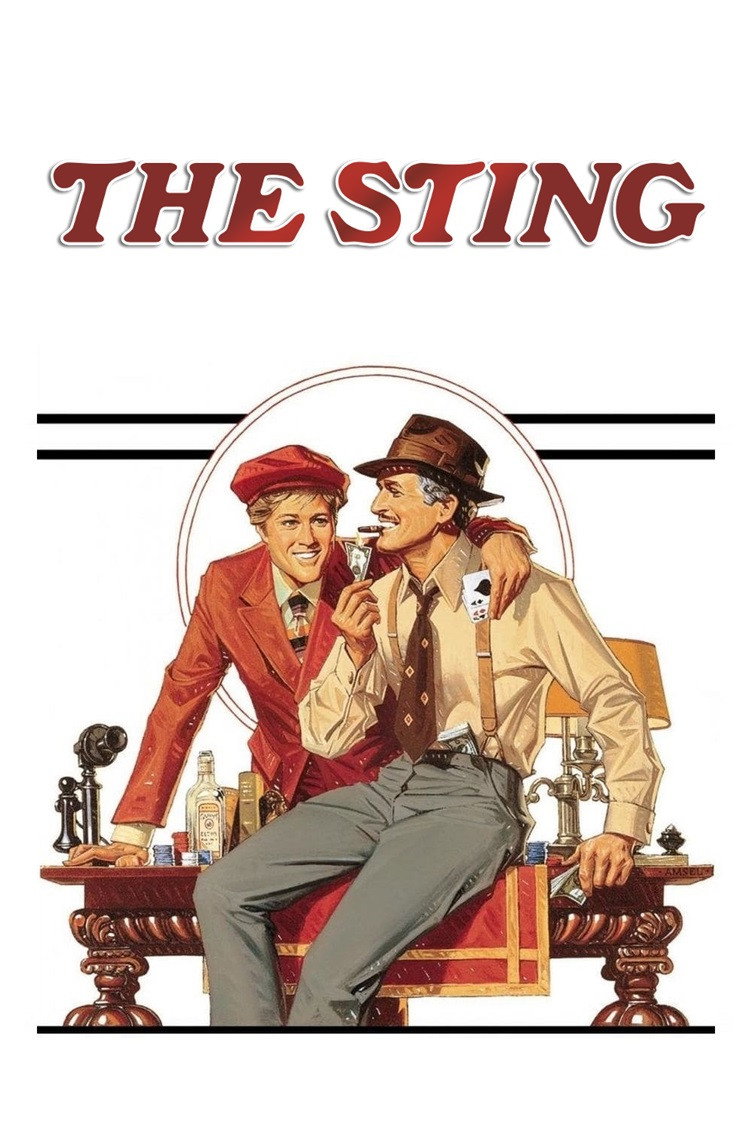
George Roy Hill gives actors time to be funny and complicated plots room to unfold. The Sting makes a persuasive case for his patient direction, even when he spends a little too long watching everybody get ready.
Fi1m perspective
Paul Newman takes his time at the poker table in The Sting (1973), making the deception look like a private pleasure. We laughed because he seems to enjoy it so much. George Roy Hill gives him the space to be funny without insisting on help from the dialogue. It is thoroughly enjoyable directing, with a weakness for letting the preparations run longer than they need to.
Hill began his feature career with Period of Adjustment (1962), before breaking through with Butch Cassidy and the Sundance Kid (1969), which paired Newman and Robert Redford. The Vonnegut adaptation Slaughterhouse-Five (1972) came between that film and their reunion in The Sting. He went on to the sports satire Slap Shot (1977), and eventually finished with Funny Farm (1988). He worked across genres without settling on a repeated visual style.
In The Sting, David S. Ward supplies the elaborate swindle, and Hill makes the men arranging it worth spending time with. Newman's unhurried Henry Gondorff and Redford's restless Johnny Hooker keep the partnership lively even when there is business to explain. Hill allows their different speeds to do much of the work. The film asks little of us emotionally, but their company is ample reason to recommend it.
Robert Surtees's angled compositions give the period settings interest without allowing the scenery to dominate. Edith Head's costumes work just as well, establishing the period without distracting from the actors wearing them. Hill does occasionally linger over the surroundings, and Ward's preparations sometimes become more dutiful than amusing. Reynolds's editing cannot entirely disguise the excess length; a little less arranging would improve the evening.
Some critics have found Hill impersonal because his films lack a readily identifiable style. We find that objection unpersuasive when Newman and Redford are together: Hill pays close attention to how they work as a pair. That does not make every delay necessary, or versatility a virtue in itself. For an evening when clever plotting and good company are enough, start with The Sting.
Biography
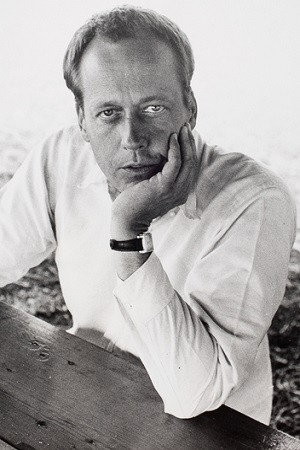
George Roy Hill (20 December 1921 – 27 December 2002) was an American film director. He directed fourteen feature films between 1962 and 1988, working across genres including westerns, caper comedies, and adaptations of novels and plays.
Hill achieved major success with Butch Cassidy and the Sundance Kid (1969) and The Sting (1973), both starring Paul Newman and Robert Redford. The Sting won seven Academy Awards, including Best Picture and Best Director for Hill. His other notable films include Slaughterhouse-Five (1972), The Great Waldo Pepper (1975), Slap Shot (1977), A Little Romance (1979), The World According to Garp (1982) and Funny Farm (1988). He had earlier worked in theatre and television, and after retiring from filmmaking he taught drama at Yale University.