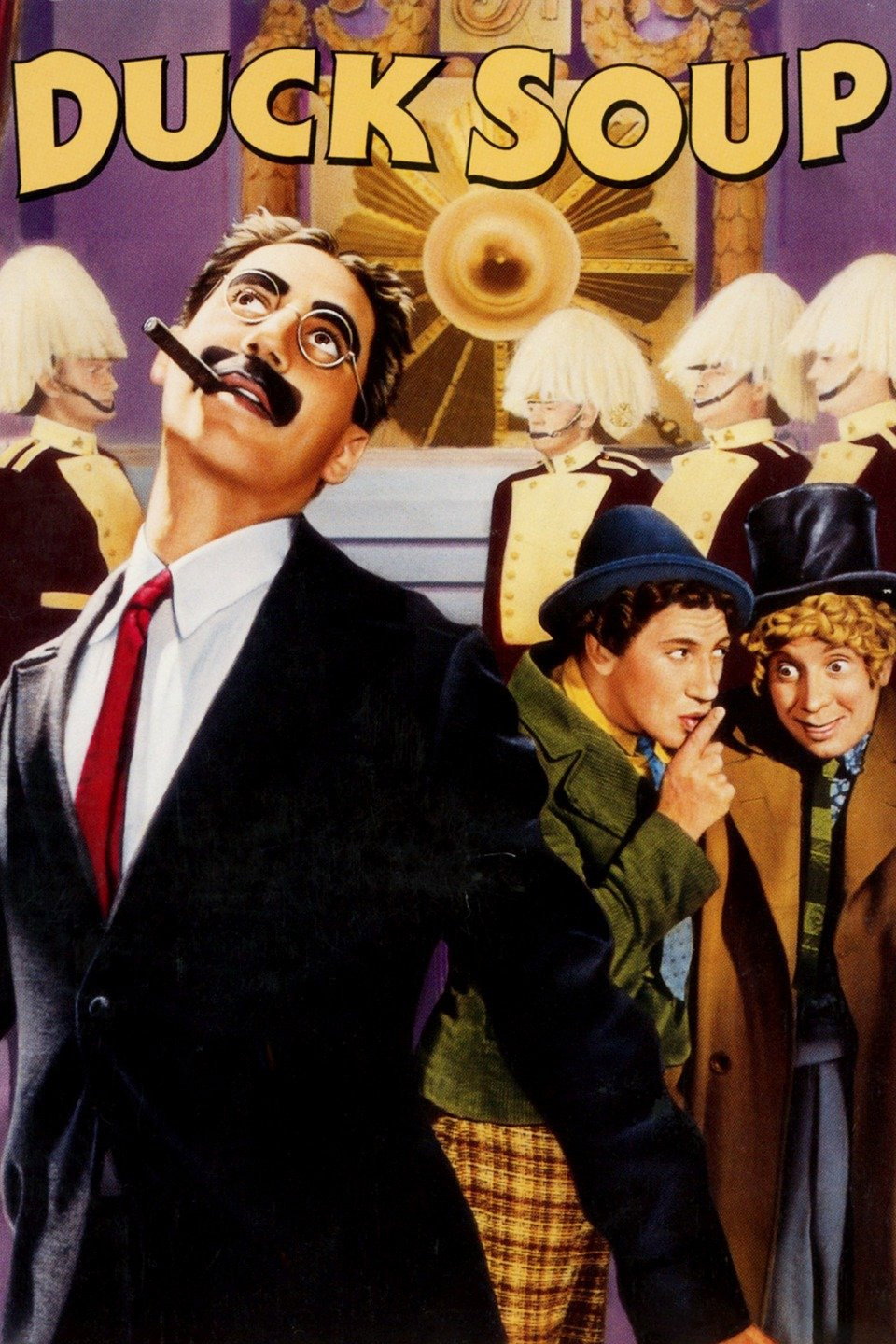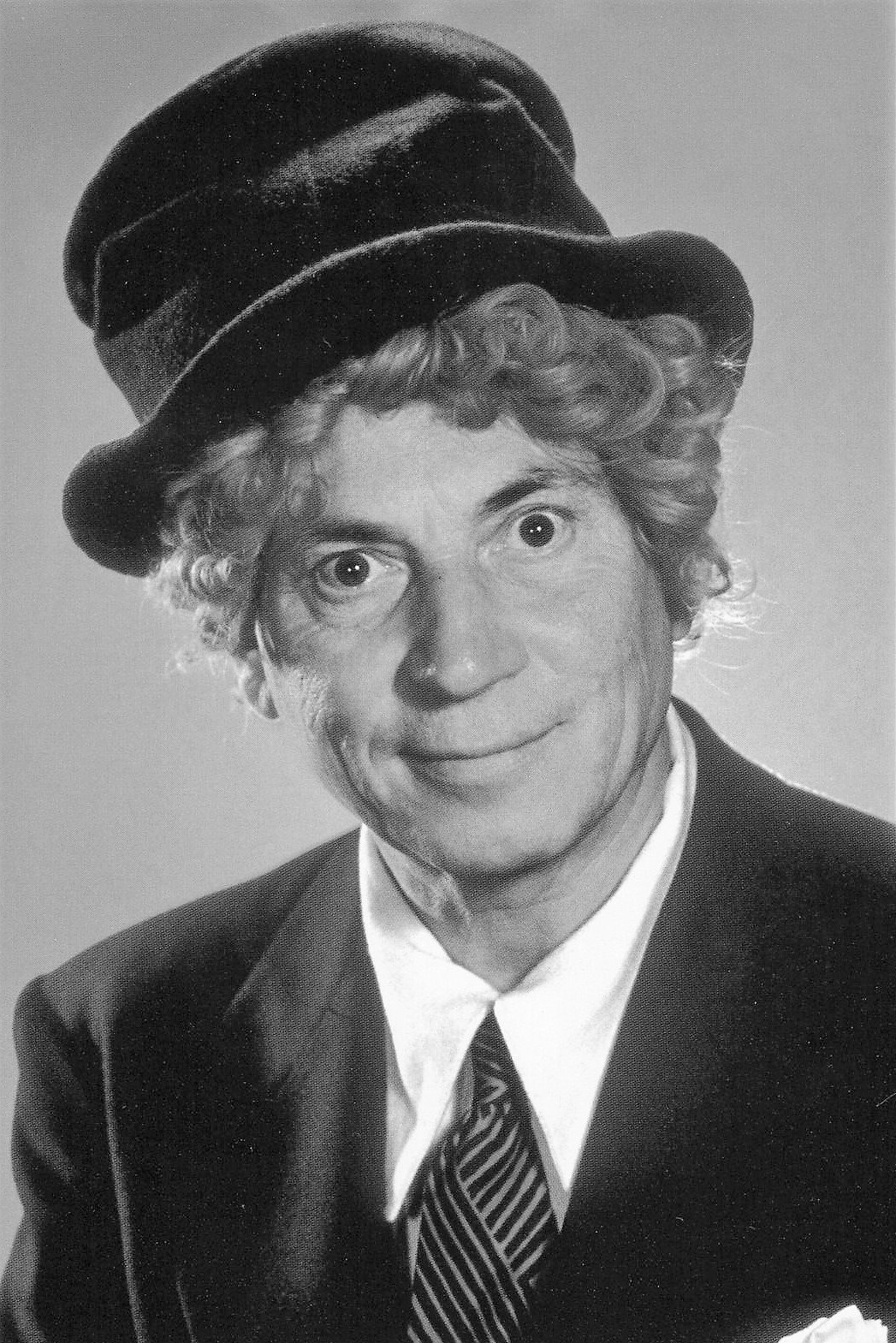
Harpo Marx makes an ordinary exchange impossible without saying a word. We rate his patient physical mischief highly, especially when the film knows when to stop; the charm wears off when somebody else's discomfort becomes the whole joke.
Fi1m perspective
In Duck Soup (1933), Harpo Marx’s Pinky and Chico Marx’s Chicolini can keep an ordinary exchange from reaching a conclusion long after anyone else would have given up. We laughed at their persistence, because each fresh interruption makes the prospect of getting anything settled more remote. Groucho can dispose of someone with a line; Harpo needs time to make a nuisance of himself. His silent character works through facial expressions, props, whistles and horn honks, so there is plenty of communication even without dialogue. The pleasure lies in watching him find another way to prevent somebody from getting on with things.
The character had been developed in vaudeville before the stage successes became films with The Cocoanuts (1929) and Animal Crackers (1930). Monkey Business (1931) brought the first original screenplay written for the screen, rather than adapted from a stage show. The move from Paramount to MGM brought A Night at the Opera (1935), with more plot to accommodate alongside the routines. Harpo’s harp solos offered a quieter contrast to the chaos, and those pauses are part of his appeal too.
Leo McCarey gives Harpo and Chico room to prolong a joke, and usually knows when to move on. Cinematographer Henry Sharp keeps the movements clear, while LeRoy Stone’s editing keeps a succession of interruptions from becoming a muddle. That matters for an actor whose jokes depend on what a body does and how long it takes to do it. We need to see the business properly, and we need the next interruption to arrive while we still care about the last. In Duck Soup, the direction, photography and cutting mostly get that balance right.
There is a limit to our affection for the behaviour. In Duck Soup, Harpo and Chico sometimes repeat the physical business after the surprise has gone, leaving another person simply to endure them. Calling the character childlike does not make those stretches less wearing. The film moves on quickly enough to keep our goodwill, but the reservation belongs beside the praise for his invention. Start here for Harpo, with the caveat that even at 68 minutes we occasionally want someone to take the props away.
Biography
Harpo Marx, born Adolph Marx, was an American actor and comedian. He was the second oldest of the five Marx Brothers and appeared in their films from the late 1920s onwards. He died in Los Angeles on 28 September 1964.
Marx was best known for his silent comic performances as a member of the Marx Brothers. He played Pinky in Duck Soup (1933), The Professor in Animal Crackers (1930), Pinky in Horse Feathers (1932), Harpo in Monkey Business (1931), Tomasso in A Night at the Opera (1935), Stuffy in A Day at the Races (1937), Rusty in A Night in Casablanca (1946) and 'Punchy' in At the Circus (1939). He also appeared as himself in an episode of the television series I Love Lucy (1951). Marx played the harp in many of his screen performances.