The League of Gentlemen's fourth man is the one you never see. His work is in the shape of the thing: sketches that pick up mid-sentence, stories that run through six half-hours, and comedy that keeps turning into horror.
Fi1m perspective
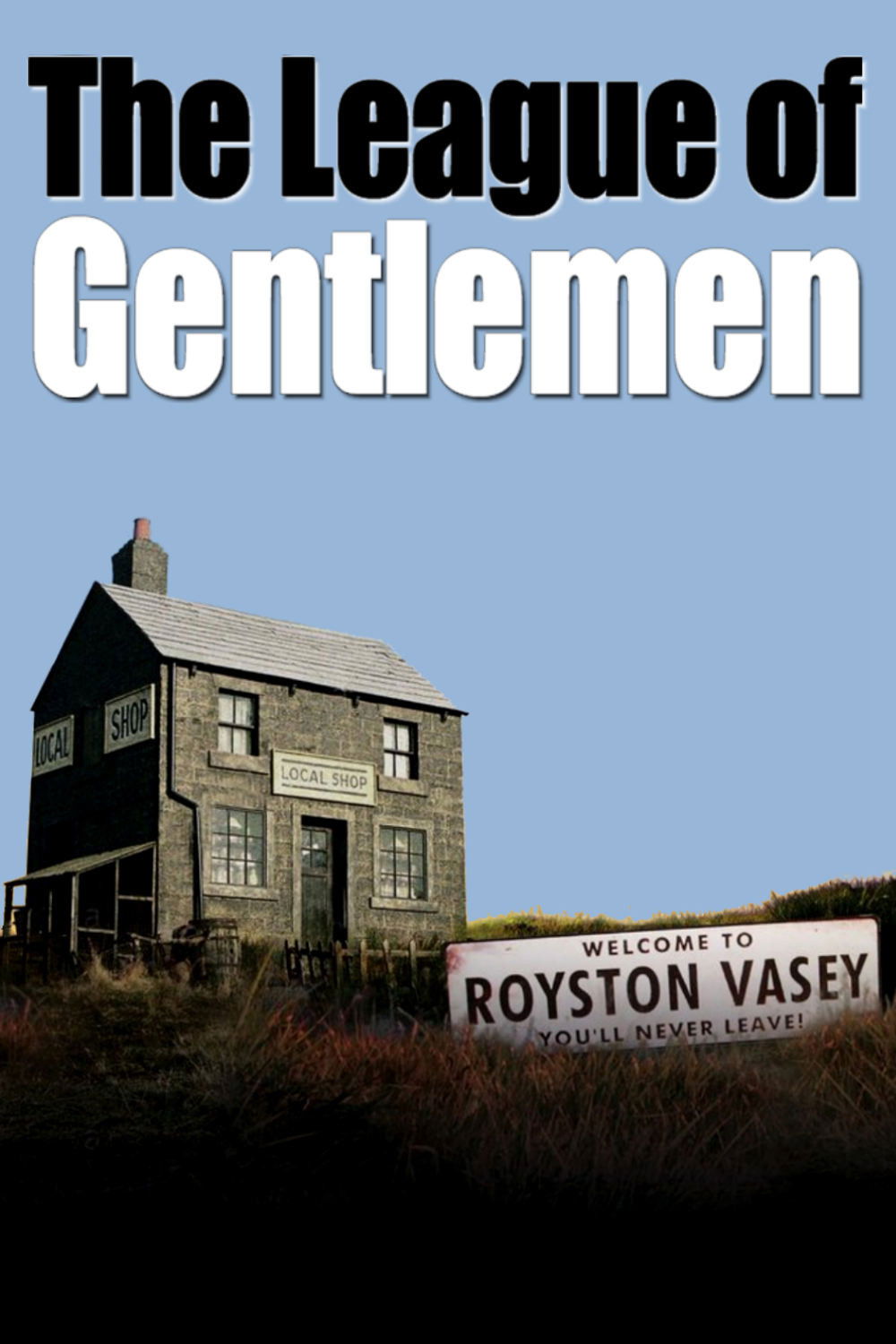
Watch The League of Gentlemen (1999) and count the men. Mark Gatiss, Steve Pemberton and Reece Shearsmith play nearly everyone in Royston Vasey, under false noses and wigs thick enough that you are always aware of who is underneath. The fourth member of the League, Jeremy Dyson, is credited as Various and turns up now and then, but you would not pick him out. His work is in the structure. Sketches recur across an episode and pick up mid-sentence, and running stories, a nephew trying to leave the Dentons' house among them, are threaded through six half-hours until Royston Vasey feels like a place rather than a list of characters. The shop on the moor, standing alone with its windows papered over, frightened us more than a sketch show should, and it did so because of where it sat in the running order, coming back each time just as we had relaxed.
The four met at Bretton Hall and formed the League in 1995; the stage act went to Radio 4 in 1997 and to BBC Two in January 1999. Dyson has been the one who stayed at the desk ever since. He co-created Funland (2005) with Simon Ashdown and Psychobitches (2013–14), a sketch series with an all-female cast, and with Andy Nyman he wrote the stage play Ghost Stories and co-directed its 2017 film. He has written episodes of Killing Eve and Good Omens, script-edited a good deal of other people's comedy, and published short stories and novels. The 2025 Radio 4 drama High Cockalorum and the 2026 stage thriller The Psychic, again with Nyman, are the latest. We can only speak in detail to the first of these.
The pattern across the rest is plain enough from the outside. English ghost stories, the sort he says people used to buy him for his birthdays, are put into formats built for laughs, so the audience never quite knows which reflex is wanted. That is the strength, and repetition is also the weakness. In the League the first two series go back to the same beats more often than they should, and some of the jokes were old when they arrived; a running story is, after all, a joke told six times, and not every one survives the sixth telling. Steve Bendelack's direction helps, because the terraces, the wet pavements and the bare hills look real and only the people are wrong, so the repetition reads as a town's routine rather than a writer's.
Dyson says he does not act, or not well, and has arranged his career so that he rarely has to. It is a reasonable division of labour: three men in prosthetics to do the frightening, one at the desk deciding when it comes. Start with the first series and give it two episodes before you decide; the shop will still be there when you get back to it.
Biography
Jeremy Dyson is a British writer, screenwriter and author. He is co-creator of the sketch comedy team the League of Gentlemen, alongside Mark Gatiss, Steve Pemberton and Reece Shearsmith, whom he met while studying at the University of Leeds. The group began as a stage act in 1995, moved to BBC Radio 4 in 1997 and to television with the BBC Two series The League of Gentlemen in 1999.
Dyson co-created the West End play Ghost Stories (2010) with Andy Nyman and its 2017 film adaptation. He co-created the BAFTA-nominated series Funland (2006) and the Rose d'Or-winning Psychobitches (2013–2014). He has written episodes of Killing Eve and Good Omens, and published several books of short stories and a novel. The League of Gentlemen received a BAFTA Television Award for Best Comedy among other honours.