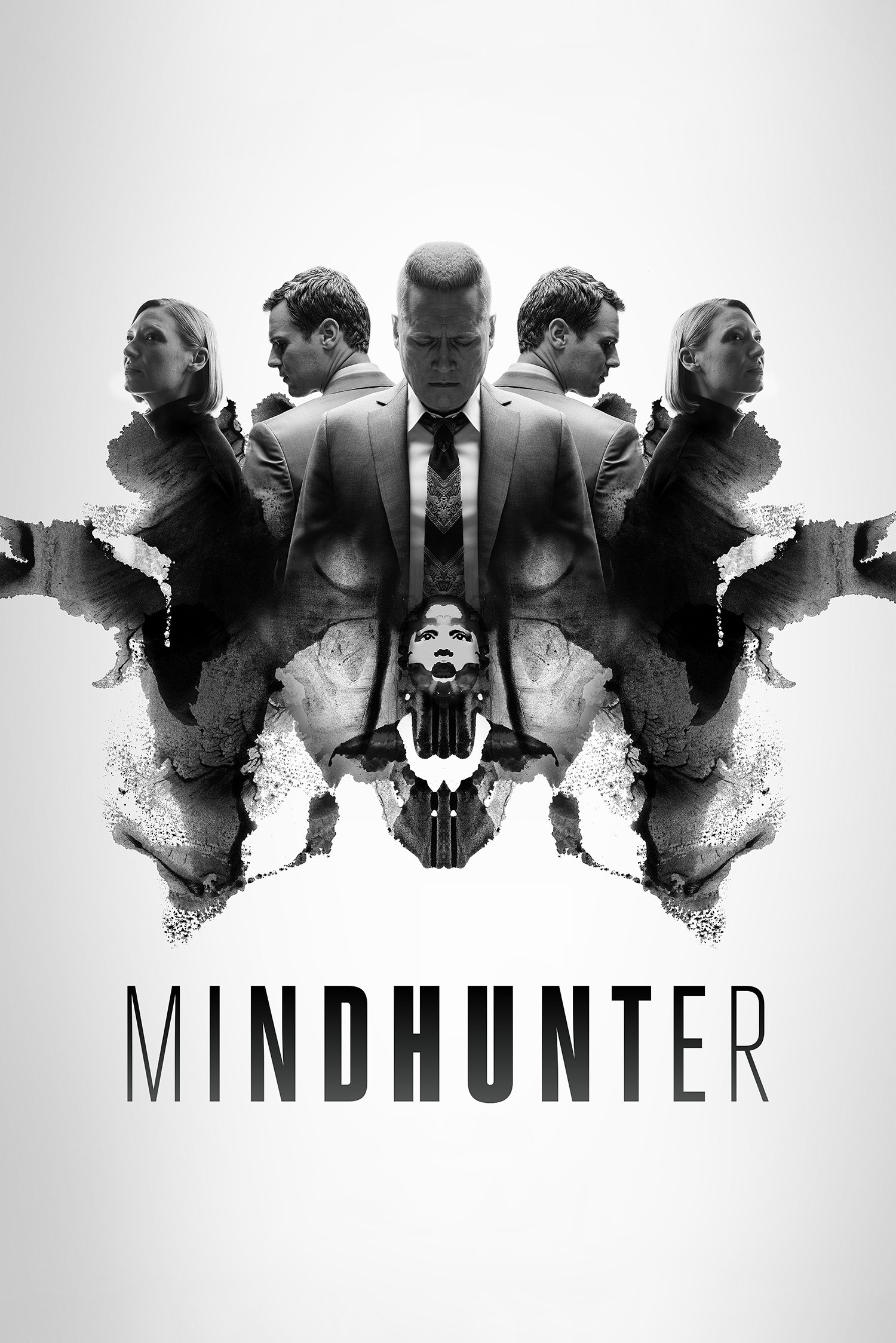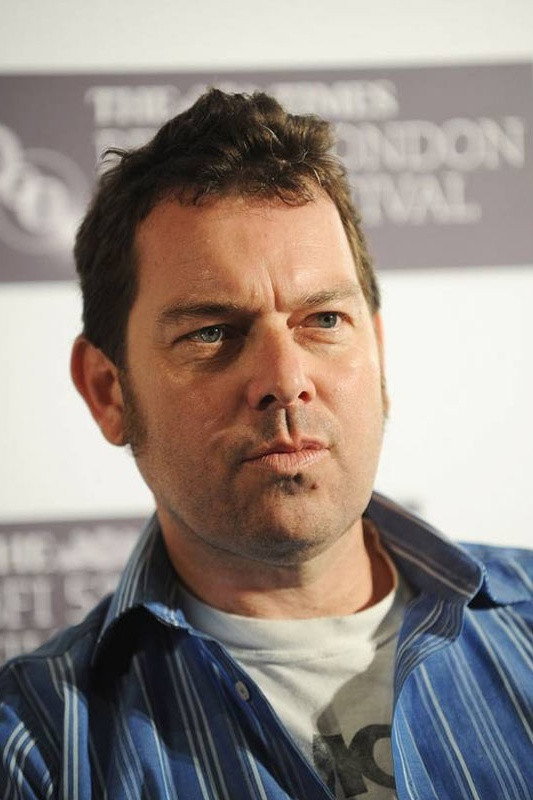
Joe Penhall writes people arguing in rooms about what a thing should be called and who gets to decide, and he trusts the argument to carry the scene. Mindhunter is the proof; the stage is where he learned it.
Fi1m perspective
Early in Mindhunter (2017), two FBI men and an academic sit in a basement at Quantico and argue about what to call the thing they are studying. Nobody says "serial killer", because in the late 1970s nobody had settled on it. That is the scene Joe Penhall keeps writing, in one form or another: intelligent people in a closed room, disagreeing about a definition, with a great deal riding on who wins. The murderers, when they arrive, are more of the same. Holden Ford (Jonathan Groff) and Bill Tench (Holt McCallany) sit across a table from them and ask why, and the answers come as talk, not blood.
He arrived at this through the theatre. Some Voices at the Royal Court in 1994 was the debut, and Blue/Orange at the National in 2000 the one that made his name: a consulting room, a patient, two doctors, and a fight about race, mental health and who has the power to say what is wrong with whom. The films that followed were adaptations, Enduring Love (2004) and The Road (2009), and by his own account he got the second job "partly because I was the only writer out of several considered who didn't want to change anything." That is a useful thing to know about him. He prefers to keep what is on the page and let it speak, which is why his adaptations are praised for staying close rather than for their inventions. Roger Michell has directed four of his films, more than anyone else, and there is a musical made with Ray Davies, Sunny Afternoon (2014), which is not what you would predict from the rest.
Mindhunter is where the theatre training is plainest. David Fincher gives the series its cool surfaces and its patience, but the scenes that hold are Penhall's: long, seated, nearly still, one man trying to get another to explain himself. We were more unsettled by a polite conversation in a prison visiting room than we had expected to be by a series that shows so little, because everything frightening is in what is said and how reasonably it is said. Where the series is weaker is where he is not writing an argument. Ford is a thinner man than the murderers he interviews, and the hours that work best are the ones where Tench or Wendy Carr (Anna Torv) push back and he has to defend a theory rather than admire it.
The plays since Blue/Orange, Mood Music (2018) and The Constituent (2024) among them, have not been received as warmly by critics, though audiences have kept coming, and he has a record of falling out with producers over changes to scripts, The Road included. Both follow from the same trait. He wants the argument left whole, and film is an industry that likes to cut arguments short. Fincher let him keep them, and the series that ran from 2017 to 2019 is what that looks like when it is allowed to happen. Start there. If the sound of clever people disagreeing at length is not your idea of an evening, nothing else he has written will change your mind.
Biography
Joe Penhall is an English-Australian playwright and screenwriter. Born in London in 1967 and raised in Australia, he began his career in theatre. His first major play, Some Voices, premiered at the Royal Court Theatre in 1994 and won the John Whiting Award.
Penhall's stage works include the award-winning Blue/Orange (2000) at the National Theatre and the book for the West End musical Sunny Afternoon (2014), which won four Laurence Olivier Awards. His screen credits include the adaptations Enduring Love (2004) and The Road (2009), the screenplay for King of Thieves (2018), and creating the Netflix series Mindhunter (2017), on which he also served as writer and executive producer.