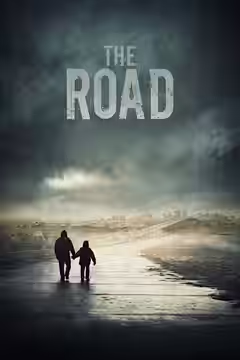
John Hillcoat’s adaptation of Cormac McCarthy’s novel is harrowing and tender, with Viggo Mortensen and Kodi Smit-McPhee convincing as a father and son struggling to survive. The repeated hardships can drag, but their performances reward the discomfort.
The Road is a strong, sometimes wearing survival drama whose best reason for enduring the misery is its father and son. John Hillcoat’s adaptation of Cormac McCarthy’s novel takes their dependence on each other seriously, without making the journey easy to watch. There is little relief in this dying landscape. The interest lies in how Viggo Mortensen and Kodi Smit-McPhee make a family credible under such pressure. When the film gives them room, its severity feels justified.
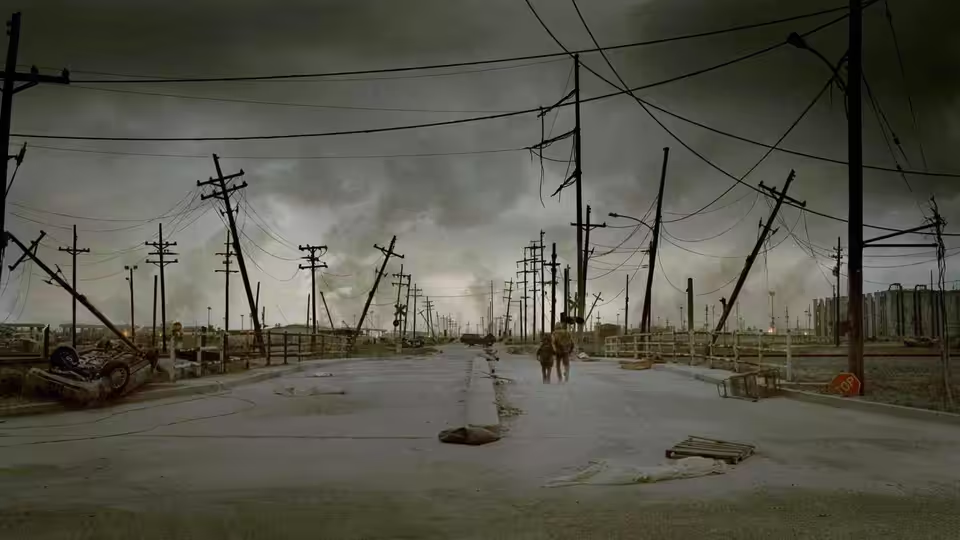
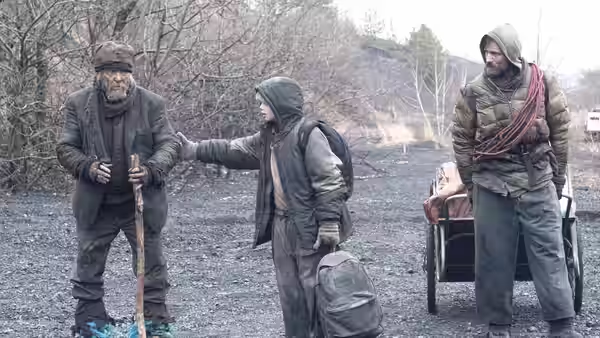
Javier Aguirresarobe’s muted cinematography makes the barren surroundings feel exhausting to cross, and the images stay bleak without becoming merely decorative. Chris Kennedy’s production design gives the same desolation a convincing physical presence; this looks like somewhere people would struggle to live. We flinched at the sound of dead trees falling. The sudden noise makes the surroundings feel dangerous, even before we consider what people might do to one another, and gives these empty places something more frightening than silence.
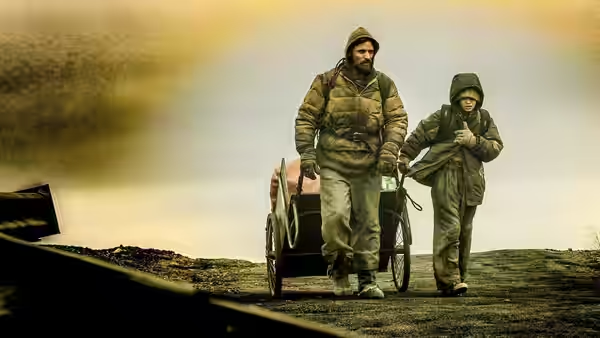
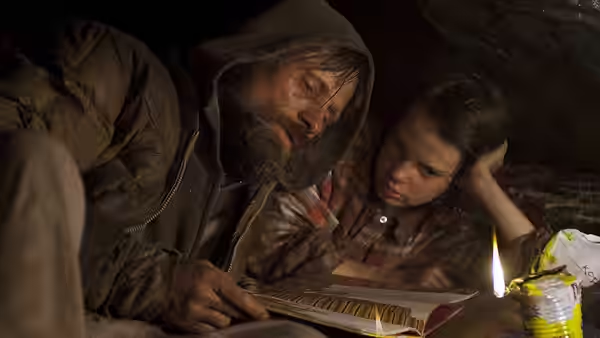
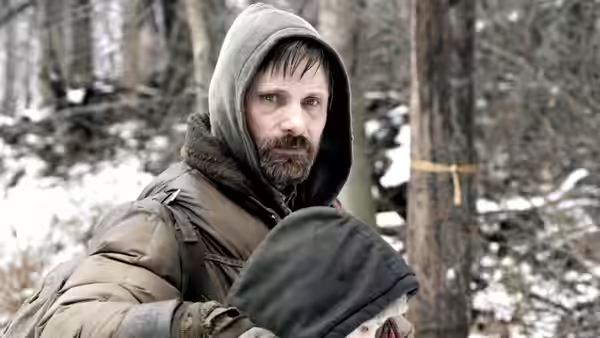
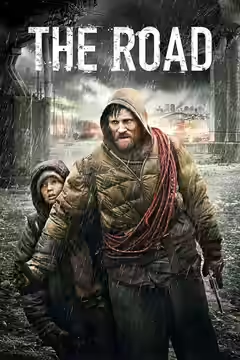
Viggo Mortensen gives Father enough emotional range to prevent grimness becoming his only characteristic. His care for Boy is convincing, and so is the strain of having to provide protection when there is so little reassurance to offer. Kodi Smit-McPhee gives Boy a presence of his own, so that the relationship does not depend entirely on the adult’s performance. Their tenderness is particularly affecting because it does not require the film to pretend that the surroundings have become any less hostile.
Joe Penhall’s screenplay has a difficult job in giving this journey shape without making its hardships feel arranged for our benefit. It does not always succeed. Some episodes blur together, and Jon Gregory’s editing cannot quite stop the accumulation of suffering from becoming predictable: after a while, another ordeal has less effect. At those points we begin to notice the film insisting on its seriousness, and the bond between the two leads has to sustain our interest through scenes that tell us little more about them.
Nick Cave and Warren Ellis provide a mournful score that suits the film’s loneliness. It helps the tenderness between Father and Boy register without turning their relationship into a comforting escape from everything around them. The music is doing delicate work, since too much consolation would make the desolation feel less credible. Mostly it judges that balance well, supporting the performances rather than trying to make every hardship a separate occasion for tears.
For a survival drama, The Road offers unusually little pleasure in the business of staying alive. That can make its 111 minutes feel long, but turning the desolation into a succession of satisfying problems to solve would weaken what the two leads achieve. The patience it asks for is mostly repaid by the attention given to their relationship. We recommend it with a warning about the repeated hardships, which sometimes test our endurance without telling us anything more about Father or Boy. Save it for an evening when neither person on the sofa needs cheering up.